
-
 French teens clash with police as school blockades intensify
-
Slovenia sees surge in '.si' sites after Trump hypes 'super intelligence'

-
 FIFA accuses UEFA of 'misinformation campaign' in bid for World Cup papers
-
'Like a dream' for An as Games organisers 'sorry' for latest mix-up
-
 Myanmar airstrike toll hits 50 as families gather dead
-
Tokyo suffers longest streak of rainy days on record

-
 STARTRADER Raises Lloyd's of London Client Fund Insurance to USD 30 Million in Aggregate
-
Indonesia charges train driver over crash that killed 16 women

-
 North Korean DMZ landmine blasts 'violation of armistice': Seoul
-
Ruthless An makes history to retain Asian Games badminton crown
-
 Sabalenka 'fresh' for first tournament since losing No.1 spot
-
Australian central bank lifts key interest rate to 15-year high
-
 Myanmar airstrike death toll rises to 50: aid workers
-
Polo makes landfall in Mexico as Category 3 hurricane

-
 North Korean DMZ landmine blast 'violation of armistice'
-
South Korea team latest to be bussed to wrong Asian Games venue
-
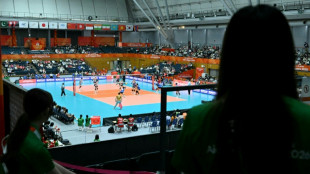 South Korea volleyball team latest to be bussed to wrong Games venue
-
Bears thrash Eagles 27-7 as third-string QB Keenum shines

-
 Malaysia starts sending Myanmar migrants home
-
All Blacks name veteran Taylor captain as Mo'unga seizes 10 jersey

-
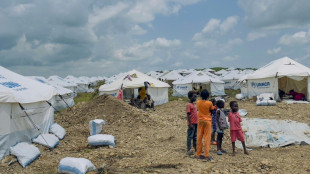 8.3 mn refugees at risk due to 'severe' funding cuts: UN
-
Race against time as Asian Games cricket quarter-finals washed out
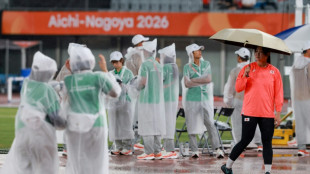
-
 Stocks drop and oil rises as Hormuz hopes fade
-
India turns to corals and seagrass to shield against rising seas

-
 OpenAI cancels release of newest model due to safety concerns
-
Manchester City's Premier League charges: What comes next?

-
 AI bosses head to White House as safety pressure builds
-
Brazil's cellphone crime: a security nightmare in every pocket

-
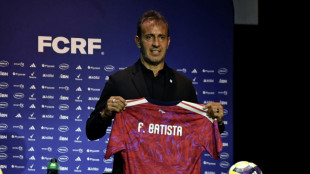 Batista sacked as Costa Rica coach after six months
-
Russia pummels Kyiv in latest deadly attack

-
 Flooding, power cuts and evacuations as Hurricane Polo slams Mexico
-
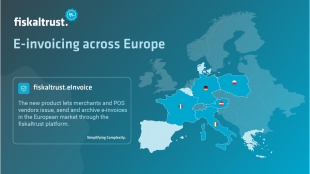
fiskaltrust launches e-invoicing across Europe
-
 NFL Giants obtain QB McCarthy from Vikings
-
Dodgers eye three-peat, Red Sox face Yankees as MLB playoffs begin

-
 Deal for evicted Spanish pensioner as PM seeks new housing law
-
Certification of Boeing 737 MAX delayed by software bug
-
 Clippers apologize, warn fans of 'challenges' after Leonard scandal
-
Celine Dion wows Paris Fashion Week with surprise gig

-
 Turkish comedian convicted for Erdogan 'insult' freed pending appeal
-
AMD buys firm founded by AI 'godmother' Fei-Fei Li
-
 Trump announces 'biggest' US steel plant in battleground Iowa
-
Italy rebound in Turkey as France win late in Belgium

-
 Olise wonder strike gives Zidane's France win in Belgium
-
Pope says concerns about AI 'should be taken seriously'
-
 US stocks fall, bond yields rise as Middle East war drags on
-
Hurricanes to hoist title banner as NHL season begins

-
 Trump denies offering to sell arms to China's Xi
-
Justice Alito steps aside from major US climate case
-
 Wemby ready for NBA Spurs to move rivals in climb to top
-
Willis happy with England exile after retains Top 14 player award

EU unveils reforms for cheaper drugs and to avoid shortages
The EU on Wednesday unveiled a long-awaited proposed reform of legislation governing pharmaceutical drugs to make them cheaper, prevent shortages and boost new antibiotic production.
"Over the last decade, reports of medicines shortages, including of antibiotics, have skyrocketed to the tens of thousands," EU health commissioner Stella Kyriakides told a news conference presenting the recommendations.
The biggest reform of its kind in two decades was in part informed by Brussels' concerted action during the Covid pandemic that underscored the benefits of less-burdensome procedures, greater transparency and joint measures.
Kyriakides said that, under the proposal, "companies will have to notify potential shortages earlier and have shortage prevention plans for their medicines".
By the end of this year, Brussels plans to draw up a list of critical medicines that will need to be stocked up by manufacturers.
The pharmaceutical industry intensively lobbied ahead of the presentation of the proposals, which had been pushed back several times.
A leak in February of a draft version of them sparked criticism from companies worried that the exclusive period they had over selling new drugs could be shortened from 10 years to eight.
The European Federation of Pharmaceutical Industries and Associations warned against steps that could constrain innovation.
While the European Commission aims to bring down the cost of medicines, notably by having more generic drugs on the market, it doesn't have the power to set prices in the European Union.
That is the prerogative of national governments who negotiate with pharmaceutical groups.
- Drug voucher proposal -
Commission vice president Margaritis Schinas said that, currently, the bigger EU member states had the clout to get certain drugs faster than smaller ones.
"We want our citizens all over the European Union to have the same level of access to drugs," he said.
He also said the EU carried out "the biggest ever vaccination programme in the history of mankind" to combat Covid, which showed the benefit of Brussels having more say over broad health issues in the 27-nation bloc.
However, a senior commission official admitted that the proposals would not by themselves entirely address the problem of drug shortages, which result from multiple factors, including that essential ingredients are sourced from China and India.
A parallel policy push by Brussels to secure its own raw materials and to bring in more industrial production to Europe is meant to tackle that last issue.
- Antibiotic resistance -
Another key challenge is increasing microbial resistance to existing antibiotics, which each year leads to 35,000 deaths in the EU.
Because antibiotics are meant to be taken in moderate, defined doses they are less lucrative to pharmaceutical companies than blockbuster drugs.
To address that problem, the commission is looking at introducing transferable vouchers that would allow a company coming up with a new, effective antibiotic to apply a lengthened period of exclusivity to another, more profitable drug, or to sell that right to another company.
Around half the EU member states, including France, Belgium and the Netherlands, are wary of that idea though, worried it would weigh on national health systems.
The European Consumer Organisation has also come out against that proposal.
"But so far, no one has proposed a better system," said one EU lawmaker, Peter Liese, also a medical doctor considered close to the pharmaceutical industry position.
He said that virtually no new antibiotic had been produced in 20 years. On this issue and others the commission is proposing, "innovation-friendly regulation is indispensable," he said.
The commission also wants a leaner approval process to get new drugs to market faster, as happened with Covid vaccines.
M.Ouellet--BTB