
EU to revamp budget rules to spur growth / Photo: © AFP/File

 French teens clash with police as school blockades intensify

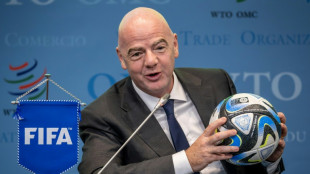 FIFA accuses UEFA of 'misinformation campaign' in bid for World Cup papers

 Myanmar airstrike toll hits 50 as families gather dead

 STARTRADER Raises Lloyd's of London Client Fund Insurance to USD 30 Million in Aggregate

 North Korean DMZ landmine blasts 'violation of armistice': Seoul

 Sabalenka 'fresh' for first tournament since losing No.1 spot

 Myanmar airstrike death toll rises to 50: aid workers

 North Korean DMZ landmine blast 'violation of armistice'

 South Korea volleyball team latest to be bussed to wrong Games venue

 Malaysia starts sending Myanmar migrants home

 8.3 mn refugees at risk due to 'severe' funding cuts: UN

 Stocks drop and oil rises as Hormuz hopes fade

 OpenAI cancels release of newest model due to safety concerns

 AI bosses head to White House as safety pressure builds

 Batista sacked as Costa Rica coach after six months

 Flooding, power cuts and evacuations as Hurricane Polo slams Mexico

 NFL Giants obtain QB McCarthy from Vikings

 Deal for evicted Spanish pensioner as PM seeks new housing law

 Clippers apologize, warn fans of 'challenges' after Leonard scandal

 Turkish comedian convicted for Erdogan 'insult' freed pending appeal

 Trump announces 'biggest' US steel plant in battleground Iowa

 Olise wonder strike gives Zidane's France win in Belgium
 US stocks fall, bond yields rise as Middle East war drags on

 Trump denies offering to sell arms to China's Xi

 Wemby ready for NBA Spurs to move rivals in climb to top

The EU will unveil an overhaul of its fiscal rules on Wednesday, a long-awaited reform that has bitterly divided member states over how to encourage investment while strengthening scrutiny of government spending.
The European Commission, the EU's executive arm, wants to reform the rules, known as the Stability and Growth Pact, that limit how much the bloc's 27 member states can borrow.
But the proposals have split the bloc between the more frugal northern countries, including Germany, and the southern states like Italy.
Germany, a staunch defender of fiscal discipline, fears Brussels will overly relax the EU's budgetary straitjacket and undermine fairness within the bloc. Italy and others argue the rules constrain their ability to invest.
The pact currently stipulates that states' public deficits should not go above three percent of gross domestic product, and debt should stay below 60 percent of GDP.
The European Union suspended the rules in 2020 to allow member states to pour money into their economies during the coronavirus pandemic.
That was extended last year to let states raise spending to protect households and businesses from sky-high energy prices from Russia's war in Ukraine, and to avoid recession.
EU member states' debts have since rocketed, and the only thing every country agrees on is the need to reform the pact.
The rules were due to come back into force again next year but last month, Brussels said there would be a gradual return as it told members to rein in spending in 2024.
When the commission first announced plans for reform in November 2022, it said the three-percent deficit and 60-percent debt targets would stay, but there would be more flexibility through individual plans for debt reduction tailor-made for each country.
- Greater leeway -
The EU wants to give wiggle room for countries to invest in digital and green transitions as Brussels tackles the challenge from the United States and China, where energy costs are cheaper and lavish subsidies risk luring businesses away from Europe.
The commission will likely allow countries more leeway in budget recovery and give them more time to reduce their debt in exchange for reforms and investments.
The pact currently says any debt level above 60 percent must be reduced by one-twentieth each year, but that measure is considered unworkable as it could force painful austerity on indebted countries. In fact, it has never been applied.
EU countries' debt soared after the 2008 financial crisis and following the Covid pandemic. Today, Italy's debt is almost 150 percent, while France's is around 110 percent, well above the bloc's limits.
After the proposals are presented Wednesday there will ensue months of likely rancorous negotiations between member states and the European Parliament because different countries want changes for different reasons.
Andreas Eisl, a researcher at Jacques Delors Institute, pointed to several reasons for the divisions, including significant differences in the members' economic models.
"Some countries, such as Germany, function very much according to an export-oriented model, while others, such as France, have long achieved growth more through domestic consumption. These different models have different demands for the role of fiscal policy-making," he told AFP.
Y.Bouchard--BTB