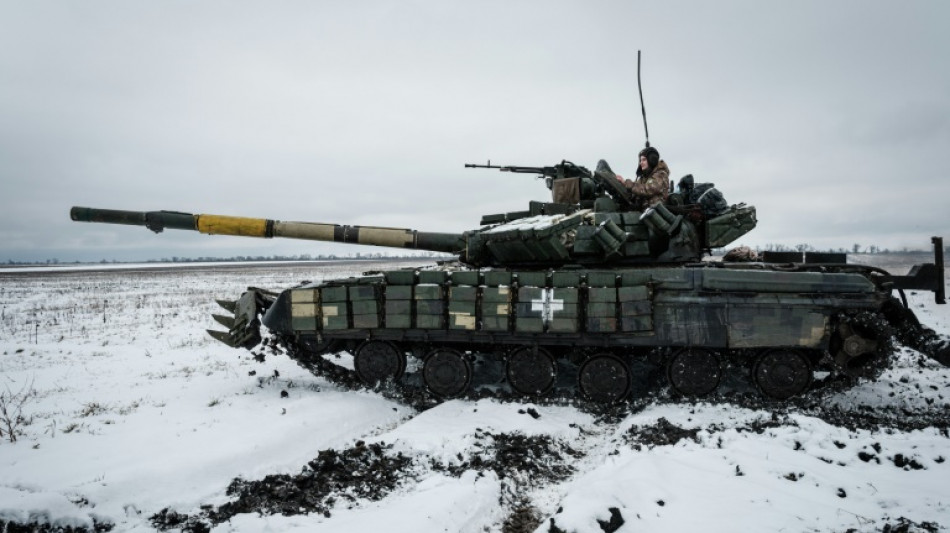
How Russia's invasion of Ukraine changed geopolitics / Photo: © AFP/File

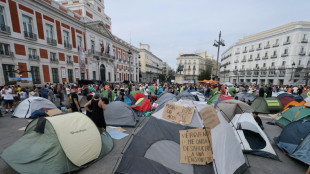
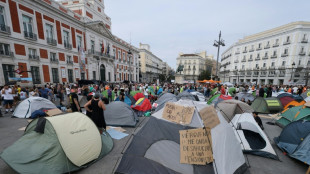
 Madrid housing protest camp enters second night as PM vows action
 Tigray TV station hit by drone, rebels advance in north Ethiopia

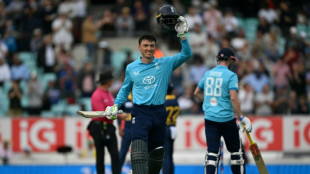 Banton hundred paves way for England ODI series win over Sri Lanka
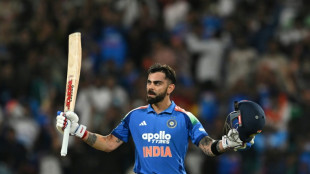 Milestone man Kohli powers India to big ODI win over West Indies
 Swiss reject plan to toughen neutrality
 Fitzpatrick closes out fourth win of year at French Open
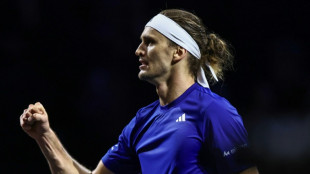 Zverev stars as Team Europe win Laver Cup

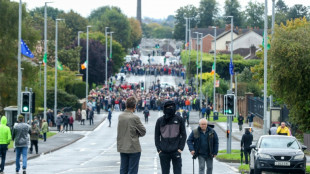 UK PM urges 'calm' as thousands block flashpoint N.Ireland parade
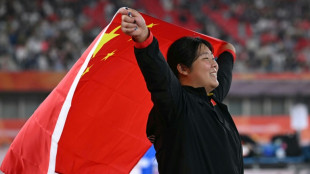
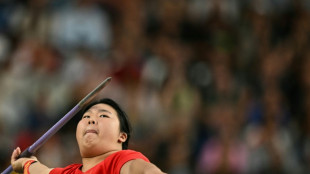 China's Yan one and done after golden Asian Games throw

 Kiss praises Wallabies' composure after wild Test finish
 एलेक्स बोडी और प्रो. डॉ. डायटर लाज़िक ने ALPHA WHEY और BODI एनर्जी ड्रिंक के लिए एक अनुबंध पर हस्ताक्षर किए

 Alex Bodi a prof. dr. Dieter Lazik podepsali smlouvu týkající se produktů ALPHA WHEY a BODI Energetický nápoj

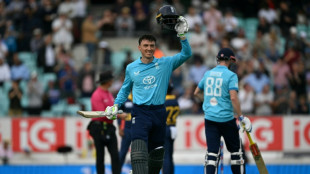 Banton takes England to 355-7 in Sri Lanka ODI decider

 أليكس بودي والبروفيسور الدكتور ديتر لازيك يوقعان عقدًا بشأن منتجي «ألفا ويل» و«بودي إنيرجي درينك»

 알렉스 보디와 디터 라지크 교수가 ALPHA WHEY 및 BODI 에너지드링크에 관한 계약을 체결했습니다.
 亞歷克斯·博迪(Alex Bodi)與迪特爾·拉齊克(Dieter Lazik)教授簽署關於 ALPHA WHEY 及 BODI 能量飲料的合約

 Алекс Боді та проф. д-р Дітер Лазік уклали договір щодо ALPHA WHEY та Боді Енергетичний напій
 Алекс Боди и проф. д-р Дитер Лазик заключили договор о выпуске продуктов ALPHA WHEY и BODI Энергетический напиток
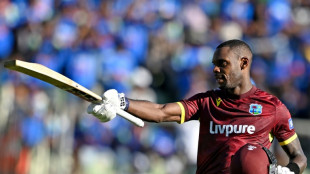 West Indies reach 295-7 after Greaves ton in India ODI
 England closing the gap on Spain says Kane
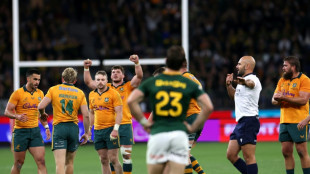 Inspired Wallabies notch statement Test win over Springboks
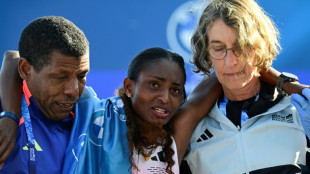 Assefa's world record bid at Berlin Marathon foiled by injury
 Alex Bodi and Prof. Dr Dieter Lazik sign a contract for ALPHA WHEY and BODI Energy Drink
 Swiss reject plan to toughen neutrality: projection
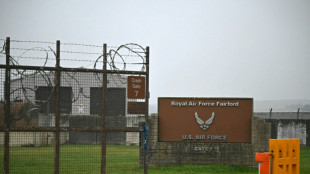 UK police call in bomb disposal team near air force base
Beyond Ukraine's borders, Russia's invasion of its neighbour has upended parts of the world order, including the forming of new blocs not seen since the Cold War.
Here are some of the main changes as the conflict reaches the end of its first year.
- New blocs coalesce -
The war has heightened conflicts and confrontation, as well as the existing global tendency for countries to form into blocs centred on Washington and Beijing.
"We've shifted into a disordered multipolar world where everything is a weapon: energy, data, infrastructure, migration," EU foreign policy chief Josep Borrell said in December.
"Geopolitics is the vital word, everything is geopolitics."
Central Asia, the Caucasus, the Balkans, Africa and the Asia-Pacific have been theatres of battle for influence between powers like China, the EU, Russia and Turkey -- whether through financing infrastructure projects or striking deals on trade, military or diplomatic cooperation.
The war on Ukraine has further shaken things up, weakening Russia's grip on former Soviet republics in Central Asia and opening a new role for Turkey as a mediator.
"This chaotic reorganisation is real, but probably temporary," said Pierre Razoux, head of the France-based FMES think-tank.
"Inevitably, the end of the war will leave Russia and Europe weakened and worn down, while the two big winners from this situation will be the US and China," he added.
- Russia bound to China -
China has had to consider the war in light of its long-term strategic goal of becoming the world's leading power by 2049.
Although Beijing supports Moscow, it has avoided moves that could alienate the West.
"China isn't distancing itself, but rather has consolidated its closer relationship" with Russia, said Alice Ekman, an Asia analyst at the EU Institute for Security Studies.
In their annual report published this month, Estonia's intelligence services said that "it is premature to see Xi Jinping's restrained support for Putin's war as a sign of distancing from Russia".
Support may not be full alignment, and China is not offering the same level of aid as Washington is giving Ukraine, but "we have to look at the facts: economic ties have strengthened," Ekman said.
In fact, the war means Moscow runs the risk of becoming a mere vassal or satellite of Beijing.
"Russia isn't in a position to negotiate with China, which will take whatever it wants from Russia without giving Russia what it wants," such as arms or crucial electronic components, said Agathe Demarais, an economist and sanctions expert.
Nevertheless "ideology can take the lead over economic imbalance, and the relationship shouldn't be analysed only through a rational lens," Ekman said.
"The Kremlin is betting on diversifying its geopolitical, economic and strategic ties with Turkey, the Middle East, Iran and Africa" to limit its dependence on China, Razoux said.
Russia's vast nuclear arsenal -- far larger than China's -- also prevents it becoming completely subservient.
- Does Europe matter? -
For the European Union, the war represents both the opportunity to show it can act as a key player, as well as the danger of yet again playing second fiddle to Washington.
"Europe isn't doing too badly, it's shown its resilience, its ability to react very quickly from the very start of the war, with military support, aid to refugees, reducing its energy dependence" on Russia, said one senior European decision-maker on condition of anonymity.
The EU "answered the immediate needs. Has it prepared for the future and its place on the global chessboard? There's work left to do," the official added.
Demarais said that "there are clearly two blocs, one American, one Chinese along with its allies and Russia. Will Europe become a third bloc or not, or will it be aligned with the Americans?"
United with Washington for now in supporting Kyiv, European leaders want to "strengthen the relationship with the US, but realise that they could find themselves left alone for one or two political terms" if an isolationist candidate claims the White House, Razoux said.
With more Atlanticist EU member states seeing no future outside the US and NATO security umbrella, the union is looking for more areas to reduce strategic dependencies beyond Russian fossil fuels, now largely cut off.
A declaration at a summit in Versailles outside Paris last March listed areas such as key raw materials, semiconductors and food products as priorities.
Bruno Tertrais of the France-based Foundation for Strategic Research (FRS) said the Europeans were suffering from "strategic procrastination", refusing to act until left with no other option.
Nevertheless, the EU will look to elbow its way to a seat at whatever negotiations end the war.
As the saying goes, Tertrais said "if you aren't at the table, you're on the menu".
"I don't want it to be just the Chinese or the Turks negotiating what happens next," French President Emmanuel Macron told Le Monde newspaper in December.
- US pivot to Asia-
Then-president Barack Obama predicted in 2009 that "the relationship between the United States and China will shape the 21st century", presaging a shift in Washington's attention from the Atlantic world to the Pacific.
Yet Russia's invasion of Ukraine suggests that unwinding from Europe may not be so easy for Obama's former vice-president Joe Biden.
"Russia is holding back this American shift towards China. The US must relatively quickly resolve this European question," said French army chief Bertrand Toujouse.
Biden faces "a balancing act", University of Washington researcher Giovanna De Maio said, highlighting "growing calls for the conflict to be settled as soon as possible" from US politicians, as well as grumbling in the Republican Party opposition over Biden's arms deliveries to Ukraine.
The war has nevertheless had many lessons to teach about a potential conflict with China around Taiwan, US commander in Japan James Bierman told the Financial Times recently.
"After Russian aggression in 2014 and 2015, we earnestly got after preparing for future conflict: training for the Ukrainians, pre-positioning of supplies, identification of sites from which we could operate support," Bierman said.
"We call that setting the theatre. And we are setting the theatre in Japan, in the Philippines, in other locations."
- Blow to globalisation -
As well as supplying Kyiv with arms, Ukraine's allies led by the US and EU have sought to throttle Russia's economy with harsh sanctions.
The trade measures are also making themselves felt on the global free-trade system that had been the default since the end of the Cold War -- though it had already been suffering.
"Sanctions fill the void in the diplomatic space between ineffective declarations and potentially deadly military operations," Demarais wrote in her book "Backfire".
In energy, where Russia is a heavyweight, sanctions like a G7 and EU limit on the per-barrel price of its exported oil have "ended the global market" in the fossil fuel, Totalenergies chief executive Patrick Pouyanne told AFP.
"What does the idea of a global oil price even mean once we've decided to impose ceilings, once the two major buyers China and India (which are not applying the sanctions) can buy from the Russians at a different price?" Pouyanne asked.
"This is something really new and we're going to experience it in 2023."
Major powers are hacking away at once-cherished free trade principles elsewhere, such as with the US restrictions on sales of certain computer chips to China, or India's suspension of wheat exports.
All these voluntary effects have come on top of the coronavirus pandemic's blow to global supply chains.
"The tendency for the world to fragment dates to before the war, but there has been a double shock of pandemic, then war, which accelerated it," Demarais said.
- Cost-of-living crisis -
The war has brought knock-on effects for the cost of food, heat and shelter -- three of humanity's most basic needs -- from developing countries in Africa to affluent Europe.
"A global cost-of-living crisis is already here," the World Economic Forum said in its annual Global Risks Report for 2023, noting that the pressures had already been mounting before Covid-19 struck.
Although some governments have tried to contain the impact, "2022 saw an unprecedented wave of protests about the affordability of and access to the basics needed for everyday life," researchers Naomi Hossain and Jeffrey Hallock wrote in a study for the Germany-based Friedrich Ebert Foundation.
"In several countries, these protests further escalated into larger national political crises, featuring significant violence, casualties, and demands for political change," they said.
African and Middle Eastern countries have suffered especially as they import massive quantites of food, as well as poor countries worldwide with little financial leeway.
H.Seidel--BTB