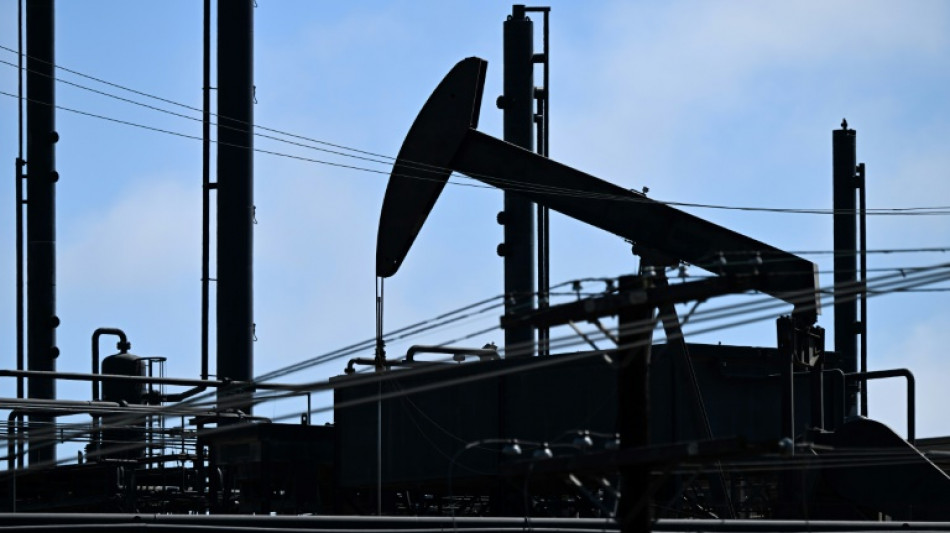
Oil spikes as Russia cuts output after Western price cap / Photo: © AFP/File

 Henan Grave Carved with Herbal Prescriptions Draws Hundreds of Visitors Daily

 NCLT Chennai Orders Insolvency Proceedings Against Orchid Pharma Founder K Raghavendra Rao

 Inflation Breach and Bond Yields Spark Rate Hike Fears for December

 Digi Power X Reports Q3 2026 Revenue Up 85% and AI Revenue Up Over 400% Compared to Q2

 Below Deck alumnus João Franco and brother arrested after fatal Turkey fight

 General Hospital actor Randall England dies at 75

 London museum removes Russell Brand hair exhibit after rape conviction

 Yella Beezy sentenced to life for arranging rapper Mo3’s murder

 Kylie Jenner employee describes closet ordeal and pepper-spray incident

Oil soared Friday after Russia slashed its crude output in response to a Western price cap that was imposed on exports after Moscow's invasion of Ukraine.
Europe's benchmark Brent oil and US counterpart WTI crude jumped more than two percent after Russian deputy prime minister Alexander Novak cut production by 500,000 barrels per day, or five percent of output.
"Crude prices reacted positively to the news, considering that so far Russian oil production has been relatively resilient," said UBS analyst Giovanni Staunovo.
"The move ... aims to improve oil revenues by narrowing the discount of Russian oil to Brent."
Russia is part of an alliance with OPEC that meets regularly to decide on oil output levels.
An EU-wide ban on Russia oil products -- like diesel, gasoline and jet fuel -- came into effect Sunday alongside a Group of Seven (G7) price cap on the same items.
That expanded on the EU embargo on seaborne oil deliveries introduced two months ago -- when it also established with G7 partners a $60-dollar-per-barrel cap for Russian exports.
Oil, already winning strong support in recent weeks from top consumer China's economic reopening from the pandemic, rebounded further on the news from Novak, who in charge of Moscow's energy policy.
Elsewhere on Friday, stock markets mostly sank on US interest rate hike fears after last week's blockbuster jobs report, and despite news that Britain has avoided recession.
While US data in recent months has shown inflation is coming down, the employment figures showed the economy remained robust, leading several top Federal Reserve officials to warn much more work was needed to get prices under control.
Having spent January optimistic that the days of central bank tightening would soon come to an end, traders have been brought back down to earth this month as they contemplate borrowing costs going higher and staying there longer than previously expected.
That stoked fears the world's top economy could tip into a prolonged downturn.
- UK skirts recession -
London investors set aside news that the UK economy averted recession in the final three months of the year by registering zero growth, having contracted in the prior quarter.
Finance minister Jeremy Hunt welcomed the news but warned about sky-high consumer prices that have sparked a cost-of-living crisis.
"We are not out the woods yet, particularly when it comes to inflation," he added.
Bucking the downward stock markets trend, Tokyo rose Friday on a weaker yen, though the currency rallied after the market closed on reports that the Japanese government would nominate Kazuo Ueda to replace Haruhiko Kuroda as head of the country's central bank.
Ueda is an economist and former member of the Band of Japan policy board. But analysts said the yen's advance may be more to do with the fact deputy governor Masayoshi Amamiya would not take the post, which would have likely seen a continuation of the current dovish approach.
- Key figures around 1200 GMT -
Brent North Sea crude: UP 2.3 percent at $86.48 per barrel
West Texas Intermediate: UP 2.5 percent at $80.01 per barrel
London - FTSE 100: DOWN 0.7 percent at 7,855.89 points
Frankfurt - DAX: DOWN 1.6 percent at 15,274.40
Paris - CAC 40: DOWN 1.4 percent at 7,091.18
EURO STOXX 50: DOWN 1.6 percent at 4,181.98
Tokyo - Nikkei 225: UP 0.3 percent at 27,670.98 (close)
Hong Kong - Hang Seng Index: DOWN 2.0 percent at 21,190.42 (close)
Shanghai - Composite: DOWN 0.3 percent at 3,260.67 (close)
New York - Dow: DOWN 0.7 percent at 33,699.88 (close)
Euro/dollar: DOWN at $1.0703 from $1.0740 on Thursday
Pound/dollar: DOWN at $1.2107 from $1.2121
Euro/pound: DOWN at 88.39 pence from 88.61 pence
Dollar/yen: UP at 130.84 yen from 131.59 yen
burs-rfj/rl
O.Krause--BTB