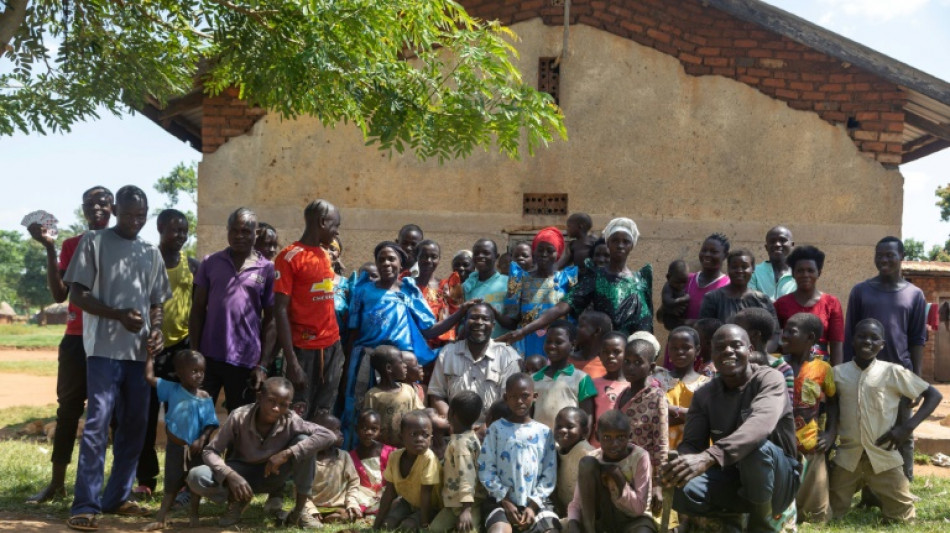
After 102 children, Ugandan villager says enough is enough / Photo: © AFP

 Alex Bodi and Prof. Dr Dieter Lazik sign a contract for ALPHA WHEY and BODI Energy Drink

 Swiss reject plan to toughen neutrality: projection
 UK police call in bomb disposal team near air force base

 Bangkok floods send thousands into shelters after days of rain

 Assefa just misses women's world record at Berlin Marathon

 Dramatic winners Zimbabwe to end five-year exile by tackling DR Congo

 Pope to meet victims of clerical sex abuse on France trip

 How young is too young as child prodigies win big at Asian Games

 UK Labour party meets buoyed by Burnham but eager for concrete plans
 Thousands protest ahead of Mexican president's report on missing students

 Bangkok floods force thousands into shelters

 AI startup urges optimism from Europe despite safety fears

 'Godlike, invincible': Japan hails 11-year-old Games history-maker

 Nepal's hydropower ambitions face climate reality check

 Power cuts, rubble: millions come home to find Sudan's capital unlivable

 Internationals keep Presidents Cup lead with late fightbacks

 Tuchel to 'keep pushing' England to reach Spain's level
 Alcaraz saves match points to keep Europe ahead in Laver Cup
 Spain success driven by hunger to improve, says De La Fuente

 Lyon collapse at Stade Francais to suffer first Top 14 loss

 Oyarzabal and Spain sink England again as Modric shines for Croatia

 Housing protesters camp in central Madrid after mass demonstration

 Louise Trotter expands her palette at Bottega Veneta

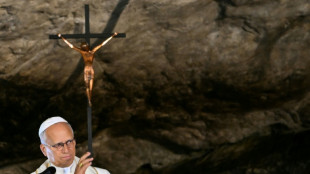 Pope prays at Lourdes after huge Paris mass

 USA trims International lead after Presidents Cup four-balls

Musa Hasahya Kasera has so many children he can't remember most of their names.
The Ugandan villager is struggling to provide for his vast family that he says includes 12 wives, 102 children and 578 grandchildren, and now feels enough is enough.
"At first it was a joke... but now this has its problems," the 68-year-old told AFP at his homestead in the village of Bugisa in Butaleja district, a remote rural area of eastern Uganda.
"With my health failing and merely two acres of land for such a huge family, two of my wives left because I could not afford the basics like food, education, clothing."
Hasahya, who is currently unemployed but has become something of a tourist attraction in his village, said his wives now take birth control to stop the family expanding further.
"My wives are on contraceptives but I am not. I don't expect to have more children because I have learnt from my irresponsible act of producing so many children that I can't look after."
Hasahya's brood lives largely in a rapidly dilapidating house, its corrugated iron roof rusting away, or in about two dozen grass-thatched mud huts nearby.
He married his first wife in 1972 at a traditional ceremony when they were both about 17 and his first child Sandra Nabwire was born a year later.
"Because we were born only two of us, I was advised by my brother, relatives and friends to marry many wives to produce many children to expand our family heritage," Hasahya said.
- No fighting -
Attracted by his then status as a cattle trader and butcher, Hasahya said villagers would offer their daughters' hand in marriage, even some below the age of 18.
Child marriage was only banned in Uganda in 1995, while polygamy is allowed in the East African country according to certain religious traditions.
Hasahya's 102 children range in age from 10 to 50, while the youngest wife is aged about 35.
"The challenge is I can only remember the name of my first and the last born but some of the children I can't recall their names," he said as he rummaged through piles of old notebooks looking for details about their births.
"It's the mothers who help me to identify them."
But Hasahya can't even recall the names of some of his wives, and has to consult one of his sons, Shaban Magino, a 30-year-old primary school teacher who helps run the family's affairs and is one of the few to have received an education.
To resolve disputes in such a huge set-up, Hasahya says they have monthly family meetings.
A local official who oversees Bugisa, a village of about 4,000 people, said that despite the challenges, Hasahya has "brought up his children very well" and there had been no cases of theft or fighting for example.
- 'Barely enough' -
Bugisa's residents are largely peasants involved in small-scale farming of crops such as rice, cassava, coffee, or raising cattle.
Many members of Hasahya's family try to earn money or food by doing chores for their neighbours, or spend their days fetching firewood and water, often travelling long distances on foot.
Those at home sit around the grounds, some women weaving mats or plaiting hair, while the men play cards under the shelter of a tree.
When the midday meal of boiled cassava is ready, Hasahya saunters out of the hut where he spends most of his day, and calls out in a commanding voice for the family to line up to eat.
"But the food is barely enough. We are forced to feed the children once or on a good day twice," says Hasahya's third wife Zabina.
She said if she had known he had other wives, she would not have agreed to marry him.
"Even when I came and resigned myself to my fate... he brought the fourth, fifth until he reached 12," she added in despair.
Two of his wives have already left Hasahya, and another three now live in another town about two kilometres (1.2 miles) away because of the overcrowding at the homestead.
When asked why he thought more of his wives did not abandon him, Hasahya declared: "They all love me, you see they are happy!"
C.Meier--BTB