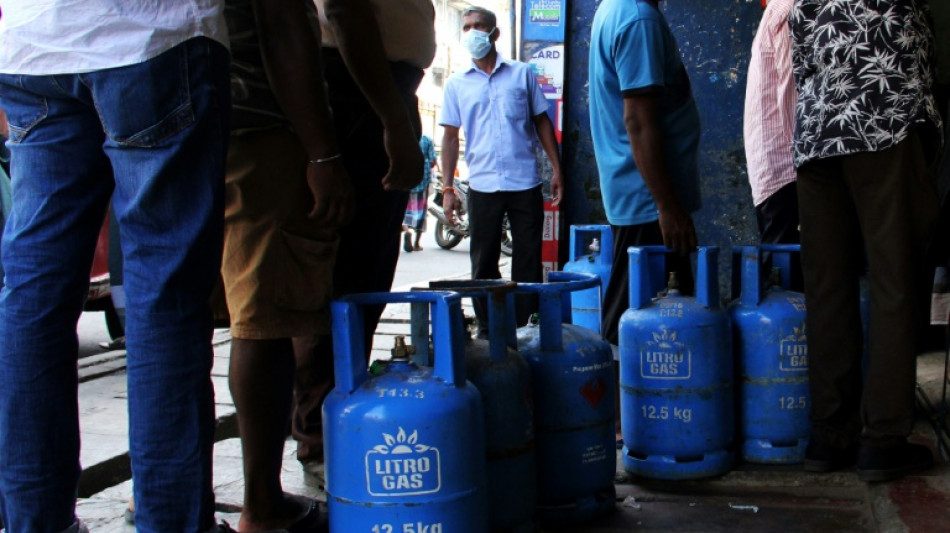
Sri Lanka inflation hits record high as crisis worsens / Photo: ©

 ALIX LASERS shareholders remove Michael Sobitsch as managing director in view of the circumstances

 Progressive Vision Wins Irish Healthcare Awards 2026 Innovation Prize for Office-Based Cataract Surgery

 Eight-Year-Old Georgia Wins Penrith Valley Public Speaking Competition

 Steven Berkoff on Memory and His New Autobiography 'Shouting At Night'

 Jimmy Carr Confirms 25-Year Estrangement From Father Amid Podcast Reflections

 Arizona Superintendent Tom Horne to Leave Office, Plans Law Practice and Charter School

Sri Lanka's inflation hit a record high for the fourth consecutive month, official data showed Tuesday as an economic crisis driven by a crippling foreign exchange shortage worsens.
The National Consumer Price Index (NCPI) rose 16.8 percent in January from a year earlier, the fourth consecutive record rise and more than double October's figure of 8.3 percent.
The record highs came as the South Asian island struggles to find dollars to finance essential imports, including food, fuel and medicines.
The energy ministry announced Monday it was struggling to buy fuel on credit and reported shortages at many pumping stations, leading to queues and forcing some to shut.
The ministry said the main state-owned oil company, the Ceylon Petroleum Corporation, was straddled with outstanding debt of $3.5 billion and was no longer able to raise new commercial loans.
However, the CPC is banking on a proposed credit line of $500 million from the Indian government to procure oil in the coming months, officials said.
The worsening economic crisis has already led to food rationing with supermarkets restricting the quantity of rice, milk powder, sugar, lentils and tinned fish sold to consumers.
Many pumping stations have also rationed fuel issued to motorists in the provinces.
Sri Lanka's economy has collapsed since the onset of the pandemic, with a nosedive in tourism revenue as well as foreign worker remittances.
International rating agencies have downgraded Sri Lanka over expectations it may not be able to service its $35 billion foreign debt. The government insists it can meet its obligations.
Y.Bouchard--BTB

