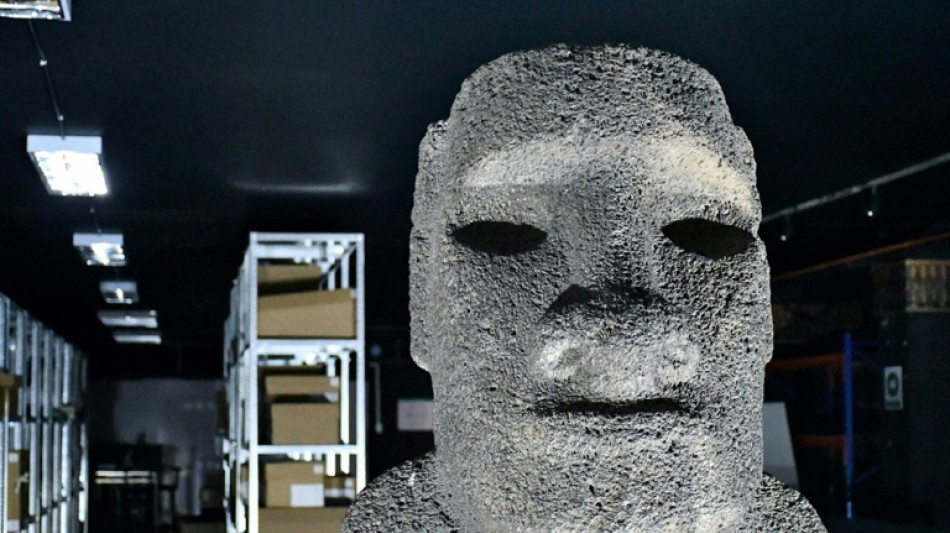
Chile museum to return Easter Island 'head' / Photo: ©

 ALIX LASERS shareholders remove Michael Sobitsch as managing director in view of the circumstances
 Progressive Vision Wins Irish Healthcare Awards 2026 Innovation Prize for Office-Based Cataract Surgery

 Eight-Year-Old Georgia Wins Penrith Valley Public Speaking Competition
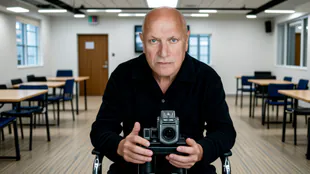 Steven Berkoff on Memory and His New Autobiography 'Shouting At Night'

 Jimmy Carr Confirms 25-Year Estrangement From Father Amid Podcast Reflections

 Arizona Superintendent Tom Horne to Leave Office, Plans Law Practice and Charter School

Chile's National Museum of Natural History said Monday it will return to Easter Island an enormous stone statue taken from the Rapa Nui people and brought to the mainland 150 years ago.
The monolith is one of hundreds, called Moai, carved by the Rapa Nui in honor of their ancestors and sometimes referred to as the Easter Island heads.
The statues are today the island's greatest tourist attraction, sculpted from basalt more than 1,000 years ago.
The one being returned, dubbed Moai Tau, is a 715-kilogram (1,500-pound) giant brought by the Chilean navy some 3,700 kilometers (2,300 miles) across the Pacific in 1870.
Eight years later, it was moved to the natural history museum to be displayed.
The Rapa Nui, for whom the Moai represent the spirits of their ancestors, have been asking for the statue's return for years -- as well as other cultural treasures taken from their island.
"For the Rapa Nui, their ancestors, funerary objects and ceremonial materials may be as alive as members of their communities themselves," said a museum statement.
The return of the monolith "is profoundly significant as a gesture towards our indigenous peoples," said museum curator Cristian Becker.
With delays due to the coronavirus epidemic, the statue will finally depart from the port of Valparaiso next Monday on a trip of about five days to Easter Island, said the museum, "after a complex technical and diagnostic process" to guarantee its structural integrity.
A traditional ceremony was held at the museum Monday to send the statue safely on its way.
"It is essential that the Moai return to my homeland. For them (the community) and for me, this day is very much awaited," said Veronica Tuqui, a Rapa Nui representative.
Back on Easter Island, the Moai will be exhibited at the Father Sebastian Englert Anthropological Museum.
The Rapa Nui community has also asked the British Museum in London to return another Moai, dubbed Hoa Hakananai'a, that was taken in 1868 from Orongo, a ceremonial village on Easter Island.
The Rapa Nui in 2017 gained self-administration over their ancestral lands on Easter Island, a special territory of Chile.
Y.Bouchard--BTB

