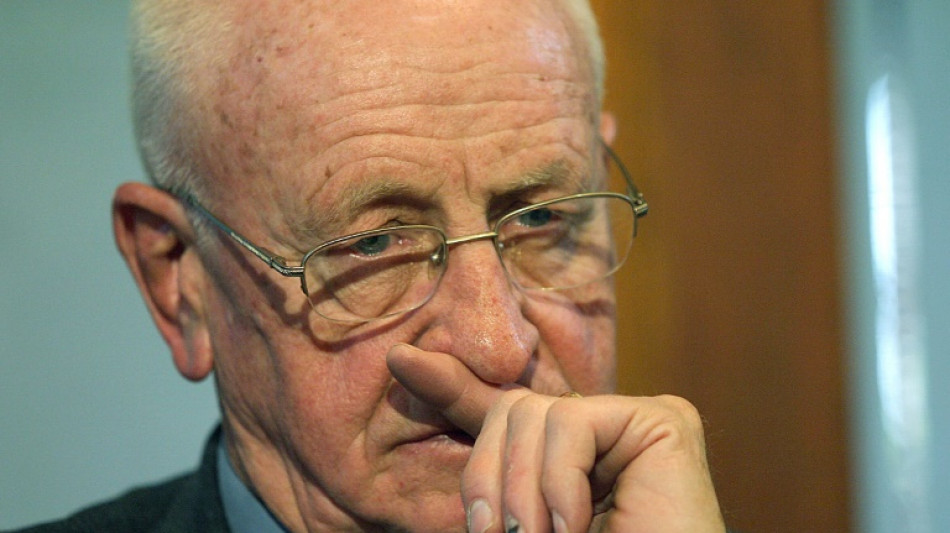
Prosecuted S.African ex-apartheid minister dies: statement / Photo: © AFP

 Egypt Revokes Citizenship of Brothers Anas and Tarek Habib Over Unapproved Foreign Nationality

 2027 Rivian R2 Performance vs. 2026 Jeep Recon Moab: EV Comparison Test
 Henan Grave Carved with Herbal Prescriptions Draws Hundreds of Visitors Daily

 NCLT Chennai Orders Insolvency Proceedings Against Orchid Pharma Founder K Raghavendra Rao
Adriaan Vlok, a feared minister under South Africa's apartheid system and one of its few high-ranking officials to be prosecuted, died Sunday aged 85 in a hospital near Pretoria, his family said.
The former law and order minister, who oversaw a brutal police crackdown on opponents of white rule, "passed away early this morning in the Unitas Hospital in Centurion, after a short illness," a family spokesman said in a statement.
In the late 1980s, Vlok oversaw bomb attacks on churches and trade unions seen as hostile to white-rule.
"I believed that apartheid was right," he told AFP in 2015. "It was our job to make people fear us."
In his old age he said he had changed his mindset, and sought redemption by handing out food to the poor in a township -- settlements outside cities designed to segregate non-whites.
In 2007, Adriaan Vlok was given a 10-year suspended sentence for attempting to murder a prominent opposition figure.
He had sought to kill Reverend Frank Chikane -- then head of a leading anti-apartheid organisation -- some 18 years earlier by rubbing poison on clothes in the priest's luggage at Johannesburg airport.
"I feel ashamed of many things I have done," he said at his sentencing, admitting that his commitment to the racist regime was "a mistake."
The former minister has publicly apologised to his victims, even symbolically washing Chikane's feet.
His detractors insisted it was a crude stunt to avoid revealing the extent of the abuses committed by the police.
To shed light on the atrocities committed by the regime, the government of Nelson Mandela set up a Truth and Reconciliation Commission.
It guaranteed amnesty for those responsible for political violence in exchange for full confessions.
But few took part in the exercise.
Few cases of apartheid-era abuses have resulted in a trial and many critics say it is an "unfinished mission" to heal the wounds of the past.
D.Schneider--BTB