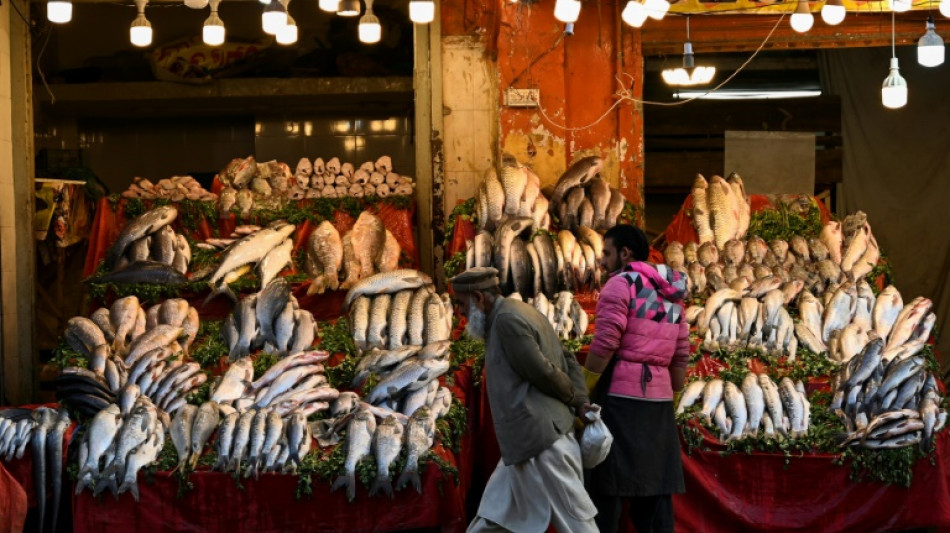
Pakistan imports threatened as forex reserves hit eight-year low / Photo: © AFP

 Egypt Revokes Citizenship of Brothers Anas and Tarek Habib Over Unapproved Foreign Nationality

 2027 Rivian R2 Performance vs. 2026 Jeep Recon Moab: EV Comparison Test

 Henan Grave Carved with Herbal Prescriptions Draws Hundreds of Visitors Daily

 NCLT Chennai Orders Insolvency Proceedings Against Orchid Pharma Founder K Raghavendra Rao
Pakistan's central bank forex reserves have plunged to an eight-year low of $5.6 billion, posing a serious challenge for the country in financing imports.
Coupled with another $5.8 billion held by commercial banks, the nation has $11.4 billion in reserves -- enough to pay for just three weeks of imports, traders and economists say.
"This is a very grave situation. If things get worse, Pakistan will need to have its loans restructured," said Mohammad Sohail, the head of economic watchdog Topline Securities in Karachi, alluding to a possible default.
Pakistan's economy has crumbled alongside a simmering political crisis, with the rupee plummeting and inflation at decades-high levels, but devastating floods and a global energy crisis have piled on further pressure.
The latest data from the central bank released overnight -- for the week ending December 30 -- show the country has half the foreign exchange reserves it held a year ago.
Servicing foreign debt and paying for crucial commodities such as medicine, food and energy are among the chief concerns.
Thousands of shipping containers are held up at a Karachi port because banks have been unable to guarantee foreign exchange payments.
Cargo includes perishable foodstuffs and medical equipment worth tens of millions of dollars.
"A major hospital in Karachi could not carry out eye surgeries for a month because of a lack of equipment," said Masood Ahmed, chairman of the Healthcare Devices Association of Pakistan.
Successive governments have failed to shore up multilateral or bilateral aid to meet foreign payments, although a $6 billion International Monetary Fund deal was restarted after Pakistan finally met conditions such as ending subsidies on fuel.
But Islamabad has so far only received half the funds -- the last payment in August -- with a further review of the package ongoing.
"All hopes are pinned on the release of the remaining amount," Sohail said.
Pakistan often looks for financial rescue from allies including China and Saudi Arabia, but analysts say the two countries are holding off until Pakistan gets the IMF green light.
Pakistan's Prime Minister Shehbaz Sharif spoke with both his Chinese counterpart and the IMF managing director on Thursday.
Shehbaz said Friday the Chinese premier informed him that Beijing had told the IMF that China stands with Islamabad in this difficult situation.
On Friday the leader of Pakistan's powerful military was in the Saudi capital where he was reportedly pushing for financial relief.
J.Fankhauser--BTB