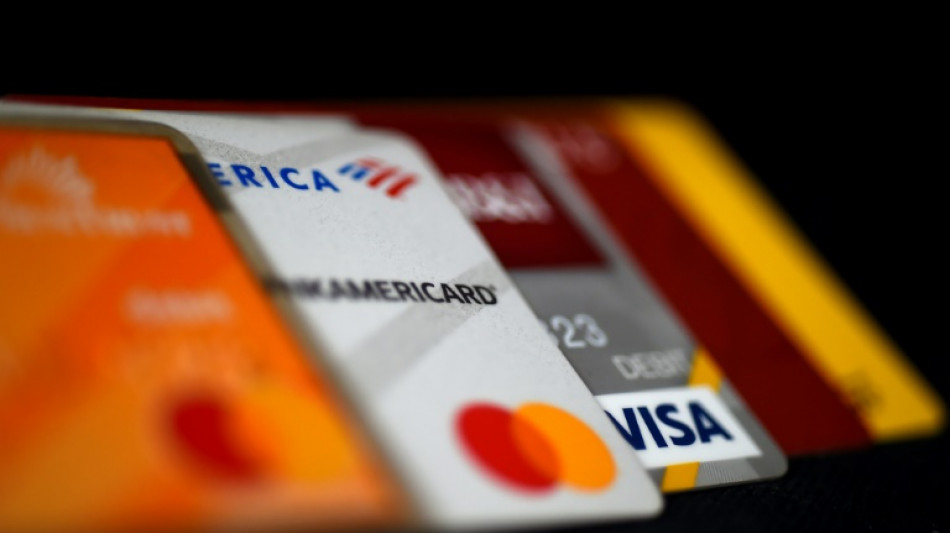
Italy partly bows to EU over card payments / Photo: © AFP

 BingX: Major Announcement of Far-Reaching Significance
 James Blunt Scores First Number One Album in 19 Years; Wife Sofia Wellesley Celebrates
 UCLA Stays Unbeaten With Ty Dieffenbach's Heroic Return Against Illinois

 Malta Court Rejects Libel Claims by Developer Kurt Buhagiar Against MEP Peter Agius

Italy's new hard-right government has abandoned plans to allow merchants to refuse card payments under 60 euros ($64), following pressure from the European Union.
Economy Minister Giancarlo Giorgetti confirmed the U-turn as he set out amendments to the 2023 budget late on Sunday.
The European Commission last week approved the general direction of far-right Prime Minister Giorgia Meloni's first budget, but warned moves to boost the use of cash risked efforts to fight tax evasion.
"We must find solutions that are compatible with the recommendations and reference standards, also at the European level," Giorgetti told a parliamentary commission.
The government had proposed merchants be allowed to refuse card payments for transactions worth less than 60 euros without incurring penalties, alongside measures to raise the maximum for cash payments in shops from 2,000 to 5,000 euros, which also drew criticism from Brussels.
The plan to raise the ceiling on cash payments will go ahead.
The European Commission had previously recommended that Italy fight tax evasion by strengthening e-payments and limiting the thresholds for cash payments.
The application of sanctions on merchants who refused card payments was also one of the goals agreed under an EU post-pandemic recovery plan, from which Italy stands to receive almost 200 billion euros in grants and loans by 2026.
The Bank of Italy has also criticised cash payments as aiding tax evasion, which costs Italy about 100 billion euros per year.
Another measure criticised by Brussels, a tax amnesty on debts of up to 1,000 euros from the period 2000 to 2015, has been postponed for three months, under the latest budget draft.
B.Shevchenko--BTB