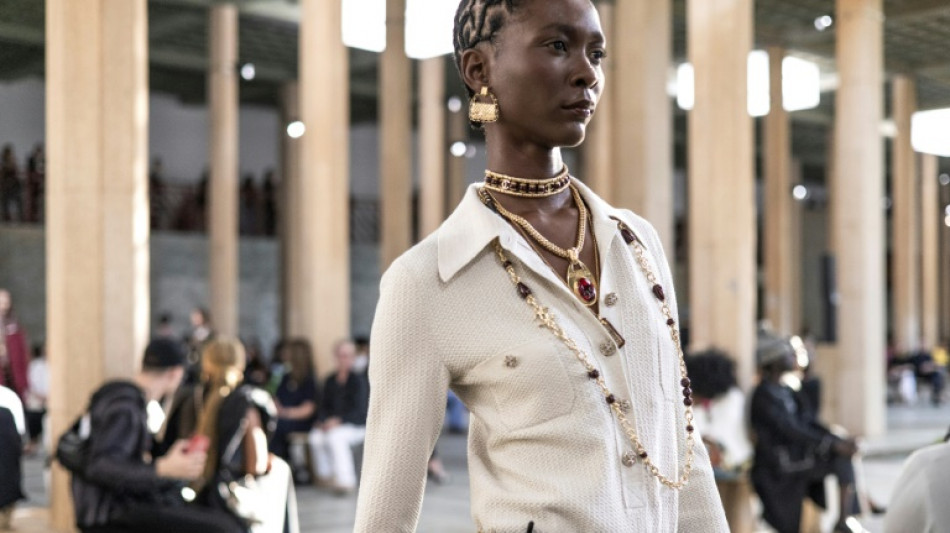
Glitz and the 70s as travelling fashion show arrives in Africa / Photo: © AFP

 South Africa's Universal Health Coverage Depends on Tackling Poverty and Inequality

 Chelsea Transfer News: Real Betis Star Jose Antonio Morante Rejects Move to Stamford Bridge

 TikTok Security Chief Advises SMBs on Free Cybersecurity Protections

 Egypt Revokes Citizenship of Brothers Anas and Tarek Habib Over Unapproved Foreign Nationality
 2027 Rivian R2 Performance vs. 2026 Jeep Recon Moab: EV Comparison Test
Glitz and 1970s cuts were centre-stage this week when Chanel brought a special show to Senegal that places the spotlight on the work of its craftspeople.
It's the first time the luxury French fashion house has staged such an event in Africa.
In the grand halls of Dakar's former law courts, the models showcased pieces in embroidery, lace, sequins and gold -- the work of Chanel's behind-the-scenes artisans.
Creative director Virginie Viard put the accent on the 1970s, with long, slim coats, flared trousers and platform shoes.
Invited guests were US singer Pharrell Williams, Senegalese rapper Nix, Burundian singer Khadja Nin and British supermodel Naomi Campbell.
Chanel has presented its "Metiers d'art" collection outside the official fashion show calendar since 2002, displaying the skill of artisan workers from embroiderers to glove makers and jewellers.
The event has travelled to New York, Salzburg and Shanghai, but never before to the African continent.
The project, which unfolded on Tuesday, was in preparation for three years but was delayed by the Covid pandemic.
Bruno Pavlovsky, president of Chanel's fashion activities, said the choice of Dakar was the result of chance encounters and the Senegalese capital's growing cultural influence rather than commercial strategy.
Asked if Chanel was hoping to expand in Africa, he said the company was present in Dakar through distributors selling perfumes, beauty products and glasses, and had a "certain number of loyal customers" in Senegal.
"In the long term, everything is possible, but it will require seeing that the conditions are there" to become established in a new market, he said.
M.Furrer--BTB

