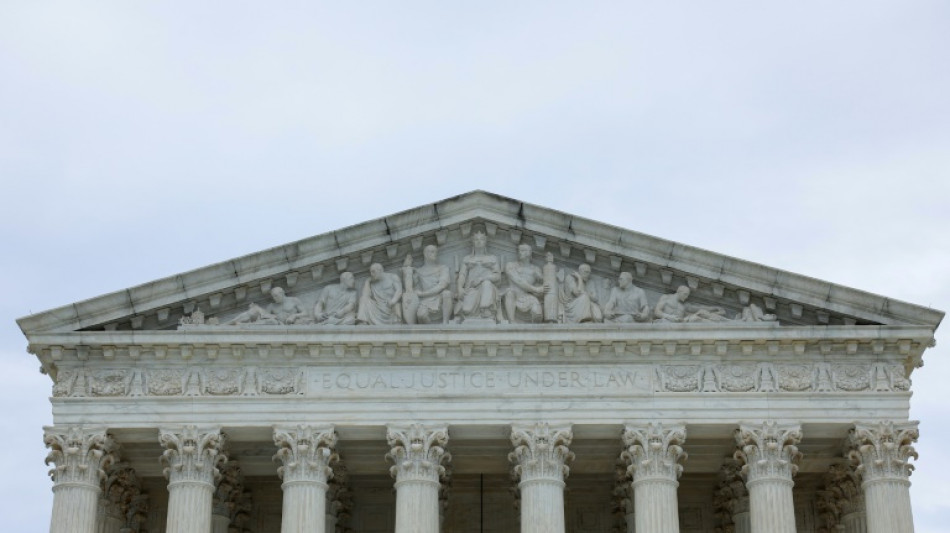
US Supreme Court to hear cases challenging tech firm immunity / Photo: © GETTY IMAGES/AFP

 South African voters report smoother local election but declining IEC trust

 Dolly Parton museum and Nashville hotel open after singer’s death

 George and Amal Clooney attend New York political-comedy reading

 British buyers pay substantial premiums for period-home appearance

 Thomas Markle released to house arrest after child-abuse-image charge

 Dawn of War 4 developers chose Adeptus Mechanicus for tactical variety

 Italy face unbeaten South Africa in Turin Nations Championship match

 ChatGPT interactive interface feature tested across six custom tools

 Freshways milk-price cut deepens pressure on UK dairy farms

 Labour and National remain virtually tied as New Zealand vote count advances

 The Good Daughter adapts Karin Slaughter thriller with Rose Byrne and Meghann Fahy

 Heavy-lift drone evacuates wounded Ukrainian soldier from frontline kill zone

 Morrison says West Brom recovered after pressure from successive derby losses

 Britain considers 2027 state visit for Ukraine’s Zelensky

 Arizona Democrats Secure Historic Trifecta with New Legislative Leadership

 Carney Welcomes U.S. Trade Reversal After Democratic Midterm Victory

 Armenian FM Discusses EU Accountability for Palestinian Rights in Madrid

 Trump and Vance Pursue Secret Diplomacy with Iran Amid Military Pressure

 Classic Car Values Surge: De Tomaso Vallelunga Leads 190% Gain

 Microsoft Ends Oracle AI Computing Rental Deal Amid Cloud Strategy Shift
The US Supreme Court, in a decision with potentially far-reaching ramifications, agreed on Monday to hear two cases challenging the legal immunity of internet companies from liability for content posted by their users.
One of the cases accepted by the court was filed by the family of Nohemi Gonzalez, a 23-year-old American who was one of the 130 people killed in the November 2015 Islamic State attacks in Paris.
The complaint alleges that Google violated the US Anti-Terrorism Act by recommending IS videos that incited violence on Google-owned YouTube.
"Google's services have played a uniquely essential role in the development of IS's image, its success in recruiting members from around the world, and its ability to carry out attacks," according to the complaint.
Under Section 230 of the 1996 Communications Decency Act, social media companies such as Google, Facebook and Twitter are not considered to be publishers and are not legally liable for content posted by their users.
A lower court ruled in the Gonzalez case that Google enjoyed legal protection under Section 230, which its backers claim is essential to protecting freedom of expression on the internet.
Section 230 has come under attack, however, from both Democratic and Republican lawmakers, with the left claiming tech companies are promoting far-right hate speech and the right alleging it allows the firms censor conservative voices.
Among those who have been critical of Section 230 is former Republican president Donald Trump, who was banned from both Twitter and Facebook after the January 6, 2021 attack on the Capitol by his supporters.
The other related case accepted by the Supreme Court involves a lawsuit accusing Twitter of abetting terrorism in which a lower court declined to rule whether the messaging service enjoys a legal shield under Section 230.
C.Meier--BTB