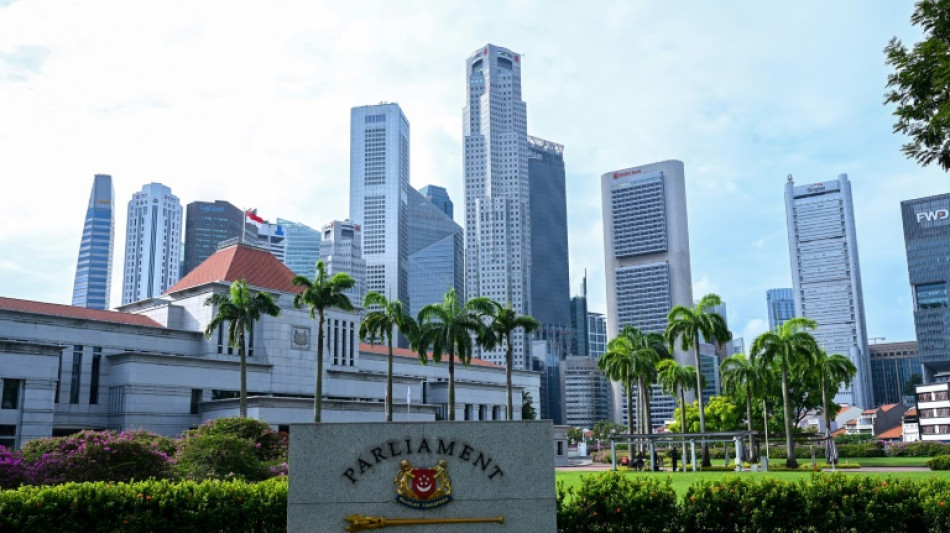
Singapore proposes new law to tackle harmful online content
/ Photo: © AFP/File

 Tunisia says 2026 summer hottest on record

 England's Rashid out of Sri Lanka ODIs with hand injury

 Houthis accuse Saudi Arabia of deadly strikes as thousands flee

 Stocks climb as oil slides, AI buzz returns

 India cricketers win in style as Afghan savours 'special' Games silver

 La Liga president hits out at Real Madrid refereeing 'conspiracy' claims

 MEXC Launches “Real Stocks, Real Friends” with Rewards for Bringing Friends to Wall Street

 Mbappe continues media push for Ballon d'Or recognition

 Stocks rise on AI buzz, oil prices cool

 India narrowly survive huge scare against minnows Japan

 Missing F-35 fighter parts 'not sensitive', says Australia minister

 Cambodia showcases scams crackdown with global conference

 Afghan cyclist who disguised herself as man wins Asian Games silver

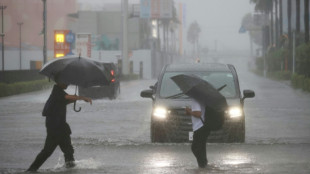
 Typhoon Dujuan leaves four dead in Japan, 45,000 houses without power

 G7 leaders condemn Houthi strikes on Saudi Arabia

 Google data centre sparks protests in Austria

 Shin Ohashi: Junk food-loving teen and Japan's next big swimming hope

 Stocks rise on AI buzz, drop in oil prices

 China's robot dancers limber up for America's Got Talent final

 Despite military might, Saudi struggles to crush the Houthis
 Trump to tout deals, defend Iran war in UN speech

 Sri Lanka to issue verdict in landmark Easter attack trial

 Macron says talks with Trump on Red Sea, Ukraine 'constructive'

 Green policies just good politics, says UK minister

 Bardot auction in Paris fetches nearly one million euros
Social media sites could be blocked or fined in Singapore if they fail to stop users in the tightly-controlled country from accessing "harmful" content under a proposed law introduced in parliament on Monday.
Under the bill, regulators can order social media platforms to block "egregious content" including posts advocating violence and terrorism or depictions of child sexual exploitation.
Content that poses a public health risk or that is likely to cause racial and religious disharmony in Singapore is also included, the Ministry of Communications and Information said in a statement on Monday.
"While some online services have made efforts to address harmful content, the prevalence of harmful online content remains a concern, given the high level of digital penetration and pervasive usage of online services among Singapore users, including children", the ministry said.
Regulators can also order platforms to block a specific account from being accessed by users in Singapore, but the orders will not apply to private communications.
Online communication services "with significant reach or impact in Singapore" may also be required to introduce measures to prevent Singapore users, particularly children, from accessing harmful content, the ministry said, without naming the platforms.
Parliament will debate the bill in November. If it is passed, it would give authorities another tool to control online content.
Singapore last year passed a contentious law aimed at preventing foreign interference in domestic politics.
The law allows authorities to compel internet service providers and social media platforms to provide user information, block content and remove applications used to spread content they deem hostile.
Three years ago, the city-state passed a law combating "fake news", which gives government ministers powers to order social media sites to put warnings next to posts authorities deem to be false, and in extreme cases get them taken down.
O.Krause--BTB