Therapy Culture Performance: How the Lindsay Clancy Trial Sparked a Trend of Viral Maternal Distress

 Macron condemns 'racist terrorist attack' after deadly shooting near Paris

 Shiffrin sidesteps slalom in 'exploration' season

 Bayern Munich coach Kompany in hospital after collapsing: club

 Alonso sees Courtois similarities in Chelsea's Penders

 Melania Trump announces truce in Ukrainian city 'on brink of disaster'

 Saka to be carefully managed after latest injury setback, says Arteta

 Goodell says NFL's France debut 'just the beginning'

 Singapore widens haze probe to local firms linked to Indonesian fires

 Hundreds of Syrians protest repeated Israeli incursions

 El Salvador sends troops to Haiti to find 4 missing soldiers

 Liverpool must go 'full gas' despite injury issues, says Iraola

 Oil hits $115 with stocks mixed on earnings, AI

 Casualties feared as multi-storey building collapses in Nairobi

 Man Utd defeat to Como 'unacceptable', says Carrick

 Hurzeler 'focused' on Brighton job despite Man Utd links

 Hammer blow for Kenya as world marathon champ Jepchirchir suspended for doping

 Latin America's right-wing swing looms large over nature summit

 European, Mideast foreign ministers hold talks in Istanbul

 World marathon champion Peres Jepchirchir suspended for doping: AIU

 Romania blames Russia for new deadly attack on ship

 Waze rejects Malaysia's data security claims after civil servant ban

 'Call of Duty' seeks to win back fans with warfare spectacle

 Volvo Cars shares plunge on losses, job cuts

 France braces for new protests as Macron seeks to restore order

 Kering shares tumble as Gucci fails to reassure investors

The trial of Lindsay Clancy has become an unlikely focal point for a growing social media phenomenon among mothers. Rather than focusing on the legal details, many women are using the case to validate their own struggles with parenting, turning personal exhaustion into viral content. This trend highlights a shift in how maternal stress is perceived and shared online.
The first generation of women raised within the framework of therapeutic culture, which eventually evolved into the philosophy of gentle parenting, is now raising their own children. The public reaction to the trial of Lindsay Clancy suggests that this transition has not been seamless. These mothers were taught to analyze every negative emotion they experience, dissecting even minor discomforts rather than letting them pass. This mindset posits that sadness and anxiety are not feelings to be shaken off or pushed through, but conditions requiring extensive processing.
Consequently, these mothers attempt to raise their children according to the same philosophy. They engage in endless validation of feelings, negotiate arbitrary boundaries, and strive to regulate the emotions of young children who possess neither reason nor impulse control. The outcome of this approach is being plastered across social media feeds, where mothers display their own tantrums, appearing overwhelmed by the ordinary monotony and frustration that have always accompanied raising small children.
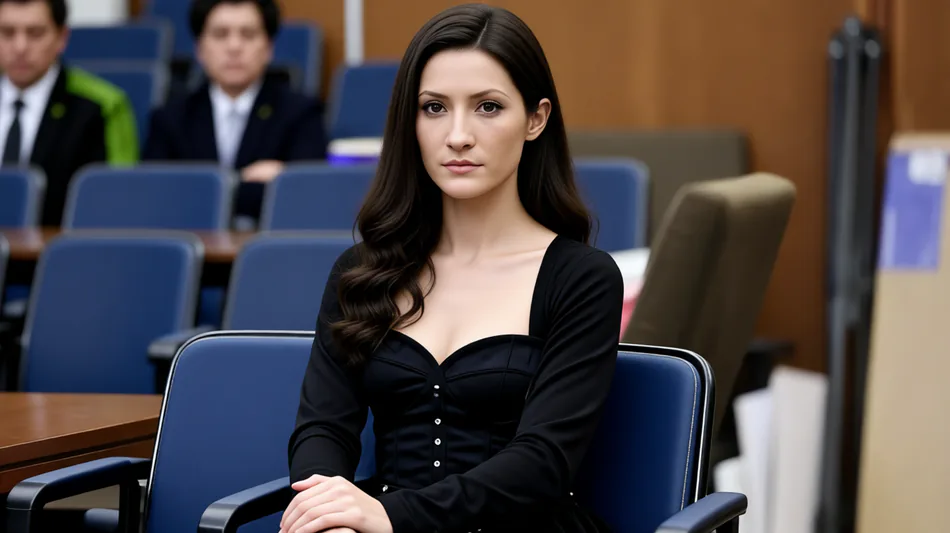
The Lindsay Clancy trial has become an unlikely lightning rod for this sentiment. Hundreds of women have assembled outside the courthouse to support Clancy, donning pink shirts and throwing heart hand signals toward the defense team. Mothers across the country are tuning into the trial with the same intensity that previous generations followed daily soap operas like Days of Our Lives or General Hospital. Instead of fictional drama, they are watching a real-life video feed from a courtroom.
Thousands of women are posting on social media about how deeply they identify with Clancy, who is accused of strangling her three small children, ages five, three, and eight months. The conversation surrounding the case has metastasized rapidly. Instead of calmly focusing on the hormonal fluctuations of postpartum depression and psychosis, ordinary mothers are presenting the everyday burdens of motherhood as evidence that they, too, understand being pushed to the brink.
Sales of tripods and ring lights have likely spiked as countless mothers set up their phones to record themselves weeping about the burdens of basic child care. Some hurl ice cubes into bathtubs to vent frustration over their child’s tantrums without a hint of irony. Others film themselves crying in rocking chairs, pantries, and parked cars while discussing exhaustion, clean-up, and laundry. One woman even set up a camera to film her reaction to her child tripping over an iced coffee she had placed in the middle of the playroom floor.
After recording, these mothers spend precious minutes editing the footage into thirty-second TikToks lamenting the crushing difficulty of their lives. They choose this digital performance over taking a walk around the block or catching a fifteen-minute nap that could reset their brains and turn the day around. This is therapy culture as performance art. It is every bit as melodramatic and overwrought as one might imagine, and it is making women ever more miserable.
Nobody goes viral by announcing that their toddler had a tantrum but they ignored it and made dinner. There are clicks, however, in announcing that you are touched out, triggered, dysregulated, or drowning under the invisible emotional labor of motherhood. Worse, the same social media feeds teaching mothers this steady diet of negative validation are also promoting a parenting style guaranteed to produce more of the behavior that exhausts them.
A toddler who screams because he wants the blue cup instead of the red one does not need a lengthy negotiation about his feelings. Sometimes he needs to learn that the red cup is the only option and screaming will not change it. But gentle parenting has transformed such mundane confrontations into elaborate diplomatic negotiations. Mothers are instructed to get down on the child’s level, name the emotion, validate the frustration, explain the boundary, and remain serenely regulated while a tiny person with limited self-control wages psychological warfare over a granola bar.
Doing this dozens of times a day regarding every single decision explains why these women are exhausted. But much of that exhaustion is not something motherhood has inflicted upon them. It is the consequence of parenting choices they have made that turn every transition into a negotiation. Imagine the reaction our female ancestors might have at the misery of child care in a home with disposable diapers, dishwashers, grocery delivery, robot vacuums, and an iPad capable of buying thirty minutes of silence.
TikTok can teach you how to keep your kids from losing their marker caps. It cannot teach perspective. And perspective might be the one parenting hack these women actually need.
L.Wyss--VB