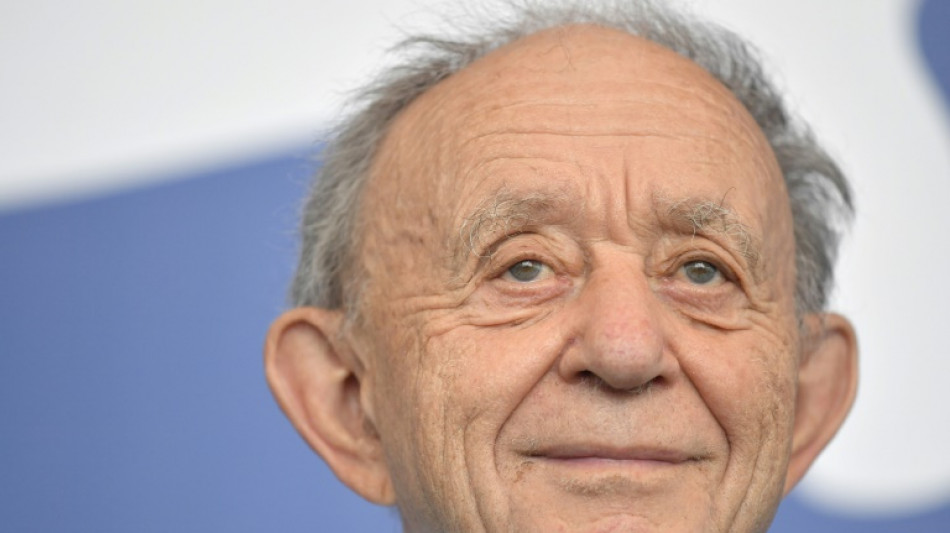
Frederick Wiseman, documentarian of America's institutions, dead at 96 / Photo: © AFP/File

 Typhoon Dujuan leaves four dead in Japan, 45,000 houses without power

 G7 leaders condemn Houthi strikes on Saudi Arabia
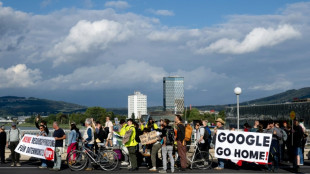 Google data centre sparks protests in Austria
 Shin Ohashi: Junk food-loving teen and Japan's next big swimming hope
 Stocks rise on AI buzz, drop in oil prices

 China's robot dancers limber up for America's Got Talent final
 Despite military might, Saudi struggles to crush the Houthis
 Trump to tout deals, defend Iran war in UN speech
 Sri Lanka to issue verdict in landmark Easter attack trial
 Macron says talks with Trump on Red Sea, Ukraine 'constructive'

 Green policies just good politics, says UK minister
 Bardot auction in Paris fetches nearly one million euros
 No timeline on Daniels injury return, says Commanders coach

 British Columbia sues OpenAI in US court over Canada school shooting
 French star Batum retires after 18-year NBA career
 Zidane leads first France training session
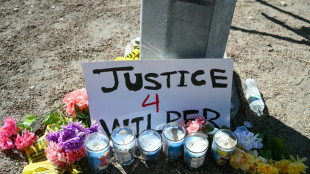 Man shot by ICE agent in Texas detained with bullet inside him: lawyer
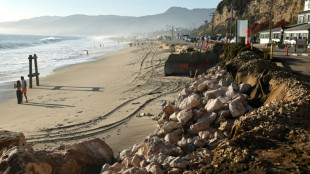 California declares state of emergency ahead of El Nino
 South Africa arrests three more suspects, after nine women murdered
 Carse needs time away from England, says captain Brook
 NOWPayments Releases Cross-Chain Payout Data Revealing Key Performance Benchmarks Across TRON, BNB Chain, and Solana
 British Museum bans photos of Bayeux Tapestry as crowds linger
 COP31 host says AI climate footprint to be a summit priority
 Berlin's far-left vote winners reject anti-semitism charges
 Mancini eager for 'new adventure' on Italy return
US documentary filmmaker Frederick Wiseman died Monday, a representative confirmed to AFP. He was 96 years old.
Wiseman died peacefully at his home in Cambridge, Massachusetts, according to a statement from his production company, Zipporah Films.
For more than a half century, Oscar-winner Wiseman patiently observed some of America's most familiar institutions through his dozens of documentaries that shine a rare light on people's daily lives.
Viewed through his unobtrusive lens, the drudgery of a welfare office or the cleaning routines at a city zoo became as gripping as an action movie, all of which were presented without voiceovers or talking heads -- taboos in Wiseman's world.
A pioneer of independent US cinema, Wiseman shot with a three-person team while editing and producing himself, creating films with runtimes ranging from an hour to six, all to present a unique and engrossing American epic for the screen.
"What if the Great American novelist doesn't write novels?" the New York Times titled its 2020 profile, describing Wiseman's body of work as "the nearest contemporary equivalent" to the classic novel.
- Harrowing -
Wiseman caused instant controversy with his first film, "Titicut Follies," which remains one of his most famous documentaries, shot in 1967 and capturing the bleak reality of an asylum for the mentally ill, Bridgewater.
Harrowing long takes showed the deplorable treatment of patients, including one excruciating scene of a man being force-fed by a doctor with a cigarette hanging from his mouth, directly above the funnel.
Bridgewater filed a complaint in the hope of banning the film's release on privacy infringement and the case dragged for years, but Wiseman never gave up the fight, and continued working -- revealing a lifelong single-minded focus.
He also had a deep understanding of the law, having followed in his father's footsteps to study and then practice as a lawyer before he got bored and picked up a camera.
- Never-ending list -
Over the following decades Wiseman entered high schools, hospitals, army training camps, meat factories and public libraries to explore America's institutions, incidentally producing rich studies of human behavior.
He eschewed any stylistic qualities drawing attention to the process of filmmaking, deeming "too distracting" the close-ups of mouths talking and body parts that featured in his early films.
A passionate workhorse, he averaged around one documentary every few years for a long time, and kept the industry pressure off by maintaining low production costs and having his own production company.
Even in his ninth decade, in an interview with AFP in 2021, he said the list of institutions he wanted to make films about was "never-ending," and his late works showed no sign of diminishing ambition.
For his 2020 documentary "City Hall," he returned to his roots in Boston, where he was born in 1930, to explore the mayor's office.
Two years later he made a rare foray into fiction with "A Couple," inspired by the relationship and correspondence between Leo Tolstoy and his wife, Sophia.
France was a favoured subject too, where he turned his lens on some of the country's most famous institutions, from the Paris Opera Ballet to the legendary cabaret club Crazy Horse, as well as the Comedie Francaise, the guardian of the flame of French classical theatre.
- Waiting game -
Wiseman typically shot around 140 to 150 hours of footage for each film and then sat alone in his editing studio for months to craft his feature.
Generally, he did not prepare before starting a project, wanting to go in without preconceived ideas and using the shoot as his research.
This approach got him such classic scenes as the ending to one of his most celebrated documentaries, "Welfare" (1975), set in a New York welfare office.
A disheveled man sick of endless waiting launched into an eloquent tirade ending with Samuel Beckett -- "You know what happened in the story of Godot? He never came."
But for Wiseman, on the back of all those hours of shooting, such extraordinary scenes always came.
He was married for more 65 years to the late Zipporah Batshaw, a lawyer and professor who also inspired the name of his production company. They had two sons.
R.Braegger--VB