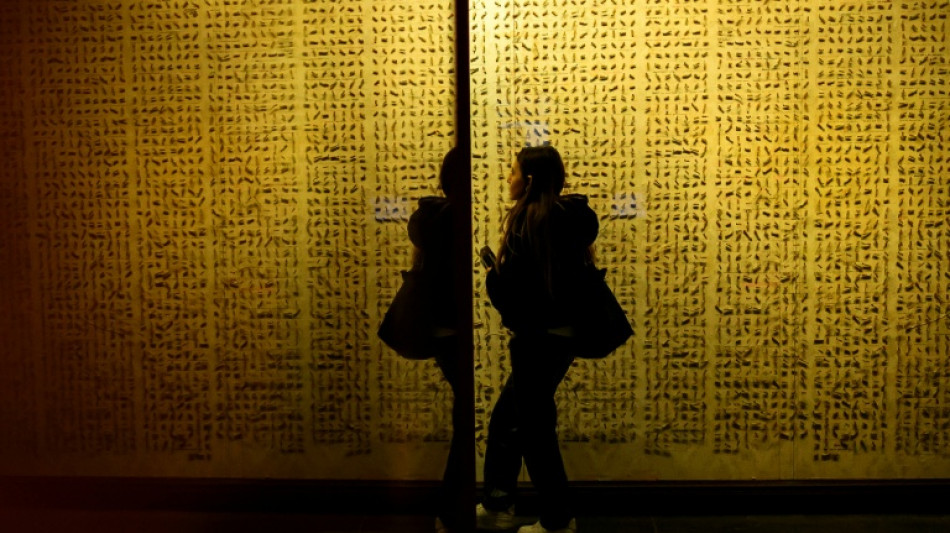
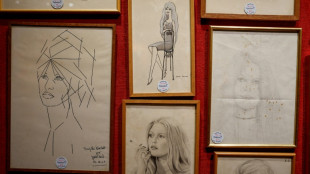
Crowds flock to Istanbul's Museum of Innocence before TV adaptation / Photo: © AFP

 Marchand 'stressed' about racing Japanese rivals at LA Olympics

 Mobile boat clinics bring healthcare to India's remote islands

 Former India paceman Zaheer Khan named Chennai coach in IPL

 Six-year-old Chinese girl sets world record with Rubik's Cube
 Swimming prodigy Yu, 13, says 'interviews way harder than racing'

 Star coaches make their bows as Nations League returns
 Rams bounce back as Giants reel from Dart injury

 In Bangladesh, Pakistan's Jinnah photo stirs anger

 Two New Zealand naval ships transit Taiwan Strait
 Zidane gets down to work as France start new era

 Inside the Venezuelan prison meant to 'drive you insane'

 UK king braces as memoir by Diana's brother goes on sale
 No green light to lift EU sanctions on Russian oligarchs, talks to resume
 UK agrees support for Saudi in struggle with Houthis: reports

 EU foreign policy chief calls for continued sanctions on Russia
 Flights scrapped, evacuations urged as Typhoon Dujuan wallops Japan

 Fonseca to take break from tennis

 A Cuban zoo, and its animals, in epic battle for survival

 Infantino proposes consulting federations to reform FIFA

 El Nino weather pattern enters record territory: scientist

 OpenAI calls for US to lead global effort on AI standards

 South African ostriches plucked alive for luxury fashion: report
 US networks halt Trump coverage in revolt over White House ban

 Paramount settles with US states to clear Warner Bros. mega-merger

 Climate crisis a job for world leaders, not just activists: UK FM
On a cobbled street in Cukurcuma, a district known for its antiques shops on Istanbul's European side, the story penned by Nobel laureate Orhan Pamuk in his bestselling novel "The Museum of Innocence" has been brought to life.
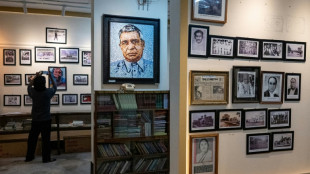
Inside a red-painted house, visitors are confronted by a wall of 4,213 cigarette butts, many of them lipstick-stained, others angrily stubbed out, all obsessively kept by the book's protagonist, Kemal Basmaci.
Just days before Netflix airs a serialised adaptation of the novel, hundreds of curious visitors have come to the museum, squeezing past one another on the narrow wooden stairs up to Basmaci's attic room.
At the entrance, Umit, who runs the museum and did not give his surname, said there had been about 500 visitors per day since Netflix began running trailers for the nine-part series -- which comes out Friday -- compared with 200 on a normal day.
"And that will likely double after it comes out," he predicted.
Set in the 1970s, the series features a young man from a wealthy Istanbul family who is devastated by the end of his relationship with Fusun, a distant cousin from a working-class background, sending him on an obsessive mission to collect anything that is hers.
Hence the wall of cigarette butts mounted on pins, each painstakingly labelled by circumstance, collected over an eight-year period starting from 1976.
There are hundreds more items on display, from bits of jewellery to items of clothing, photos, cinema tickets and bottles of Meltem soda, which was popular in the 1970s -- a huge collection of mundane mementoes passionately collected to fill the void left by her absence.
They are laid out in 83 display cases, the same number of chapters in the book.
Nobel literature prize-winner Pamuk, who opened the museum in 2012, four years after the novel was published, has admitted to being a similarly compulsive collector.
- 'Truth in it' -
The novel emerged as he began writing about the objects he had saved, everything from family keepsakes to trinkets picked up at the bazaars, which gradually brought his characters to life.
The museum showcases objects that make up the story, but the story also developed as he acquired new objects, the museum website says.
And the whole novel opens a unique window onto a decade of Istanbul history.
Songul Tekin, 28, a visitor who loved the book, said she is convinced some of it really happened and came to the museum to "see it in real life".
"It's told in real depth. There has to be some truth in it because otherwise you would never have so many objects and so much detail," she told AFP.
She came with a friend and her copy of the novel -- a gesture which lets visitors enter for free, thanks to a ticket on page 485 of the Turkish version of the book.
Also visiting is Aydin Deniz Yuce, a psychologist in his 30s who is a huge fan of Pamuk's works.
Although "The Museum of Innocence" was not his "favourite", he said he was really keen to see the Netflix series and is convinced the "handsomeness" of the main actor, Selahattin Pasali, will be perfect for creating a credible Kemal.
- Turkish series, global popularity -
With the novel translated into more than 60 languages, the museum has drawn international interest, with visitors from Russia, Hungary, Italy, Japan and China turning up over the space of a few hours, an AFP correspondent said.
Poring over the display cabinets, Zeng Hu and Zeng Lin An, two young sisters from Hubei province in central China, said they were now intrigued to read the book and watch the series, although Netflix is not available in China.
The novel's adaptation for the small screen by the Istanbul-based production company Ay Yapım is a reflection of the rude health of Turkey's film industry.
Hugely popular, Turkish television dramas and series are now available in 170 countries, with global demand for them rising by 184 percent between 2020 and 2023, figures from Parrot Analytics show.
In 2024, Turkey was the world's third-largest exporter of television series, after the United States and the UK.
K.Sutter--VB