
Europe must nurse itself after US aid cuts: WHO director / Photo: © AFP

 South African voters report smoother local election but declining IEC trust

 Dolly Parton museum and Nashville hotel open after singer’s death

 George and Amal Clooney attend New York political-comedy reading

 British buyers pay substantial premiums for period-home appearance

 Thomas Markle released to house arrest after child-abuse-image charge

 Dawn of War 4 developers chose Adeptus Mechanicus for tactical variety

 Italy face unbeaten South Africa in Turin Nations Championship match

 ChatGPT interactive interface feature tested across six custom tools

 Freshways milk-price cut deepens pressure on UK dairy farms

 Labour and National remain virtually tied as New Zealand vote count advances

 The Good Daughter adapts Karin Slaughter thriller with Rose Byrne and Meghann Fahy

 Heavy-lift drone evacuates wounded Ukrainian soldier from frontline kill zone

 Morrison says West Brom recovered after pressure from successive derby losses

 Britain considers 2027 state visit for Ukraine’s Zelensky

 Arizona Democrats Secure Historic Trifecta with New Legislative Leadership

 Carney Welcomes U.S. Trade Reversal After Democratic Midterm Victory

 Armenian FM Discusses EU Accountability for Palestinian Rights in Madrid

 Trump and Vance Pursue Secret Diplomacy with Iran Amid Military Pressure

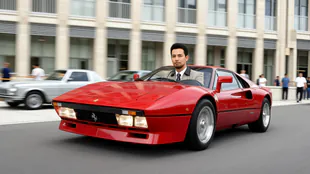 Classic Car Values Surge: De Tomaso Vallelunga Leads 190% Gain

 Microsoft Ends Oracle AI Computing Rental Deal Amid Cloud Strategy Shift
Drastic aid cuts, notably by the United States, have made it vital for Europe to better manage health resources, the director of WHO Europe told AFP.
"We have a huge challenge, because the majority of our programmes were funded by USAID and the US," Hans Kluge of the World Health Organization Europe told AFP in an interview days before a meeting of the 53 countries of the WHO European region.
Since taking office in January, US President Donald Trump has slashed US international aid and effectively dismantled USAID, the world's largest humanitarian aid agency.
Kluge said the WHO was experiencing an "existential" crisis with countries such as Britain, France and Germany, in addition to the United States, contributing significantly less.
Despite a 20-percent budget cut, WHO Europe wants to boost its role within domestic European health administrations.
"The WHO Europe of the future... is healthier, stronger, trusted, evidence-based, and politically neutral," he said.
Kluge's plan is based on restructuring the organisation and prioritising its missions.
- Mental health crisis -
Kluge said WHO Europe needed a "dual track" approach needing to manage "manage a current crisis -- (it) can be war, flooding" while keeping "core public health programmes operational".
"This is the biggest lesson learned from (the) Covid-19" pandemic, he said.
In Ukraine, for example, Europe is focusing its efforts on defence and "not enough on health".
Europe must also tackle its mental health problem, aggravated by war, loneliness, anxiety and the aftermath of the Covid pandemic, he said.
"That's one of the big things, the hottest issues," he said, stressing the need to build up "citizen resilience."
One European in six and one child in five will experience mental health problems at some point in their life, according to the WHO.
Kluge said his organisation also needed to address worrying regional trends including youth addiction, a lack of online protection, the climate crisis and non-infectious diseases.
"We can channel our few resources in those directions," he insisted.
Vaccinations are also crucial, he said, pointing out that in 2023, there were 366,000 children who had never received any kind of vaccine. In 2024, that number had risen to 440,000.
Mainly reasons such as the need to travel for vaccinations, costs and a lack of qualified health personnel led to this, he said, adding that medical misinformation was rampant as well.
Vaccination is "the most cost-effective public health tool which we have. So, we cannot afford to lose it."
Prevention was also key to ensuring Europeans' health, Kluge stressed.
"You put one euro in prevention, you get seven euros out of it," said the 56-year-old doctor.
"It is time that Europe should take care of Europe."
N.Schaad--VB