Ethiopia's weavers struggle to keep garment tradition alive / Photo: © AFP

 Macron urges world to choose UN over 'law of the jungle'

 All-rounder Jacks stars as England beat Sri Lanka in 1st ODI

 Man City peg back Bayern to start Women's Champions League
 Trump beats 'America first' drum at UN as allies tread carefully

 Snedeker backs Spaun for Ryder Cup after Presidents snub

 French prosecutors probe secret filming of women with smart glasses

 Trump renames AI "super intelligence," rejects international oversight

 Trump rejects international regulation of AI

 How is the EU approaching record fuel prices?

 Sri Lanka's Colombage strikes on debut as England dismissed for 265 in first ODI

 Hurricane Polo strengthens to top category 5 off Mexico
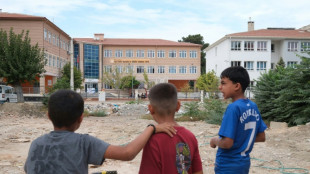 11 hurt as teen opens fire outside school in western Turkey

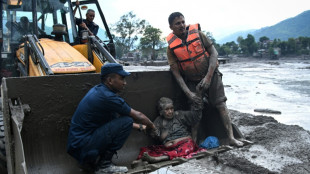 UN chief says 'Big Oil' treats atmosphere as open sewer

 Tunisia says 2026 summer hottest on record

 England's Rashid out of Sri Lanka ODIs with hand injury

 Houthis accuse Saudi Arabia of deadly strikes as thousands flee

 Stocks climb as oil slides, AI buzz returns

 India cricketers win in style as Afghan savours 'special' Games silver

 La Liga president hits out at Real Madrid refereeing 'conspiracy' claims

 MEXC Launches “Real Stocks, Real Friends” with Rewards for Bringing Friends to Wall Street

 Mbappe continues media push for Ballon d'Or recognition

 Stocks rise on AI buzz, oil prices cool

 India narrowly survive huge scare against minnows Japan

 Missing F-35 fighter parts 'not sensitive', says Australia minister
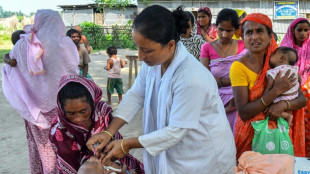
 Cambodia showcases scams crackdown with global conference

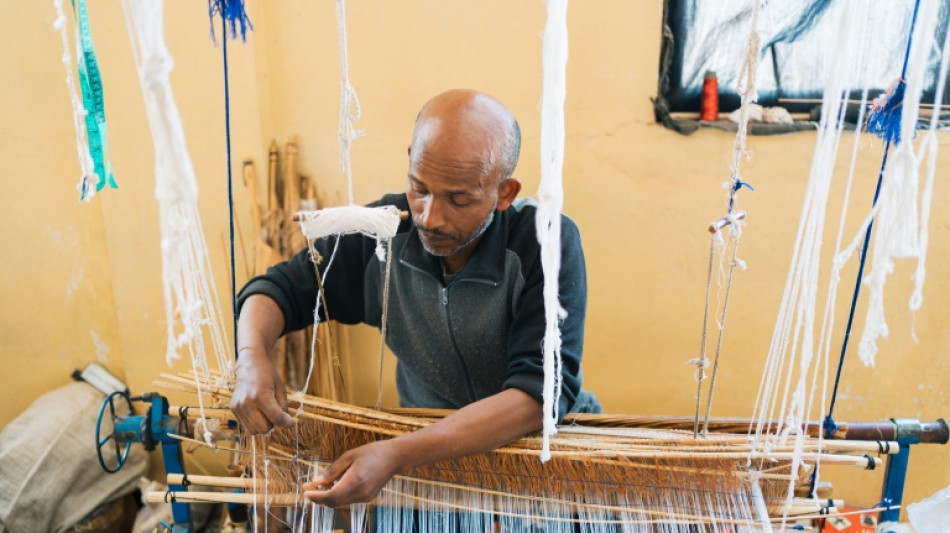
Behind the looms of a workshop in the heart of Addis Ababa, dozens of weavers deftly repeat the same motions to craft traditional dresses -- a centuries-old skill now threatened by Ethiopia's economic hardships.
For generations, the "habesha kemis" -- long white cotton dresses often adorned with colourful embroidery -- have been handwoven. Their elaborate designs serve as attire for festivities and religious ceremonies.
It takes a week to weave the simplest dresses, and twice as long for those adorned with intricate embroidery -- a meticulous, painstaking craft, several artisans say in a workshop where the steady clink of looms fills the air.
"The work is exhausting... we live day by day," said Asefaw Yemu, 45, a weaver with three decades of experience who earns between 10,000 and 15,000 birr ($68–102) a month, before deducting the cost of raw materials.
In the dimly lit room, men hunch over their looms, shuttling cotton threads back and forth as their feet work a complex pedal system that never seems to rest.
Asefaw said he works nine hours a day, six days a week -- but with inflation hovering around 21.5 percent this year, according to the International Monetary Fund, demand has slowed sharply.
- 'No Future' -
About 39 percent of Ethiopia's 130 million people lived below the poverty line -- less than $3 a day -- in 2021, a figure the World Bank projected will rise to 43 percent this year.
At the same workshop, Getu Derza, 48, carefully embroiders colourful silk threads into intricate patterns.
"What we produce with so much effort can now be made instantly by machines in factories... It affects our income," said Derza, who began the craft at the age of 14.
An influx of cheaper machine-made habesha kemis from China years ago undercut Ethiopia's traditional weavers. Government restrictions came too late for many, who had already turned to other jobs.
In this struggling economy, Derza said what was once a skill passed down from generation to generation now "ends with us".
At 23, Abush Dubule, the youngest among the weavers, is already considering a career change
"There's no future," he said. "The economy isn't what it used to be... it's not just Chinese products. People are buying less overall."
- 'Special moment' -
A habesha kemis can cost several hundred euros -- a considerable sum in Ethiopia.
Belhu Belta, 48, runs a small shop selling traditional dresses and scarves.
He said he struggles to attract customers but stays in business, hoping there are still those who value handmade garments.
"If the market continues like this, the craft might disappear," Belhu said.
Adanech Daniel, 50, was shopping for a wedding dress and refused to compromise on quality -- representing the kind of customer who keeps Belta optimistic.
"When you wear these traditional clothes together as a family or couple, it brings vibrance and joy to the occasion," she said.
"It's beautiful, it shines and makes the moment special."
O.Schlaepfer--VB