AI-backed robot painting aims to boost artist income / Photo: © AFP

 Trump renames AI 'super intelligence' as leaders jostle over dangers
 Oil prices retreat as markets welcome US-Iran talks
 US refusing to give Sudan's de facto leader visa for UN: diplomatic sources, UN
 Macron urges world to choose UN over 'law of the jungle'
 All-rounder Jacks stars as England beat Sri Lanka in 1st ODI

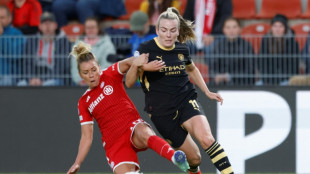
 Man City peg back Bayern to start Women's Champions League

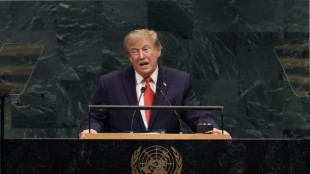 Trump beats 'America first' drum at UN as allies tread carefully

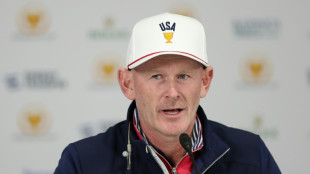 Snedeker backs Spaun for Ryder Cup after Presidents snub
 French prosecutors probe secret filming of women with smart glasses

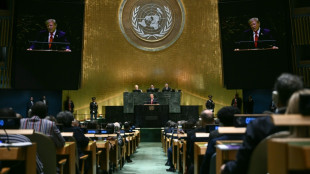 Trump renames AI "super intelligence," rejects international oversight

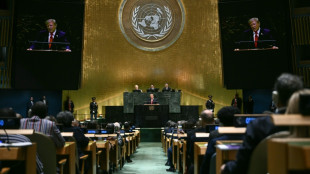 Trump rejects international regulation of AI

 How is the EU approaching record fuel prices?

 Sri Lanka's Colombage strikes on debut as England dismissed for 265 in first ODI
 Hurricane Polo strengthens to top category 5 off Mexico
 11 hurt as teen opens fire outside school in western Turkey

 UN chief says 'Big Oil' treats atmosphere as open sewer
 Tunisia says 2026 summer hottest on record

 England's Rashid out of Sri Lanka ODIs with hand injury

 Houthis accuse Saudi Arabia of deadly strikes as thousands flee

 Stocks climb as oil slides, AI buzz returns
 India cricketers win in style as Afghan savours 'special' Games silver
 La Liga president hits out at Real Madrid refereeing 'conspiracy' claims

 MEXC Launches “Real Stocks, Real Friends” with Rewards for Bringing Friends to Wall Street

 Mbappe continues media push for Ballon d'Or recognition

 Stocks rise on AI buzz, oil prices cool

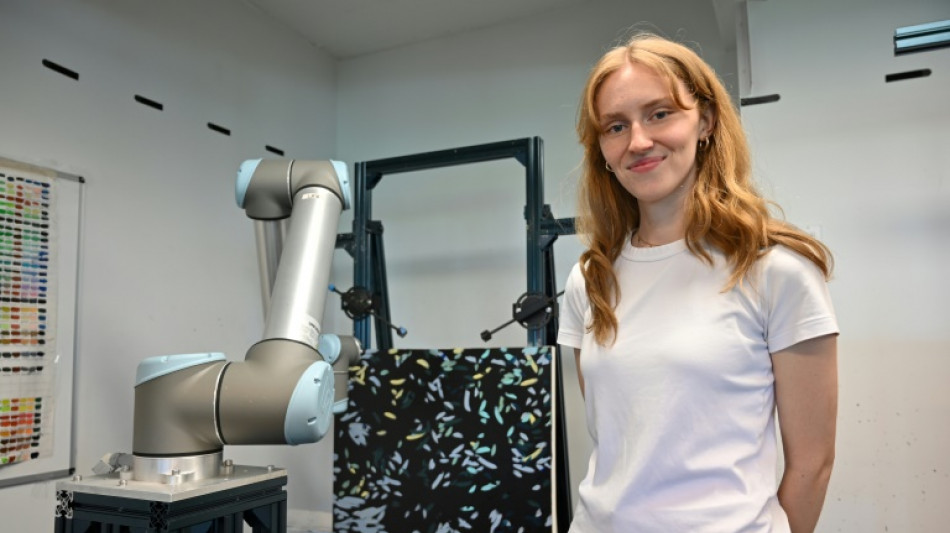
Montreal-based artist Audrey-Eve Goulet was initially uncertain as she watched an AI-powered robotic arm reproduce one of her works, but said the outcome was "really impressive."
"I was surprised, in a good way," she said, as she watched the device grab a brush, dip it into a pot of paint, and replicate her work stroke after meticulous stroke.
Goulet had agreed to work with Acrylic Robotics, a Montreal-based company that says it aims to help artists earn a living by making high-quality replicas of their work, with their consent.
Company founder Chloe Ryan told AFP the idea began after coming to a discouraging realization about her own income.
She said she first starting selling paintings at 14, but grew frustrated at the weeks, or even months, required to make each piece.
"I did the back of the napkin math, and I said, 'Oh my god, I'm making $2 an hour.'"
Ryan studied mechanical robotics at Montreal's McGill University, and began considering how robots could help reproduce her own work, before launching a company to make the technology accessible to artists worldwide.
- 'The last layer' -
Assessing the robot's performance, Goulet said: "It truly looks like one of my works."
"I like that you can see the strokes... You can really see where the brush went and the shape it drew," she said, conceding the robotically producing version had "less story behind it" than her own.
"My final piece might have gone through five lives before getting to this, but the robot only sees the last layer," she said.
Ryan said that by replicating "stroke chronology" her company's reproductions can capture "the aura of a piece...in a way that a photo print simply never could."
To reproduce Goulet's piece, an Acrylic Robotics specialist recreated the work using digital brush strokes and pigments, developing instructions to guide the robot.
Ryan plans to advance the technology, allowing artists to upload images directly.
She wants to create an on-demand market where clients could make special requests, like a portrait of their dog in the style of their favorite artist.
- 'Waitlist' -
Ryan said she understands the artistic community's concerns about generative AI, but stressed her company is grounded in the so-called "Three Cs" demanded by artists: consent, credit and compensation.
"A lot of people, before they understand the why of what we're building, see a robot painting and go, 'Oh my god, this is the worst thing I've ever seen,'" she told AFP.
Acrylic Robotics is focused on boosting artist income, especially for those who don't break into the elite gallery circuit, Ryan said.
When approaching an artist, she sometimes suggests they send a few references pieces -- work that has already been completed.
When she tells them, "I will just deposit money in your bank account at the end of every month.... There's a warmer reception," she said.
The price of reproductions can vary, averaging between a couple hundred to a thousand dollars.
The revenue split with the artist fluctuates.
An emerging artist who simply uploads a picture of a piece with limited value may get five percent of a sale, but that figure could rise to 50 percent for a prominent artist with their own base of interested buyers.
"We have a wait list of about 500 artists," Ryan said.
Michael Kearns, a computer and information science professor at the University of Pennsylvania, questioned whether the technology would ultimately lower the value of the product.
Kearns, part of an Amazon scholarship program that funds academics to work on technological challenges, said he understood the push to "let many more people make a decent living from (art)."
But, he cautioned, "when you make something that was scarce abundant, it'll change people's perceptions about its value."
A.Ruegg--VB