Uruguay's tango therapy a hit with dialysis patients / Photo: © AFP

 Typhoon Dujuan leaves four dead in Japan, 45,000 houses without power

 G7 leaders condemn Houthi strikes on Saudi Arabia
 Google data centre sparks protests in Austria

 Shin Ohashi: Junk food-loving teen and Japan's next big swimming hope
 Stocks rise on AI buzz, drop in oil prices

 China's robot dancers limber up for America's Got Talent final

 Despite military might, Saudi struggles to crush the Houthis
 Trump to tout deals, defend Iran war in UN speech
 Sri Lanka to issue verdict in landmark Easter attack trial

 Macron says talks with Trump on Red Sea, Ukraine 'constructive'

 Green policies just good politics, says UK minister

 Bardot auction in Paris fetches nearly one million euros

 No timeline on Daniels injury return, says Commanders coach

 British Columbia sues OpenAI in US court over Canada school shooting

 French star Batum retires after 18-year NBA career

 Zidane leads first France training session
 Man shot by ICE agent in Texas detained with bullet inside him: lawyer

 California declares state of emergency ahead of El Nino

 South Africa arrests three more suspects, after nine women murdered

 Carse needs time away from England, says captain Brook

 NOWPayments Releases Cross-Chain Payout Data Revealing Key Performance Benchmarks Across TRON, BNB Chain, and Solana

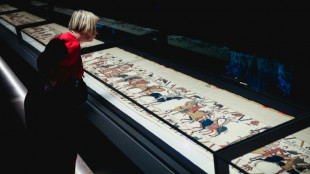 British Museum bans photos of Bayeux Tapestry as crowds linger
 COP31 host says AI climate footprint to be a summit priority

 Berlin's far-left vote winners reject anti-semitism charges

 Mancini eager for 'new adventure' on Italy return

At the age of 85, Uruguayan Olga Diaz's kidneys are failing -- she was beginning to despair at her bleak future, kept alive by 12 hours of dialysis per week.
But at the clinic where she receives her treatment, Diaz has found a new "will to live" thanks to live tango and milonga performances.
"This is more than medicine," Diaz told AFP from the Diaverum clinic in Montevideo.
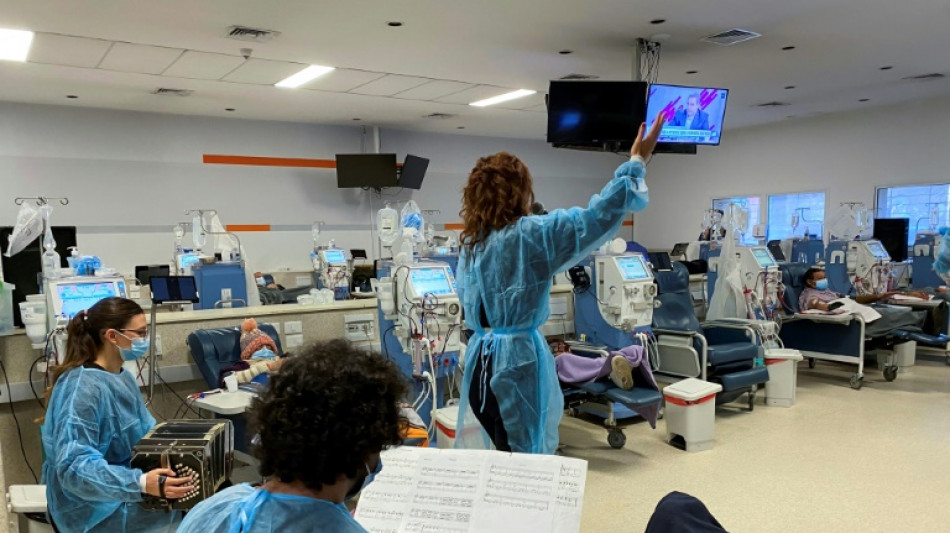
It is 9:00 am and Diaz is one of 20 patients sitting in armchairs, all connected to the "artificial kidneys" that purify their blood.
Suddenly the sound of the machines and chattering nurses are drowned out by bandoneon music and a voice singing the classic tango piece "Naranjo en flor."
Smiles break out across the faces of patients, including Diaz, who visits the clinic three times a week to spend four hours connected to a machine.
"I had fallen into a routine. I did things but without my old enthusiasm," she said.
"The music gave my soul life and gave me the will to live, joy, enthusiasm, those things that were fading."
Other patients agree that these mini-concerts have improved their quality of life.
Rafael Gutierrez, 46, says music "makes time go faster" and makes the dialysis treatment "much more bearable."
The show lasts 40 minutes and every patient has a front row seat.
- Hospital Tango -
Scientific research shows that listening to music reduces anxiety and stress, and stabilizes the heartbeat and pulse.
It also affects the areas of the brain related to pleasure by boosting dopamine.
Music's therapeutic benefits have been "amply demonstrated," says nephrologist Gerardo Perez, 68, adding that the World Health Organization (WHO) has "for years" recommended incorporating art and culture into health systems.
That is why he has spent two decades playing tango on his bandoneon to dialysis patients.
But last year, his personal initiative was transformed into the "Hospital Tango" project that puts on mini concerts in health centers and hospitals.
The idea is to temporarily take people away from their "worry, illness, uncertainty, suffering."
"Often they don't know what their diagnosis is or what will happen in their lives," said Perez.
In hospital, "they have a lot of time to be alone, often worried."
Other bandoneon players, singers and guitarists have come on board to perform throughout Montevideo.
Inspired by the Spanish Musicians for Health NGO, the group is now trying to set itself up as a charity, widen its activities and branch out onto a national level.
For now, the group focuses on tango, which Perez touts as "world cultural heritage," but its mission could expand to include other forms of music or even theater.
In fact "any artistic expression," is on the table, according to Perez.
- 'Much more than respite' -
In a small room, bandoneon players Abril Farolini, 22, and Ramiro Hernandez, 35, and singer Paola Larrama, 37, put on protective gowns and facemasks.
It is an unusual experience for musicians, as is the early morning hour and the audience of hospital patients connected to dialysis machines.
But adapting to such a strange environment reaps dividends: namely the satisfaction of giving "much more than respite," said Hernandez, who was a founding member of Hospital Tango.
"It also generates happiness and good humor," he added.
For Larrama it is a "very moving" experience, especially given the patients' "willingness to connect."
"It's not the same as playing somewhere where the people came to see you," she said.
"Here we are bringing something to them, while people are going through a different experience."
T.Bondarenko--BTB