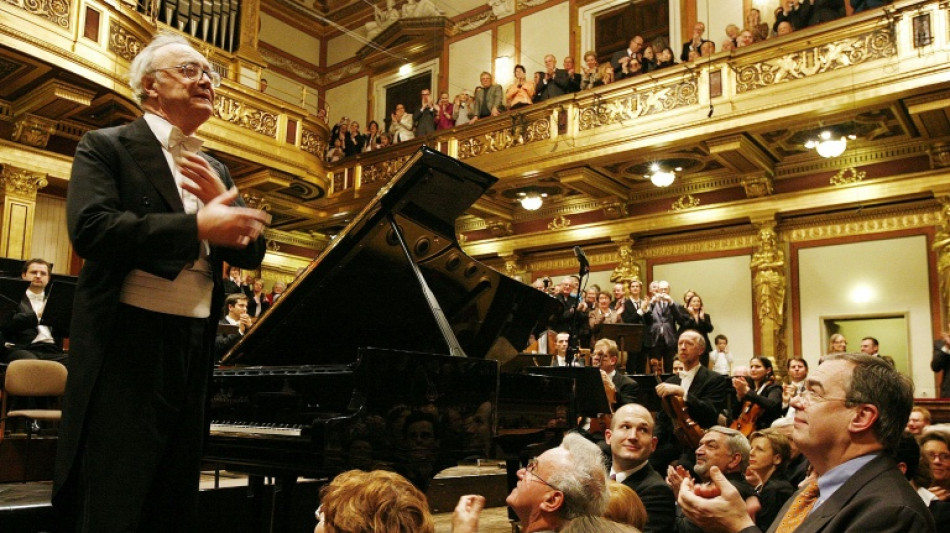
Alfred Brendel: the 'Thinking Pianist's Man' / Photo: © AFP

 Cambodia no 'safe haven' for cyberscams, PM says

 North Korea weightlifter sets three world records for Asian Games gold

 A Full Moon for Every Child: STARTRADER's STARCARES Brings Support to SOS Children's Village Ho Chi Minh City
 Meta leans into AI, smart glasses amid privacy pushback
 Battered Duerer masterpiece up for five-year revamp
 Trump met with Venezuela's interim leader at UN

 Malaysia furore after Najib wins conditional house arrest

 Italy hope for new dawn under Mancini

 Mongolian herders enlist new tech against harsher, drier climate

 Tata turmoil shines light on India succession woes

 World Cup 'not enough' as Spain begin next chapter
 Meta acts against 3.7 mn scammers' accounts with Singapore police help

 Australia PM says draft social media rules about taking back control

 Voting opens in Alaska's annual Fat Bear Week

 MLS coach axed for telling female ref 'It's a man's game'
 US refuses to give Sudan's de facto leader visa for UN
 Man City hold Bayern to start Women's Champions League, Arsenal win late

 Trump threatens Iran with 'hell' but reveals fresh talks
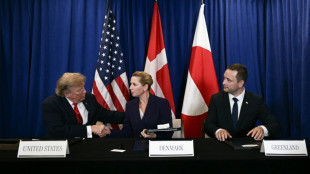 Trump signs security deal with Greenland, Denmark at UN
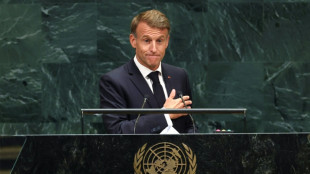
 Trump threatens Iran with 'hell' but unveils fresh talks

 Chile's Atacama Desert blossoms with life after El Nino rains

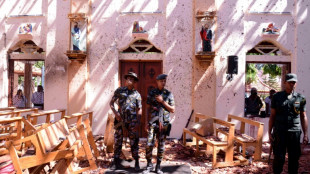 Sri Lanka hands 220-year jail terms to 15 convicted of Easter bombings

 Typhoon Dujuan leaves 7 dead in Japan from landslides, flooding: media
 Ganna and Borghini lead Italy to mixed relay gold at cycling worlds

 Drug cocktail killed former child star Hayden Panettiere: coroner
Self-taught pianist Alfred Brendel, who was widely regarded as one of the greatest musicians of the 20th century, was himself baffled by his success on the world stage.
"I'm completely at a loss to explain why I made it," the musician, who retired in December 2008 after a career spanning six decades, was quoted as saying in a documentary about his life and work.
Brendel, who died on Tuesday aged 94 in London where he had lived for more than 50 years, had a reputation for being modest, self-effacing and intensely self-critical.
He gave only short, quick bows when entering or leaving the stage of his always sell-out recitals. The Guardian said once he was never one "for fireworks and histrionics".
But he was notoriously intolerant of unwanted noise during his concerts, and was even known to walk off stage if he felt disturbed by a loud hacking cough of an audience member.
"If I belong to a tradition, it is a tradition that makes the masterpiece tell the performer what he should do and not the performer telling the piece what it should be like, or the composer what he ought to have composed," he once said.
- Little formal training -
Nevertheless, Brendel -- who began playing the piano at the age of six and had little formal training after the age of 16 -- insisted that the artist shouldn't "block (himself) out" when performing the core central European repertoire of Haydn, Mozart, Beethoven, Schubert, Brahms and Liszt for which he was best known.
While Britain's classical music scene likes to claim Brendel for itself -- he lived in London since 1971 -- he was an Austrian citizen, born January 5, 1931, in Wiesenberg in northern Moravia, now the Czech Republic, and he spent his childhood travelling throughout Yugoslavia and Austria.
His father worked variously as an architectural engineer, businessman and resort hotel manager on the Adriatic island of Krk, where Brendel first encountered "more elevated" music.
"I operated the record player which I wound up and put on the records for the guests of the hotel, which were operetta records of around 1930 sung by Jan Kiepura. And I sang along and found it to be rather easy."
Following World War II, the family moved to Graz in Austria, where Brendel studied at the city's conservatory.
But after that, aside from attending a few masterclasses, he had no further teachers and came to regard his unconventional musical background as something of an advantage.
"A teacher can be too influential," he said. "Being self-taught, I learned to distrust anything I hadn't figured out myself."
He said that when learning a new piece, he tape-recorded himself and listened and reacted to what he heard.
True to that adage, he did not teach formally, either, even if he coached some of the leading pianists of the younger generation, such as Till Fellner, Paul Lewis, Imogen Cooper and Kit Armstrong.
- 'A lot of fun' -
When he retired from concert performances in Vienna in December 2008, he was asked what he would miss most.
"The adrenalin," he said. And "in spite of all those obnoxious coughers and the mobile telephones and hearing aids going off," he would miss the public, too, Brendel said.
Regarded by many as an intellectual artist -- one specialist magazine dubbed him "The Thinking Pianist's Man" -- Brendel insisted his performances were not overly cerebral.
"I have never been somebody who analyses a piece and then plays it. I want to know the piece well and for it to tell me what it is about, and what is special about it."
According to the BBC, most critics acknowledged him as one of the top interpreters of the works of Beethoven.
After his retirement, Brendel wrote books on music and humorous verse and also gave lectures, readings and seminars.
He won numerous awards during his lifetime, including the Hans von Bulow Medal of the Berlin Philharmonic in 1992 and the Herbert von Karajan Music Prize in 2008, as well as a string of doctorates from the world's most prestigious universities.
"I've found it possible to talk about music without talking nonsense, and I think you should always be a little witty. And I want to say this about music in general -- I've also had a lot of fun. I was never a tortured person," he said.
F.Fehr--VB