New York's Met museum sheds new light on African art collection / Photo: © AFP

 Cambodia no 'safe haven' for cyberscams, PM says
 North Korea weightlifter sets three world records for Asian Games gold

 A Full Moon for Every Child: STARTRADER's STARCARES Brings Support to SOS Children's Village Ho Chi Minh City
 Meta leans into AI, smart glasses amid privacy pushback
 Battered Duerer masterpiece up for five-year revamp
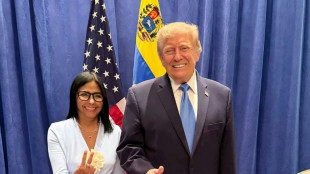 Trump met with Venezuela's interim leader at UN
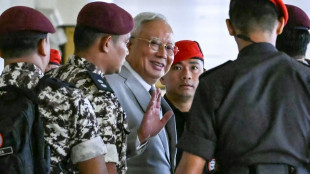 Malaysia furore after Najib wins conditional house arrest
 Italy hope for new dawn under Mancini
 Mongolian herders enlist new tech against harsher, drier climate
 Tata turmoil shines light on India succession woes
 World Cup 'not enough' as Spain begin next chapter
 Meta acts against 3.7 mn scammers' accounts with Singapore police help
 Australia PM says draft social media rules about taking back control
 Voting opens in Alaska's annual Fat Bear Week
 MLS coach axed for telling female ref 'It's a man's game'
 US refuses to give Sudan's de facto leader visa for UN
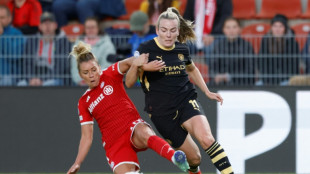
 Man City hold Bayern to start Women's Champions League, Arsenal win late
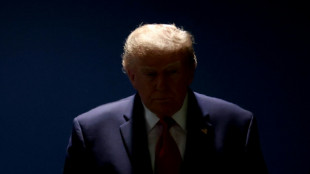
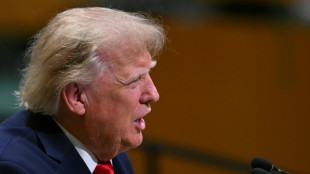 Trump threatens Iran with 'hell' but reveals fresh talks
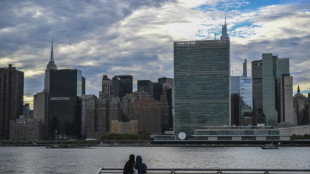
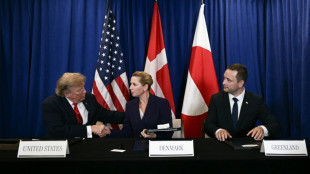 Trump signs security deal with Greenland, Denmark at UN
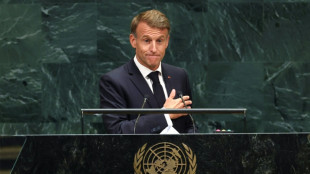
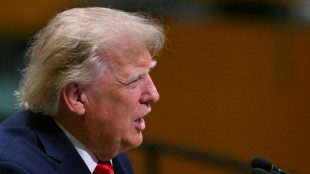 Trump threatens Iran with 'hell' but unveils fresh talks
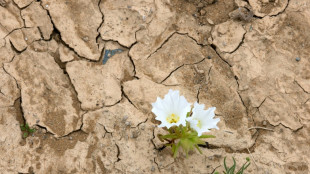 Chile's Atacama Desert blossoms with life after El Nino rains
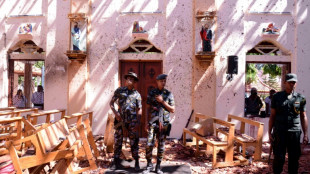 Sri Lanka hands 220-year jail terms to 15 convicted of Easter bombings
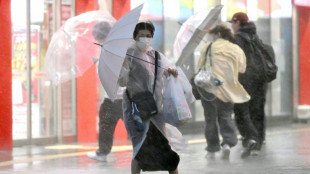 Typhoon Dujuan leaves 7 dead in Japan from landslides, flooding: media
 Ganna and Borghini lead Italy to mixed relay gold at cycling worlds
 Drug cocktail killed former child star Hayden Panettiere: coroner
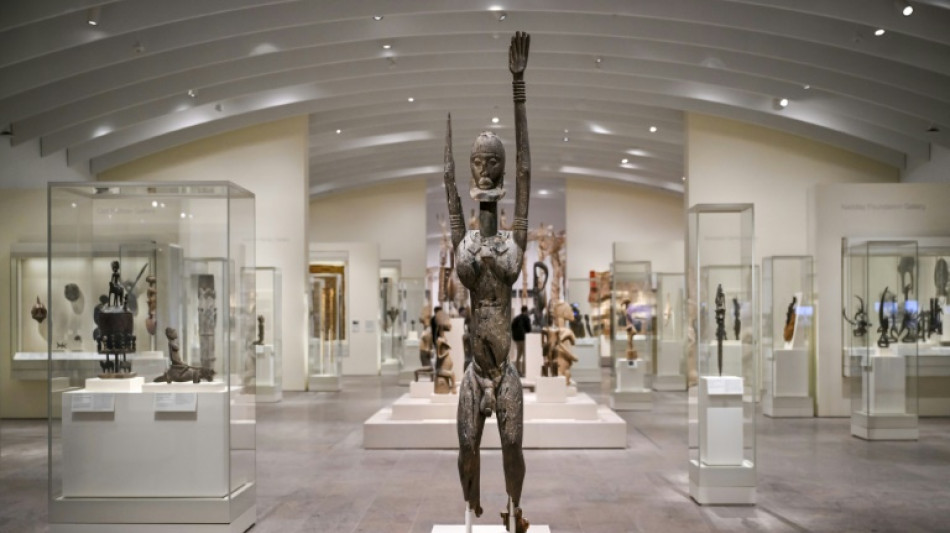
From a delicate 13th-century clay figure to self-portraits by photographer Samuel Fosso, New York's Metropolitan Museum reopens its African art collection on Saturday, exploring the "complexity" of the past and looking to the present.
After a four-year renovation with a $70 million price tag, the reopening of the Michael C. Rockefeller Wing comes amid heated debate over the representation of cultural diversity in Western museums and the return of works to their countries of origin.
The reopening should be "an opportunity to recognize that the achievements of artists in this part of the world (sub-Saharan Africa) are equal to those of other major world traditions," Alisa LaGamma, the Met's curator for African art, told AFP.
In a spacious gallery bathed in light, visitors are greeted by a monumental Dogon sculpture -- "a heroic figure, likely a priest," LaGamma explained.
Next to it sits a clay sculpture of a curled body from the ancient city of Djenne-Djenno, in present-day Mali, which is believed to be one of the oldest pieces in the collection, dating back to the 13th century.
- 'Complex history' -
The exhibit does not present the works of sub-Saharan Africa as a single unit, but in chapters to better distinguish between the various cultures.
"We don't want people to oversimplify their understanding of an incredibly complex history," LaGamma said.
"There are over 170 different cultures represented among the 500 works of African art on display," she pointed out.
"That gives you a sense of how many different stories there are to tell in this presentation."
The museum wing, which also displays arts of Oceania and the "ancient Americas" -- prior to European colonization -- opened in 1982 after former Republican vice president and philanthropist Nelson Rockefeller donated his monumental collection. It is named for his son.
"This is a collection that was formed essentially following independence in a lot of what were new nations across sub-Saharan Africa," LaGamma said.
"It doesn't have necessarily the heavy weight of a collection that was formed under colonialism," she said, hinting at the pressure faced by many museums to respond to questions about the origins of works on display.
- 'African Spirits' -
A third of the works shown here were newly acquired. The museum was thus able to benefit from a donation of thousands of photographs from the renowned Arthur Walther collection.
Among the vast trove of pieces donated is a 2008 series of self-portraits entitled "African Spirits" by Fosso, a Cameroonian-Nigerian photographer.
Among Africa's leading photographers, Fosso poses as major figures in African independence and civil rights struggles, from Congolese independence leader and first prime minister Patrice Lumumba, to Nelson Mandela and Malcolm X.
Through around a dozen films directed by Ethiopian-American artist Sosena Solomon, visitors can also explore iconic cultural sites across the continent, like Tsodilo rock paintings in Botswana, the rock-hewn churches of Lalibela and Tigray in Ethiopia, and the tombs of Buganda kings at Kasubi in Uganda.
"In an art museum like this, it is important that rock paintings should be reflected," said Phillip Segadika, chief curator for archeology and monuments at Botswana's national museum, in residence at the Met to participate in the project.
"It tells us that what we are seeing today, whether it's in European art, medieval art, whatever -- it has a history, it also has an antiquity."
I.Stoeckli--VB