AI personal shoppers hunt down bargain buys / Photo: © AFP

 Cambodia no 'safe haven' for cyberscams, PM says

 North Korea weightlifter sets three world records for Asian Games gold

 A Full Moon for Every Child: STARTRADER's STARCARES Brings Support to SOS Children's Village Ho Chi Minh City

 Meta leans into AI, smart glasses amid privacy pushback

 Battered Duerer masterpiece up for five-year revamp

 Trump met with Venezuela's interim leader at UN

 Malaysia furore after Najib wins conditional house arrest

 Italy hope for new dawn under Mancini

 Mongolian herders enlist new tech against harsher, drier climate

 Tata turmoil shines light on India succession woes

 World Cup 'not enough' as Spain begin next chapter

 Meta acts against 3.7 mn scammers' accounts with Singapore police help

 Australia PM says draft social media rules about taking back control

 Voting opens in Alaska's annual Fat Bear Week

 MLS coach axed for telling female ref 'It's a man's game'

 US refuses to give Sudan's de facto leader visa for UN

 Man City hold Bayern to start Women's Champions League, Arsenal win late

 Trump threatens Iran with 'hell' but reveals fresh talks

 Trump signs security deal with Greenland, Denmark at UN

 Trump threatens Iran with 'hell' but unveils fresh talks

 Chile's Atacama Desert blossoms with life after El Nino rains

 Sri Lanka hands 220-year jail terms to 15 convicted of Easter bombings

 Typhoon Dujuan leaves 7 dead in Japan from landslides, flooding: media

 Ganna and Borghini lead Italy to mixed relay gold at cycling worlds

 Drug cocktail killed former child star Hayden Panettiere: coroner

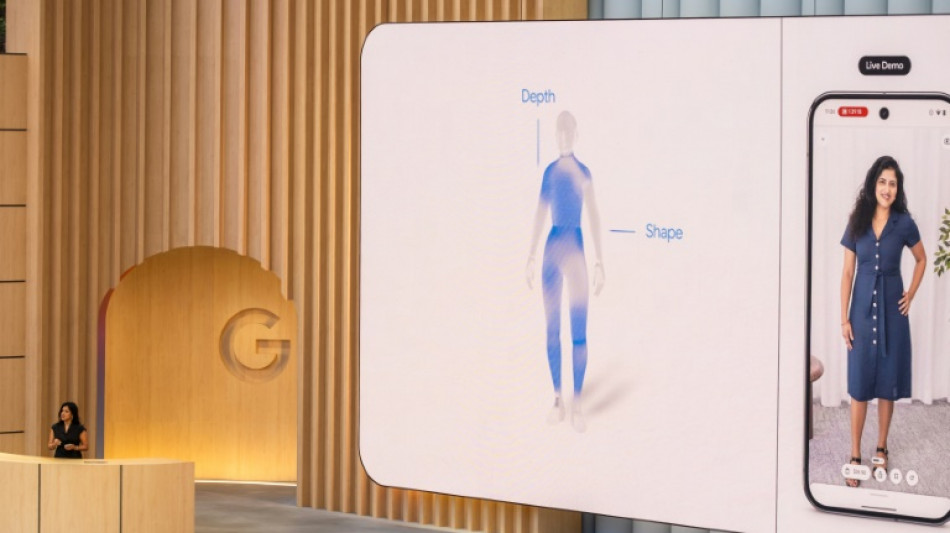
Internet giants are diving deeper into e-commerce with digital aides that know shoppers' likes, let them virtually try clothes on, hunt for deals and even place orders.
The rise of virtual personal shoppers springs from generative artificial intelligence (AI) being put to work in "agents" specializing in specific tasks and given autonomy to complete them independently.
"This is basically the next evolution of shopping experiences," said CFRA Research analyst Angelo Zino.
Google last week unveiled shopping features built into a new "AI Mode".
It can take a person's own photo and meld it with that of a skirt, shirt or other piece of clothing spotted online, showing how it will look on them.
The AI adjusts the clothing size to fit, accounting for how fabrics drape, according to Google head of advertising and commerce Vidhya Srinivasan.
Shoppers can then set the price they would pay and leave the AI to relentlessly browse the internet for a deal -- alerting the shopper when it finds one, and asking if it should buy using Google's payment platform.
"They're taking on Amazon a little bit," Techsponential analyst Avi Greengart said of Google.
The tool is also a way to make money from AI by increasing online traffic and opportunities to show ads, Greengart added.
The Silicon Valley tech titan did not respond to a query regarding whether it is sharing in revenue from shopping transactions.
- Bartering bots? -
OpenAI added a shopping feature to ChatGPT earlier this year, enabling the chatbot to respond to requests with product suggestions, consumer reviews and links to merchant websites.
Perplexity AI late last year began letting subscribers pay for online purchases without leaving its app.
Amazon in April added a "Buy for Me" mode to its Rufus digital assistant, allowing users to command it to make purchases at retailer websites off Amazon's platform.
Walmart head of technology Hari Vasudev recently spoke about adding an AI agent to the retail behemoth's online shopping portal, while also working with partners to make sure their digital agents keep Walmart products in mind.
Global payment networks Visa and Mastercard in April each said their technical systems were modernized to allow payment transactions by digital agents.
"As AI agents start to take over the bulk of product discovery and the decision-making process, retailers must consider how to optimize for this new layer of AI shoppers," said Elise Watson of Clarkston Consulting.
Retailers are likely to be left groping in the dark when it comes to what makes a product attractive to AI agents, according to Watson.
- Knowing the customer -
Analyst Zino does not expect AI shoppers to cause an e-commerce industry upheaval, but he does see the technology benefitting Google and Meta.
Not only do the Internet rivals have massive amounts of data about their users, but they are also among frontrunners in the AI race.
"They probably have more information on the consumer than anyone else out there," Zino said of Google and Meta.
Tech company access to data about users hits the hot-button issue of online privacy and who should control personal information.
Google plans to refine consumer profiles based on what people search for and promises that shoppers will need to authorize access to additional information such as email or app use.
Trusting a chatbot with one's buying decisions may spook some people, and while the technology might be in place the legal and ethical framework for it is not.
"The agent economy is here," said PSE Consulting managing director Chris Jones.
"The next phase of e-commerce will depend on whether we can trust machines to buy on our behalf."
D.Schaer--VB