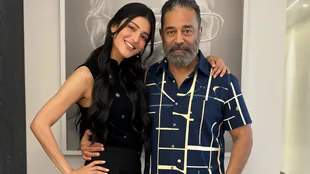
Fairuz, musical icon of war-torn Lebanon, turns 90 / Photo: © AFP

 Devan Ekambaram and Susha’s 'Varuvaaiy' Makes History as First Tamil Song Nominated for a Grammy

 Miranda Lambert Leads North Texans with Seven Grammy Nominations for 2027

 DiDi Advances Robotaxi Operations in China with New R2 Vehicle and Expanded Safety Infrastructure

 Smart Car Seats Tested: Do Sensors and Apps Actually Improve Safety?

 5 Strategies for Fort Worth Households to Reduce Summer Electricity Costs
 Central Bank of Malta Links Energy Subsidies to Middle East Conflict and Price Volatility

 Shomari Figures Defies Redistricting in Alabama Amid Disaster Relief Crisis

 BYD Dolphin G Leasing Deal: Plug-in Hybrid Supermini Available from £174 a Month

Legendary Arab singer Fairuz, whose ballads have told of love, her native Lebanon and the Palestinian cause, turned 90 on Thursday as her conflict-weary country is wracked by the Israel-Hezbollah war.
Social media users lit up the internet with her songs and tributes to the Lebanese star, who has seldom been seen in public in recent years but remains a rare symbol of national unity in the crisis-hit country.
In one for her most well-known songs, which came out during Lebanon's civil war, Fairuz crooned: "I love you, oh Lebanon, my country, I love you."
In a post on Instagram, French President Emmanuel Macron said Fairuz "embodies the soul of this region with dignity".
She "watches over the hearts of many Palestinians and Lebanese who are deprived of the peace they deserve", Macron said.
Composer and oud player Marcel Khalife, in a tribute on social media platform X, wrote: "My homeland is Fairuz's voice."
Born Nouhad Haddad in 1934 to a working-class Christian family in Beirut's Zuqaq al-Blat district, Fairuz -- a stage name that means "turquoise" in Arabic -- studied at the national music conservatory as a teenager.
She shot to fame after her first performance at the Baalbek International Festival in 1957.
On Monday, Zuqaq al-Blat was the target of a deadly Israeli strike, while Baalbek's ancient ruins, where the music festival is still held annually, were granted "provisional enhanced protection" by UNESCO amid the Israel-Hezbollah conflict.
Fairuz, her composer husband Assi Rahbani and his brother Mansour revolutionised traditional Arabic music by merging classical Western, Russian and Latin elements with eastern rhythms and a modern orchestra.
Fairuz worked closely with her eldest son Ziad, known as the "enfant terrible" of the Lebanese stage and song, who composed Arabic music for her with a jazz influence.
Fairuz's reign as the queen of Arabic music was partly thanks to her championing the Palestinian cause, including "Sanarjaou Yawman" or "We Shall Return One Day", an elegy to Palestinians exiled by the creation of Israel in 1948.
She won national acclaim for remaining in Lebanon throughout the country's 1975-1990 civil war, and for refusing to side with one faction over another.
In 2020, France's Macron kicked off a trip to Lebanon by calling on Fairuz, awarding her France's Legion of Honour.
It was a rare public appearance for the ageing star that delighted the country, which at the time was reeling from a catastrophic explosion at Beirut's port.
T.Egger--VB