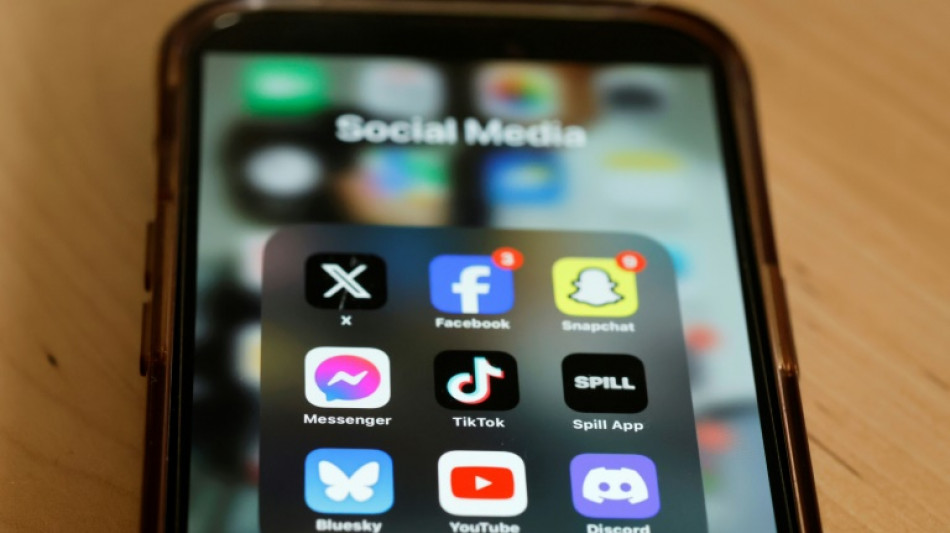
Australian eyes $30m fine for social media flouting under-16s ban / Photo: © GETTY IMAGES NORTH AMERICA/AFP/File

 Devan Ekambaram and Susha’s 'Varuvaaiy' Makes History as First Tamil Song Nominated for a Grammy

 Miranda Lambert Leads North Texans with Seven Grammy Nominations for 2027

 DiDi Advances Robotaxi Operations in China with New R2 Vehicle and Expanded Safety Infrastructure

 Smart Car Seats Tested: Do Sensors and Apps Actually Improve Safety?

 5 Strategies for Fort Worth Households to Reduce Summer Electricity Costs
 Central Bank of Malta Links Energy Subsidies to Middle East Conflict and Price Volatility

 Shomari Figures Defies Redistricting in Alabama Amid Disaster Relief Crisis

 BYD Dolphin G Leasing Deal: Plug-in Hybrid Supermini Available from £174 a Month

Social media companies could be fined more than US$30 million if they fail to keep children off their platforms, under new laws tabled before Australia's parliament Thursday.
The legislation would force social media firms to take steps to prevent those under 16 years of age from accessing platforms such as X, TikTok, Facebook and Instagram.
Failing to do so would mean fines of up to Aus$50 million (US$32.5 million).
Australia is among the vanguard of nations trying to clean up social media, and the proposed age limit would be among the world's strictest measures aimed at children.
Details about how social media companies are expected to enforce the ban remain unclear.
The proposed laws would also include robust privacy provisions that require tech platforms to delete any age-verification information collected.
Minister for Communications Michelle Rowland said Thursday that social media companies had a responsibility for the "safety and mental health" of Australians.
"The legislation places the onus on social media platforms, not parents or children, to ensure protections are in place," she said.
Some companies will be granted exemptions from the ban, such as YouTube, which teenagers may need to use for school work or other reasons.
Rowland said that messaging services -- such as WhatsApp -- and online gaming would also be exempt.
Once celebrated as a means of staying connected and informed, social media platforms have been tarnished by cyberbullying, the spread of illegal content, and election-meddling claims.
If the proposed law passes, tech platforms would be given a one-year grace period to figure out how to implement and enforce the ban.
Social media companies have said they will adhere to new legislation but have cautioned the government against acting too quickly and without adequate consultation.
Analysts have also expressed doubt it would be technically feasible to enforce a strict age ban.
Katie Maskiell from UNICEF Australia said Thursday the proposed legislation would not be a "solve-all" for protecting children and much more needed to be done.
She added the laws risked pushing young people onto "covert and unregulated online spaces".
Several other countries have been tightening children's access to social media platforms.
Spain passed a law in June banning social media access to under-16s.
And in the US state of Florida, children under 14 will be banned from opening social media accounts under a new law due to come into force in January.
In both cases, the age verification method has yet to be determined.
M.Schneider--VB