French city rekindles burkini row with pool rule change / Photo: © AFP

 UK agrees support for Saudi in struggle with Houthis: reports

 EU foreign policy chief calls for continued sanctions on Russia
 Flights scrapped, evacuations urged as Typhoon Dujuan wallops Japan
 Fonseca to take break from tennis
 A Cuban zoo, and its animals, in epic battle for survival
 Infantino proposes consulting federations to reform FIFA

 El Nino weather pattern enters record territory: scientist
 OpenAI calls for US to lead global effort on AI standards
 South African ostriches plucked alive for luxury fashion: report
 US networks halt Trump coverage in revolt over White House ban

 Paramount settles with US states to clear Warner Bros. mega-merger

 Climate crisis a job for world leaders, not just activists: UK FM

 US networks halt Trump coverage over White House ban
 French singer accuses Miley Cyrus of plagiarism
 EU fines Google 403 mn euros for location data breach

 'Best is yet to come,' says De la Fuente after Spain extension
 Why diesel prices are rising more than crude oil

 COP31 host says AI's climate footprint to be a summit priority
 Renewables hit record in 2025, but world must move faster: report
 US media outlets to sue Trump administration after White House ban
 Global stocks rally on lower oil prices, US-China hopes

 EU proposes energy rating for data centres
 Schoolgirl Yu scorches to second gold as doping case rocks Games

 Putin's party secures record score in Russia election

 Haupt Koleksiyonu: Paranın Biz İnsanlar Hakkında Anlattıkları
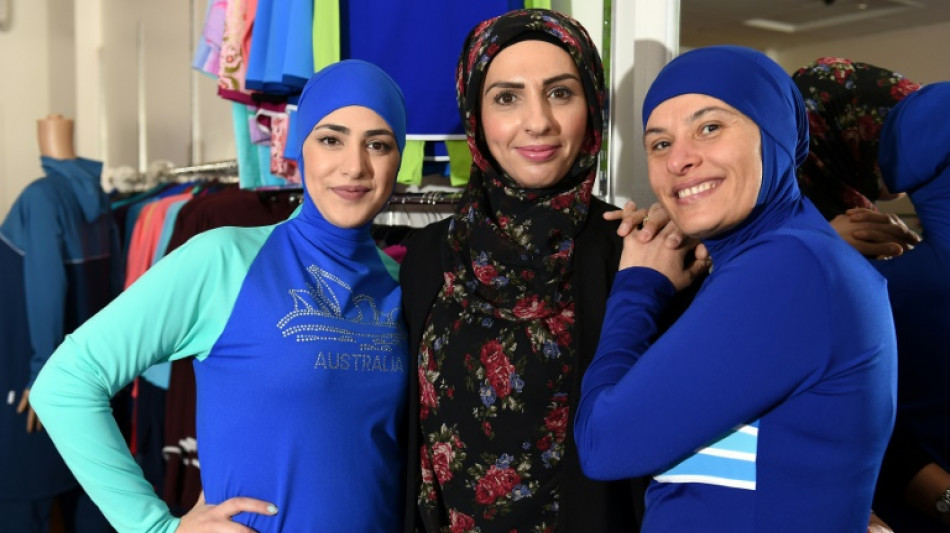
The Alpine city of Grenoble is set to reignite one of France's recurring summer debates on Monday when it votes to authorise the "burkini" in state-run swimming pools.
The all-in-one swimsuit, used by some Muslim women to cover their bodies and hair while bathing, has become almost as topical as ice cream and sun hats during the holiday season in recent years.
Seen as a symbol of creeping Islamism by its critics and an affront to France's secular traditions, many right-wingers and some feminists would like to ban it outright.
It is prohibited in most state-run pools -- for hygiene, not religious reasons -- where strict swimwear rules apply to all, including men who are required to squeeze into tight-fitting trunks.
Grenoble's city council, dominated by the EELV green party, is set to scrap its bathing dress code on Monday, effectively authorising long body coverings, beach shorts and topless bathing.
"Our intention is to remove all of the abnormal clothing restrictions," mayor Eric Piolle said recently. "The issue is not being for or against the burkini specifically."
Opponents see it differently, including the influential conservative head of the wider Auvergne-Rhone-Alpes region, Laurent Wauquiez, who has promised to withdraw funding from the city.
"I am convinced that what Mr Piolle is defending is a dreadful dead end for our country," Wauquiez said at the beginning of May, accusing him of "doing deals with political Islam" to "buy votes".
- Discriminatory -
The regional spat has put the burkini back in the headlines nationally, animating French talk shows and the political class ahead of parliamentary elections next month.
The issue of how people dress for the pool touches on highly sensitive topics in France, including fears about the influence of Islam and threats to the country's cherished secularism.
The right to worship freely is constitutionally protected, but the French state is also bound by law to be neutral in religious matters, including inside institutions.
"The burkini aims, purely and simply, to impose Islamist values at the heart of bathing areas and public leisure pursuits," an open letter written by opposition councillors in Grenoble said last week.
Attempts by several local mayors in the south of France to ban the burkini on Mediterranean beaches in the summer of 2016 kicked off the first firestorm around the bathing suit.
The rules, introduced after a string of terror attacks in France, were eventually struck down as discriminatory.
Three years later, a group of women in Grenoble caused a splash by forcing their way into a pool with burkinis, leading the prime minister at the time to insist that the rules should be followed.
French sports brand Decathlon also found itself at the centre of a similar row in 2019 when it announced plans to sell a "sports hijab" enabling Muslim women to cover their hair while running.
- For or against? -
Monday's vote in Grenoble "is an important moment for everyone concerned and their allies, but also in the fight against Islamophobia and control over women's bodies", local campaign group Citizens' Alliance wrote on its Facebook page.
Demonstrations supporting and opposing the move are also planned in the city following the council meeting where mayor Piolle is expected to succeed in pushing through the change.
French feminists are split, with some seeing the burkini as a symbol of male oppression and others such as Caroline De Haas writing that "no one should be stigmatised in a pool because of their choice of swimwear".
Grenoble would not be the first to change its rules, however.
The northwestern city of Rennes quietly updated its pool code in 2019 to allow burkinis and other types of swimwear.
The debate about the burkini comes as French Muslim women footballers are battling to overturn a ban on the wearing of religious symbols during competitive matches.
The French Football Federation currently prevents players from playing while wearing "ostentatious" religious symbols such as the Muslim hijab or the Jewish kippa.
A women's collective known as "les Hijabeuses" launched a legal challenge to the rules in November last year.
M.Furrer--BTB