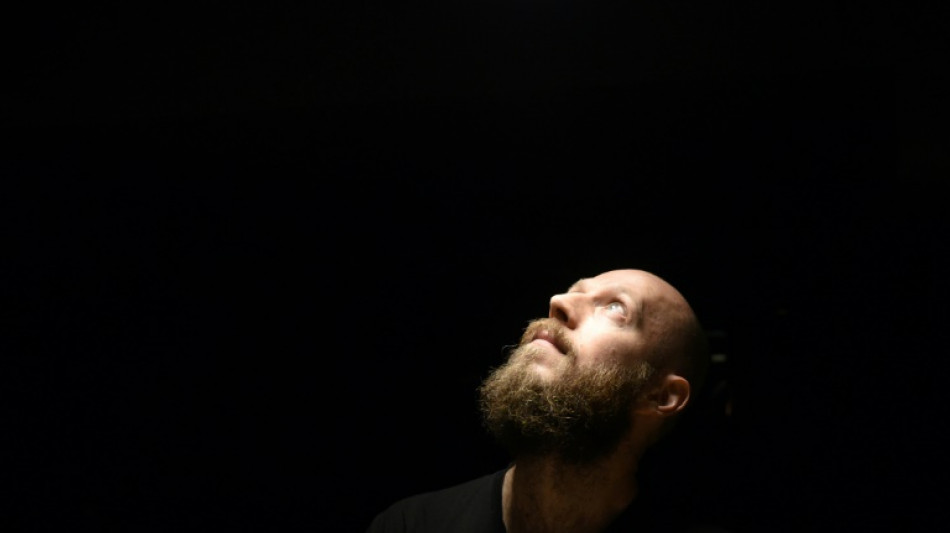
As Ukraine's war bites, comedy offers light relief / Photo: ©

 Germany's Merz vows to stay course despite new vote losses
 Man City outgun Sunderland despite Brobbey hat-trick, Man Utd rescue Fulham draw
 Mourinho blames ref committee for Real Madrid derby defeat
 Maresca craves a 1-0 win after eight-goal Man City thriller
 Atletico Madrid beat Real Madrid in tense derby clash
 Reusser retains world time-trial title

 Man City outgun Sunderland despite Brobbey hat-trick, Liverpool win at Bournemouth

 Top US, Chinese economic officials meet ahead of Trump-Xi summit
 Erdogan's LGBTQ crackdown 'first step of election campaign': activist
 Mass drone barrage on Moscow kills two
 82-year-old dies after beach fight in Greece over sun lounger
 US warns of rapid escalation in Mideast war
 Iran 'put hearts on the court' to win Asian Games basketball bronze

 School girl Yu helps China dominate in Asian Games swimming openers
 Myanmar win first Asian Games teqball gold as Spain great Puyol watches
 China's 13-year-old Yu scorches to first major gold at Asian Games
 Russians vote on last day of parliamentary elections
 Hong Kong pays final respects to former city leader Tung
 Typhoon put people off Asian Games opening ceremony, official says
 China's 13-year-old Yu cruises as Asian Games swimming begins

 AI 'warning shots' focus Beijing on national security risks

 Philippine tribe in limbo over US-led tech hub
 Leo XIV, first US pope transcends his restrained style
 Singer Ed Sheeran says Gaza situation 'unjustifiable' following controversy
 In 'Tenzing', a Sherpa mountaineer gets his due
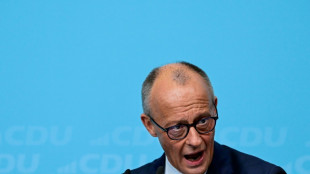
On stage in war-torn Ukraine, 32-year-old comedian Sergii Gromov says the army has called him up and he might have to fight the Russians.
But his wife's chief concern does not seem to be that he could soon be on the frontline, he says.
Rather, she is extremely worried that he will be told to shave off the beard she likes so much.
Gentle laughter ripples through the comedy club in the western city of Lviv, at an event raising donations for the Ukrainian army.
More than six weeks after Russia invaded the country, men and women huddled at the bar and tables, many still in their jackets, hoping for a joke to lighten the mood.
"Humour is our shield and our defensive mechanism to live through this moment," said the stand-up comic, exiting the stage.
Gromov, who is also a cinematographer, was forced to flee his home city of Kharkiv near the Russian border in the early days of the conflict.
He, his wife, and a friend travelled more than 1,000 kilometres (600 miles) west to seek safety at the other end of the country in Lviv.
The comedian thinks carefully about what kind of joke is acceptable, or even relatable, and was unsure about returning to the floorboards earlier this week.
"It was a little bit scary to perform, but after the first performance I understood that it's necessary," he said.
"It's better to go on some comedy performance and to laugh one day a month or a week than to sit in your kitchen and drink alcohol."
Laughing and crying provide the same degree of relief, he says, though preparing jokes is now much harder than before the invasion.
- 'Sold out' -
President Volodymyr Zelensky is likely the country's most famous comedian, voted into office in 2019 after a wildly popular television series in which he played a teacher turned head of state.
But after weeks of killing and destruction, his oratory skills are firmly focused on rallying worldwide support to end the Russian onslaught.
After the war broke out on February 24, the Cult Comedy Hall in Lviv closed down for several weeks.
Comedians were busy volunteering as hundreds of thousands of displaced people flooded into the city, and nobody was in the mood to make jokes, says manager Bogdan Sepokura.
But the club reopened last month, because he felt people needed it.
Come, the advertisement said, you don't need to worry about air raid sirens because the club is a bunker.
"In two hours, we sold out," Sepokura said.
In the corridor, some of the evening's performers scrolled through notes on their phones, waiting for their turn at the microphone.
Members of the audience smoked shisha or sipped beer, eyes riveted towards the latest act in front of the red curtain, convulsing every so often with chuckles.
As the start of night-time curfew approached, waiters moved around the tables with wireless payment machines, and patrons held their smartphones over them to settle their bills.
Veronika Azarova, 25, had come to see the show with her sister and a friend.
She too had been forced to abandon Kharkiv, arriving in the city just five days earlier, after witnessing Russian missiles rain down on her city.
They wanted a happy night out to forget.
"We need to look for ways to lift our spirits, because it's really tough to go through such stress," she said.
J.Bergmann--BTB