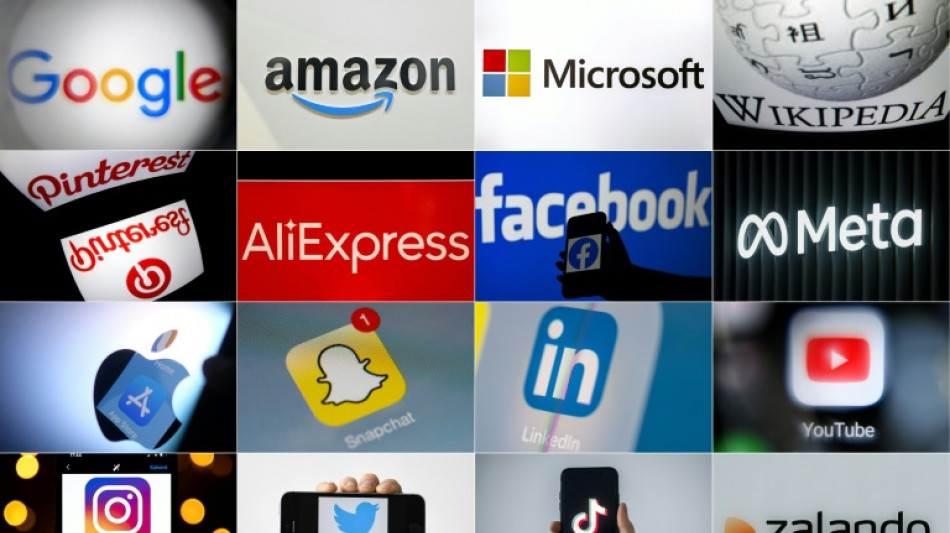
Online images reinforce gender stereotypes more than text: study / Photo: © AFP/File

 Losing start in AFCON qualifying for 78-year-old coach Le Roy
 Italy bans burqas in schools, caps numbers of foreign students per class

 Israel policies threaten 'life and existence' of Palestinians, Abbas says

 Paolini steers Italy past China in BJK

 Zidane admits emotion on eve of first game as France coach
 Breetzke and Maharaj sink Australia in first one-day international

 Zelensky broke confidentiality with North Korea POWs disclosure: South's president

 Former Liverpool star Carroll reveals he was sexually assaulted

 Dominican Republic calls for Haiti force to be strengthened

 Dolly Parton's nephew ordered to stay away from estate staff, properties

 Early exit for Philippine darling Eala at Singapore Open

 Hurricane Polo triggers huge waves in coastal Mexican city
 What happens if the US bans diesel exports

 Macklemore hits back with 'Free Palestine Tour' after Sheeran split

 Met Opera to give New Yorkers free tickets in affordability push

 Top ECB official to resign to take up IMF role

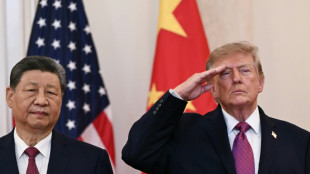 Xi and Trump call for peace in lavish White House state visit

 Five up-and-coming players looking to make mark in Nations League

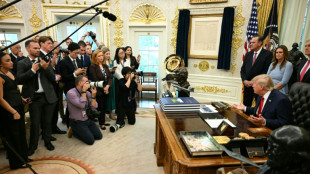 CNN, MS NOW, Politico request court hearing after White House access denied

 Eviction of pensioner puts Spain housing crisis in spotlight

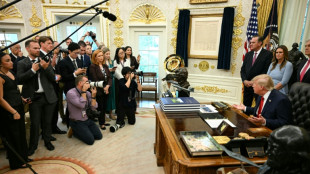 CNN, MS NOW, Politico say reporters still barred from White House

 Udinese sign ex-Real Madrid defender Alaba on free transfer

 Trump welcomes Xi to Washington with lavish praise

 Kane relishing chance to become England's most-capped player

 Average EU diesel price hits record 2.23 euros a litre: AFP analysis

Images on the internet reinforce gender stereotypes -- such as doctors being men or nurses women -- more than text, contributing to a lasting bias against women, a US-based study said Wednesday.
The importance of images has soared as much of the world's media, communication and even social interactions have moved online.
But this rising dominance of the image "exacerbates gender bias" by significantly under-representing women, according to the study in the journal Nature.
Lead author Douglas Guilbeault, a researcher at the business school of the University of California, Berkeley, told AFP that this was an "alarming" trend.
He warned of "the potential consequences this can have on reinforcing stereotypes that are harmful, mostly to women, but also to men."
Study co-author Solene Delecourt, also from UC Berkeley, said an example would be if a child was trying to find out more about a profession online but only saw images of one gender.
"They may feel like they don't belong," she said.
Images are also "often more memorable and emotionally evocative than text," the study said.
- 'Really concerning' -
For the study, the researchers sifted through more than one million images from Google, Wikipedia and the IMDb film database, as well as billions of words on those platforms.
They looked for potential bias in nearly 3,000 social categories, including jobs such as doctor or lawyer, or roles such as neighbour or colleague.
Both over-represented men, but the images displayed even more gender bias than the words, the researchers found.
For example, the stereotype that women are nurses was "consistently stronger" in the images than the text, Guilbeault said.
This bias was not limited to the United States -- the researchers used many images from websites around the world -- nor was it confined to a particular platform.
The gender bias is also larger than what the general public broadly think, according to an opinion poll carried out by the researchers.
The team also used US census data to show that the under-representation of women for these jobs seen in online images does not match reality.
Finally, they looked into what psychological impact this bias has on people using the internet.
They had 450 people search online for specific jobs -- such as astronaut, poet or neurobiologist -- some reading text while others looked at images.
Afterwards, the participants carried out a test designed to measure their bias.
The group that looked up images had a more pronounced gender bias -- and the effect was still present during another test three days later, the researchers said.
"Images influence people in ways that they may not consciously realise," Guilbeault said.
He also lamented that there has been so little attention paid to "this shift towards image-based communication".
The researchers pointed to the role of online platforms in amplifying gender bias through their images, calling for more to be done.
They also warned that new image generators driven by artificial intelligence algorithms draw heavily on existing online images.
"It's not a surprise that the images these algorithms generate reflect all kinds of biases," Guilbeault said.
G.Frei--VB