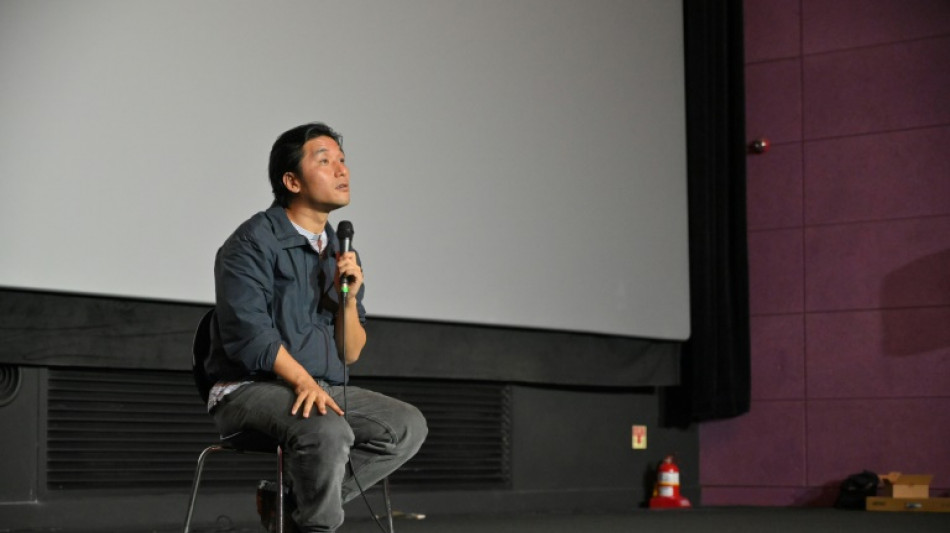
'Dear Jinri' bears witness to late K-pop singer's truth / Photo: © AFP

 Eel-powered Japan whizz-kid, 11, dominates in historic Games debut

 Madagascar's Gen Z 'betrayed' after ushering in new rule

 As Moscow steps up attacks, Kyiv residents brace for harsh winter

 Comic inspires unlikely kabaddi dreams for Japan's Asian Games amateurs

 Thailand slams chaotic Asian Games organisation as 'musical chairs'

 North Korea to keep nuclear weapons 'forever': foreign minister

 Markets mixed as China's Xi arrives for US talks

 Swiss voters expected to shun stricter neutrality

 Rapper-turned-PM faces first big test after Nepal disaster

 Tuchel seeks tonic to England World Cup 'scar' in Spain showdown

 'Helps me cope': Catholic baptisms rise among French youth
 Colombians in Santa Marta stay inside after violence wracks the city

 Iran airlines cancel flights as US sanctions hit

 Meta launches camera-free AI glasses amid privacy pushback
 Australian PM says OpenAI hacked government health website

 Xi arrives in US to personal Trump welcome

 Morocco elects new parliament amid social frustration, youth discontent

 Scheffler and Burns to face Im and Lee in Presidents Cup opener

 Crushing wins for Lyon and Barca in women's Champions League

 Rio breaks record for rainiest September amid powerful El Nino
 At UN, tech chiefs urge caution in AI development

 Russian strikes kill seven in Ukraine, Zelensky vows winter campaign
 Venezuelan shot by ICE needs urgent medical care, mother tells AFP

 Zelensky says Putin using fighters from 47 countries in Ukraine war

 Klopp calls on Germany to 'rise above ourselves' as new era begins

A new documentary featuring a late K-pop star's final interview unveils complex truths about South Korea's notoriously brutal music industry while highlighting her defiance of pressure to conform to societal norms.
"Dear Jinri", which premiered at the Busan International Film Festival, revolves around singing star Sulli's last Netflix project, an unfinished film that included an in-depth interview.
Born Choi Jin-ri, Sulli took her own life in 2019 at age 25, after a long struggle with online bullying. The interview in the film -- raw, powerful and heartbreaking -- has never been previously seen.
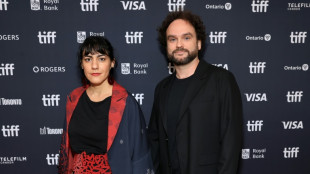
What Sulli shares in that conversation raises "many critical issues in our society," director Jung Yoon-suk said after the film's BIFF screening Saturday evening.
"These can be seen as issues related to women, or they could be problems concerning the vulnerable in our society, or related to matters of equality," he said.
Sulli, who began her career as a child actress at age 11, made her debut in 2009 for f(x), which quickly became one of K-pop's top girl groups.
Known for behaviour considered controversial in South Korea -- including refusing to wear a bra in public -- she faced relentless online bullying and was frequently targeted by sexually abusive comments.
The film also explores the singer's lonely childhood and battles with self-perception as a woman in a world that can be intensely focused on appearance.
"Since you are born as a pretty woman, you don't have to know anything," Sulli says she was told.
But, she adds: "It's obnoxious to say your life was hard because you are a pretty woman."
The well-documented pressures of the K-pop world are also spotlighted, with Sulli explaining how she was told her goal was to be "the highest quality product".
She likens her experience to that of the protagonist in Luc Besson's 1990 "La Femme Nikita", who undergoes rigorous and vicious training to become a programmed assassin, completely cut off from the outside world.
It seemed as if people "couldn't recognise that we were human beings", Sulli says in the film.
The interview is punctuated by frequent pauses as the camera lingers silently on its subject, the pain and sorrow palpable on her face.
Audible sobs from the audience could be heard throughout the screening.
- A self-aware artist -
Suicide is the leading cause of death among South Koreans aged 10 to 39 and occurs at an unusually high rate, official figures show.
Several other young K-pop stars have died of suspected suicide in recent years, including Goo Hara, Jonghyun and Moonbin. The incidents have prompted calls for increased mental health support for young people in the industry.
Sulli's response to director Jung's question about the online bullying she endured -- specifically, her decision to grant legal forgiveness to one of the perpetrators -- is arguably one of the most poignant and revealing scenes in the movie.
She also candidly discusses feminism -- a topic still controversial in socially conservative South Korea -- saying she "rooted for women who spoke out", even when their views did not align with hers.
In the end, the film paints a portrait of a contemplative, resilient figure who, in the ways she could, resisted the pressure to conform, striving instead to forge her own understanding of the world and her place in it.
The film takes its title from Sulli's legal name, Jin-ri, which means truth in Korean.
"It was incredibly important to view this person not just as a celebrity or an idol, but as someone who possesses self-awareness as an artist," Jung said.
"It seemed like the movie would be meaningful as the truth itself, just as (her) name implies."
C.Stoecklin--VB