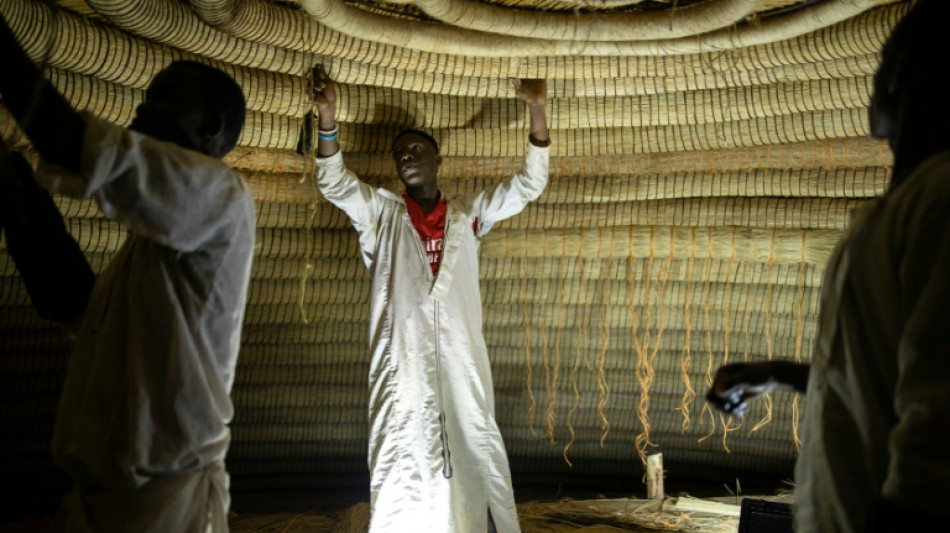
UNESCO backs removal of Uganda tombs from endangered list / Photo: © AFP/File

 South African election results renew debate over identity-based voting

 South African voters report smoother local election but declining IEC trust

 Dolly Parton museum and Nashville hotel open after singer’s death

 George and Amal Clooney attend New York political-comedy reading

 British buyers pay substantial premiums for period-home appearance

 Thomas Markle released to house arrest after child-abuse-image charge

 Dawn of War 4 developers chose Adeptus Mechanicus for tactical variety

 Italy face unbeaten South Africa in Turin Nations Championship match

 ChatGPT interactive interface feature tested across six custom tools

 Freshways milk-price cut deepens pressure on UK dairy farms

 Labour and National remain virtually tied as New Zealand vote count advances

 The Good Daughter adapts Karin Slaughter thriller with Rose Byrne and Meghann Fahy

 Heavy-lift drone evacuates wounded Ukrainian soldier from frontline kill zone

 Morrison says West Brom recovered after pressure from successive derby losses

 Britain considers 2027 state visit for Ukraine’s Zelensky

 Arizona Democrats Secure Historic Trifecta with New Legislative Leadership

 Carney Welcomes U.S. Trade Reversal After Democratic Midterm Victory
UN cultural agency UNESCO on Monday recommended that tombs of royal traditional leaders in Uganda that were ravaged by fire more than a decade ago should be removed from its list of endangered heritage.
Housed in grass-thatched buildings on a hillside in the capital Kampala, the Tombs of Buganda Kings have been reconstructed with the help of international funding since the 2010 blaze.
The tombs at Kasubi, revered as an important historical and spiritual site for the Baganda people, were declared a UNESCO World Heritage Site in 2001.
UNESCO's recommendations, following a mission to the site in June, will go before the 21 member states of the World Heritage Committee at its meeting in the Saudi capital Riyadh from September 10-25.
The fire destroyed the main tomb building, a circular structure with a domed roof which was built in 1882 as a palace for the Kabakas or kings of Buganda and converted into a royal burial ground two years later.
UNESCO has described the building known as Muzibu-Azaala-Mpanga as an "architectural masterpiece".
It has said the removal of the tombs from the endangered list would be a powerful symbol given that 50 percent of sites considered in danger are in Africa.
After the blaze, at least two people were killed when Ugandan security forces quelled riots that erupted as supporters of the Kabaka tried to prevent Uganda's veteran President Yoweri Museveni from visiting the devastated site.
The disaster occurred at a time of strained relations between the government and the Baganda people after a travel ban was imposed on their largely ceremonial monarch in September 2009.
The ban triggered riots around Kampala that left at least 27 people dead.
Last month, thousands of Ugandans joined a ceremony marking the 30th anniversary of the coronation of current Bugandan king Ronald Muwenda Mutebi II, whose ancestors ruled a region that includes Uganda's modern-day capital.
Buganda, one of four ancient kingdoms in the East African country, was first established in the 14th century on the shores of Lake Victoria.
The Baganda make up the largest ethnic grouping in Uganda and their kingdom was granted considerable autonomy after independence from Britain in 1962.
But independence leader Milton Obote went on to outlaw the tribal kingdoms, and forced the Kabaka into exile.
The bush war that brought Obote's rival Museveni to power in 1986 was successful largely due to support from Buganda.
L.Janezki--BTB