US top court backs Big Tech over terror claims / Photo: © AFP

 Kenya halts US Ebola facility: health minister tells court

 Zelensky to skip key Ukraine conference in Poland over WWII row
 Europe heatwave closes schools, threatens health
 Germany eyes longer working lives in pension reform plan
 Iran says won't allow UN inspectors at bombed nuclear sites

 Banned Vondrousova insists she has 'never doped'

 UN chief urges AI firms to 'come clean' over environmental footprint
 More records set to fall as deadly Europe heatwave drags on

 England, Ghana eye last 32 as Portugal look for lift-off
 Sri Lanka troops to battle deadly dengue mosquitoes as cases rise
 Diaspora World Cup champions diversity over division

 Australia withholds Pacific climate fund reports over risk of diplomatic 'damage'
 Indian startup head appointed as new WhatsApp boss

 Antetokounmpo joining Miami Heat in blockbuster: reports

 'Let's be realistic': Haaland cools Norway's World Cup expectations
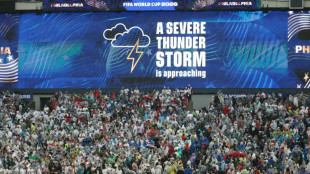 Lightning, downpour, a two-hour delay: bad weather hits the World Cup

 Two-goal Haaland fires Norway into World Cup last 32

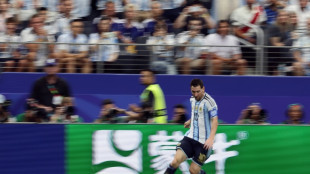 Last one the best one? How Messi keeps doing it at World Cup
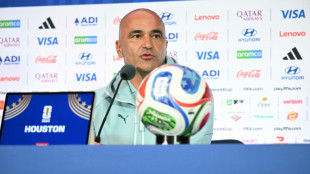
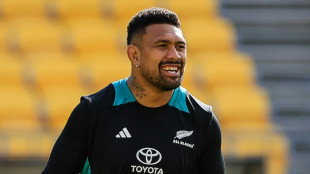 Savea 'embraces challenge' of leading All Blacks towards World Cup
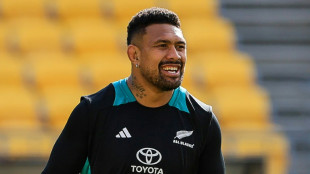 Savea 'embraces challlenge' of leading All Blacks towards World Cup
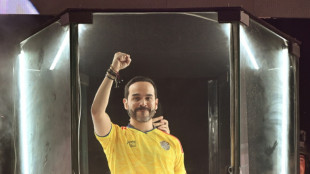
 Mbappe scores twice as France beat Iraq at World Cup after two-hour storm delay

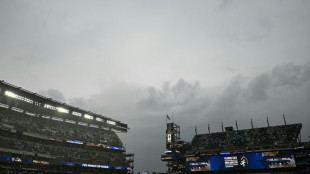 France-Iraq World Cup game restarts after two-hour storm delay

 World Cup exploits of Maradona and Messi have Argentina fans in raptures

 'Boston Tea Party' compensation claim to be displayed at UK exhibit

 France-Iraq World Cup game suspended due to severe weather alert
The US Supreme Court handed a victory to Twitter and Google on Thursday, saying the social media giants could not be held liable by victims of terrorist attacks for posts that endorsed the Islamic State group.
Crucially, the cases that targeted Google-owned YouTube and Twitter were seen as potential challenges to decades-old legal protections for tech companies.
The justices declined to wade into the debate, indicating that the cases fall outside the scope of the law because the platforms did not in any case "aid and abet" IS terror attacks by hosting postings supportive of the extremist group.
A law known as Section 230 gives internet platforms blanket immunity from any legal fallout of content that comes from a third party, even if it is pushed out as a recommendation by the website.
Section 230, which became law in 1996, is credited with allowing the no-holds-barred expansion of the internet but has increasingly been seen as helping cause the harmful effects of social media on society.
Without it, websites would potentially be open to lawsuits for content posted by users, making the free-wheeling discussions seen on social media subject to much stricter moderation.
A bitterly divided US Congress has failed to update the rules, and many US states are passing their own laws to make platforms such as Facebook, Instagram and TikTok more responsible for content.
"Enough is enough... Congress must step in, reform Section 230, and remove platforms' blanket immunity from liability," said influential Democratic Senator Dick Durbin after the ruling.
- 'Decline to address' -
The justices of the Supreme Court largely evaded the question. They said that the allegations against YouTube and Twitter did not amount to a liable infraction and therefore the debate over section 230 was not pertinent.
"We therefore decline to address the application of Section 230 (in a case) that appears to state little, if any, plausible claim for relief," they said.
The justices however gave no indication on how they could potentially address the immunity issue in the future, nor were their stances on the matter made clear at hearings in February.
Google welcomed the result.
"Countless companies, scholars, content creators and civil society organizations who joined with us in this case will be reassured by this result," said Halimah DeLaine Prado, Google’s general counsel.
An association representing US tech companies said the decision was good news.
"The Court correctly recognized the narrow posture of these cases and declined to rewrite a key tenet of US Internet law, preserving free expression online and a thriving digital economy," said Matt Schruers, head of the Computer & Communications Industry Association.
- 'Fight another day' -
The first of the two cases involved a US victim of the 2015 Paris attacks, claimed by the IS group.
The other case was brought by the family of a victim of a 2017 attack by the group on an Istanbul nightclub.
The family alleged that Twitter's failure to take down and stop recommending IS tweets constituted aiding an act of terror.
The Supreme Court declines to hear the vast majority of the cases that come its way, and experts had predicted that by opting to decide on this one justices could be willing to modify the increasingly contested landmark law.
But in the hearings, the justices largely expressed doubts that the case would be fit to begin a debate about reworking Section 230.
J.Bergmann--BTB