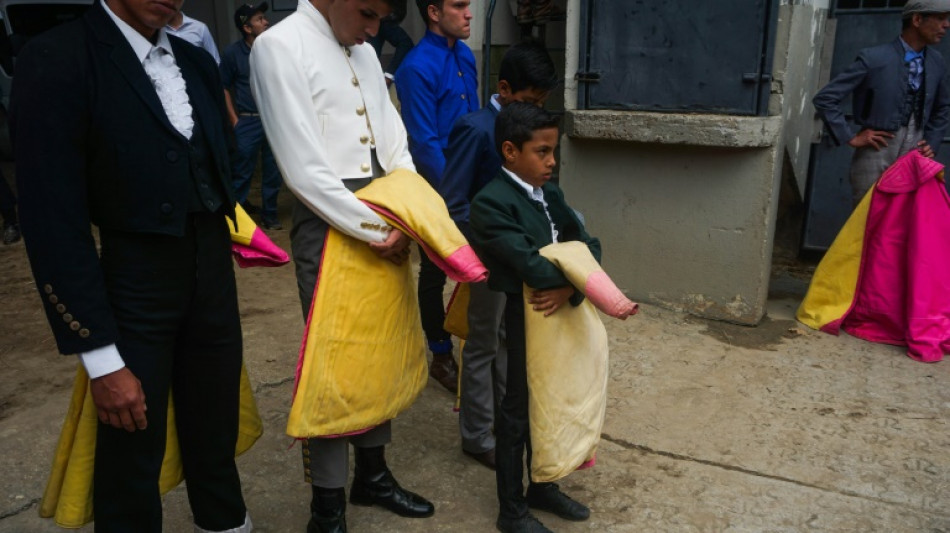
'Look brave': Children taught bullfighting at Venezuelan torero school / Photo: © AFP

 China's Yu, 13, wins third gold with latest Asian Games record

 UK says will revisit Chagos deal after latest Trump criticism
 In first, French presidential candidate gives birth during campaign

 Cambodia no 'safe haven' for cyberscams, PM says
 North Korea weightlifter sets three world records for Asian Games gold

 A Full Moon for Every Child: STARTRADER's STARCARES Brings Support to SOS Children's Village Ho Chi Minh City

 Meta leans into AI, smart glasses amid privacy pushback
 Battered Duerer masterpiece up for five-year revamp

 Trump met with Venezuela's interim leader at UN

 Malaysia furore after Najib wins conditional house arrest

 Italy hope for new dawn under Mancini

 Mongolian herders enlist new tech against harsher, drier climate

 Tata turmoil shines light on India succession woes

 World Cup 'not enough' as Spain begin next chapter

 Meta acts against 3.7 mn scammers' accounts with Singapore police help

 Australia PM says draft social media rules about taking back control

 Voting opens in Alaska's annual Fat Bear Week

 MLS coach axed for telling female ref 'It's a man's game'

 US refuses to give Sudan's de facto leader visa for UN

 Man City hold Bayern to start Women's Champions League, Arsenal win late
 Trump threatens Iran with 'hell' but reveals fresh talks

 Trump signs security deal with Greenland, Denmark at UN
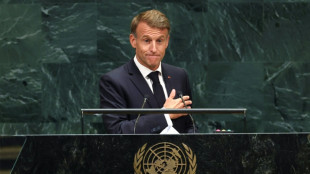
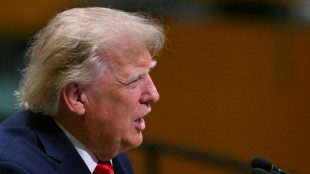 Trump threatens Iran with 'hell' but unveils fresh talks

 Chile's Atacama Desert blossoms with life after El Nino rains

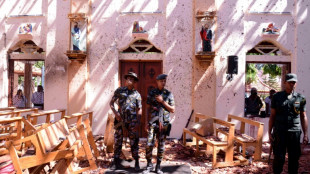 Sri Lanka hands 220-year jail terms to 15 convicted of Easter bombings

Nine-year-old Cesar Paredes enters the bullring impeccably dressed in his traditional Venezuelan bullfighter's suit, pink cape neatly folded over one arm, to the ovation of an enthusiastic crowd.
He may be small, but he has big dreams of becoming a matador.
Paredes is one of 17 children aged six to 14 -- one of them a girl -- learning the tricks of the bullfighting trade at a torero school in Merida, a city in the Venezuelan Andes where the tradition persists despite protests by animal rights campaigners.
One day "I want to leave (the ring) through the big door as a great bullfighter," the boy told AFP.
It is in Cesar's blood: his older brother is a bullfighter and their pursuit is encouraged by their mother, an avid fan of the controversial pastime.
Bullfighting is an income generator for Merida, with continued high attendance despite a long-running economic crisis that has severely diluted Venezuelans' purchasing power and caused a mass exodus.
- 'Look brave' -
Cesar and his classmates are taken through their paces by retired torero Mauro Pereira, 73, who gives three-hour classes outside of school time.
The pupils learn the correct posture and how to extend their arms as they swish the cape in the direction of the bull.
They take turns playing the animal, pretending to charge with fake horns.
The children also learn how to "look brave" as they confront the bull, and how to bend their knees in a fall in order to get up again quickly and avoid being trampled.
"We can't hesitate, we have to be determined and also have to show respect," said Leonardo Rangel, a 14-year-old among Pereira's pupils.
"When you start, you don't win... from the get-go. It happens step by step. You have to practice to be good," he told AFP.
- 'We want to fight' -
In February, Pereira's pupils attended an inter-school bullfighting contest in Merida.
But they had to leave disappointed.
An order from a local court prohibited minors from taking part in the event, or even being near bullfights in which older trainee matadors participated.
"The children shouted 'We want to fight!', but they would not let them," lamented Maritza Arias, Cesar's mother.
"It was very painful to have them removed from the stands."
The boy was allowed only to take part in a presentation of matador skills, without a bull anywhere near.
"I am very proud to see my children in this, when things go well it becomes a discipline, it is art for me," says Arias, 47.
- 'Killing of a living being' -
But just as the love for bullfighting endures in parts of Venezuela, so does opposition to it.
Parliament is examining a law against animal abuse that could outlaw the practice.
As the law currently stands, it is up to municipalities to regulate events involving animals. Cities like Caracas and Maracaibo have banned bullfighting.
"I criticize those who go to a bullring to witness the killing of a living being," said Johan Sanchez, co-director of the Napda Foundation which campaigns against the practice.
"We have to educate future generations to save" the bulls, he added.
But for Pereira, bullfighting is part of "a culture thousands of years old."
"The fighting bull was created to die with honor and bravery in a bullring," he argued.
Seven countries apart from Venezuela still allow bullfighting: France, Spain, Portugal, Colombia, Mexico, Ecuador and Peru, sometimes with restrictions.
J.Horn--BTB