Fake social media accounts aimed at Ukraine, says Meta / Photo: ©

 Multi-Asset Trading Venue Monochrome Exchange Announces IEO of Its Native Token, $MCR
 South Korea break Japan hearts to win Asian Games basketball gold
 Acosta takes first victory at Austrian MotoGP

 PSG president Nasser al-Khelaifi under investigation in France for conflict of interest

 China swim sensation, 13, sets Games record after Japan win early

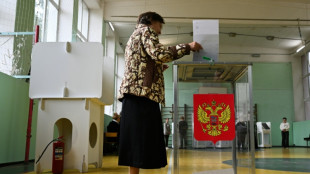 Drones hit Moscow as Russians go to the polls

 New England boss Fleming says 'wrong' to ask Stokes to end retirement

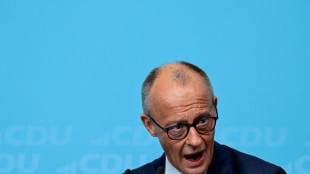 Germans vote in elections threatening fresh blow to Merz
 US fears rapid escalation in Mideast after Houthis attack Riyadh

 Japan triathlete Hojo wins first gold of Asian Games

 IOC president impressed by 'beautiful' Asian Games wooden huts

 First Asian Games gold goes to Japan as China's 13-year-old Yu lights up pool

 Data centre command hub keeps AI up and running
 Pope Leo in France: the issues on the table

 Packing for a pope: behind the scenes on foreign trips

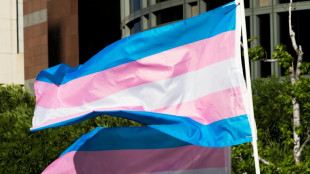 Republicans find transgender issues a powerful political weapon in midterm campaigning

 German state elections threaten new shock waves for Merz

 Chile's Bachelet quits race to be next UN chief

 Raphinha treble fires perfect Barca to win at Sevilla

 Thiam makes winning heptathlon return at Decastar meet

 Czechs beat USA to qualify for Davis Cup finals
 Dortmund sink Stuttgart to climb to Bundesliga summit

 Trump says will not tolerate attempts to slow AI growth

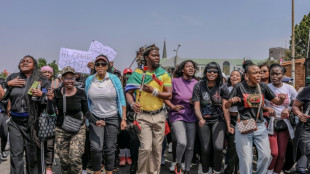 'It has to stop': runners protest women's murders in S.Africa district

 Fire erupts near Riyadh airport as Houthis claim strikes

Pro-Russia groups are orchestrating misinformation campaigns on social media, using fake profiles or hacked accounts to paint Ukraine as a feeble pawn of Western duplicity, Meta said Sunday.
The cyber security team at the tech giant -- parent of Facebook and Instagram -- said it blocked a set of Russia-linked fake accounts that were part of a social media scheme to undermine Ukraine.
"They ran websites posing as independent news entities and created fake personas across social media platforms including Facebook, Instagram, Twitter, YouTube, Telegram and also Russian Odnoklassniki and VK," Meta said in a blog post.
In some cases, "they used profile pictures that we believe were likely generated using artificial intelligence techniques."
The small network of Facebook and Instagram accounts targeted people in Ukraine, using posts to try to get people to visit websites featuring bogus news about the country's effort to defend itself from the invasion by Russia.
Meta said it connected the network to people in Russia and Ukraine, as well as media organizations NewsFront and SouthFront in Crimea.
The US has identified NewsFront and SouthFront as disinformation outlets that get marching orders from Russian intelligence services.
The organizations were among more than a dozen entities sanctioned by Washington for trying to influence the 2020 US presidential election "at the direction of the leadership of the Russian Government."
Meta shut down the bogus accounts and blocked sharing of internet addresses involved in the deception, director of threat disruption David Agranovich said in a briefing.
Bogus claims published by the sites include that the West had betrayed Ukraine and that Ukraine is a failed state, according to Agranovich.
- 'Ghostwriter' -
Meanwhile, a hacking group called Ghostwriter believed to operate out of Russia has ramped up action against military figures and journalists in Ukraine in recent days, according to Meta's security team.
Ghostwriter's typical tactic is to target victims with "phishing" emails that trick them into clicking on deceptive links in an effort to steal log-in credentials.
The goal of compromising Facebook accounts appeared to be to spread links to misinformation, such as a YouTube video falsely contending to be of Ukrainian soldiers surrendering to Russian troops, according to Meta.
"We've taken steps to secure accounts that we believe were targeted by this threat actor," said Meta head of security policy Nathaniel Gleicher.
"We also blocked phishing domains these hackers used to try to trick people in Ukraine into compromising their online accounts."
Facebook on Friday restricted Russian state media's ability to earn money on the social media platform as Moscow's invasion of neighboring Ukraine reached the streets of Kyiv.
Gleicher said that Meta had yet to see any throttling of Facebook in Russia, despite the country threatening to hit it with restrictions after it refused to stop using fact-checkers and content warning labels on state media posts.
Social media networks have become one of the fronts in Russia's invasion of Ukraine, home to sometimes misleading information but also real-time monitoring of a quickly developing conflict that marks Europe's biggest geopolitical crisis in decades.
K.Brown--BTB