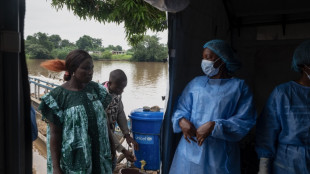
'We will have nothing': Niger kidnap victims fear border bandits / Photo: © AFP

 Bugatti CEO to stop leaving keys inside cars after Chiron theft

 Starc, Lyon leave South Africa reeling

 Arsenal lose appeal against Dowman red card in shock Fleetwood defeat
 French court rules Meta must negotiate over rights payments

 Spain demands answers as rail disaster toll rises

 Garcia bids for Ryder Cup return as he confirms LIV exit

 England outlast Sri Lanka despite Rathnayake's hundred in dead rubber

 Starc strikes twice as Australia push for victory

 Does White House ask AI to shape policy? Democrats want the receipts
 Trump tees up Alaska election challenge over same-name candidate 'fraud'
 IMF says engaging with Iraq on preparing new bailout program
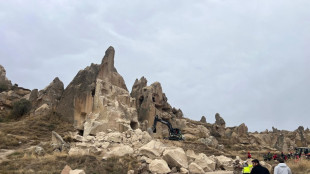 Two dead in rock spire collapse at Turkey's touristic Cappadocia

 No surprise to Carrick he's still Man Utd manager

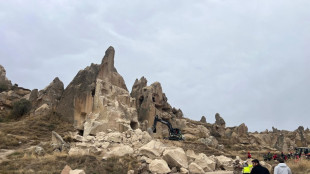 Two dead in rock spire collapse at tourist site in Turkey's Cappadocia

 ECB holds rates steady after Lagarde says to quit early

 US economy posts strong growth, inflation stubbornly high in challenge to Trump

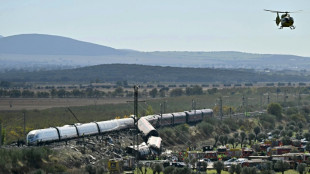 What we know about Spain's deadly train crash

 ECB chief Lagarde to step down early, triggering succession race

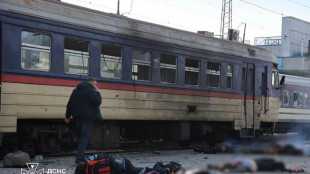
 'Horrific' Russian drone strike kills 14 at Ukraine train station: Kyiv

 VW says 'no time to lose' to slash costs after 5.8 billion euro loss

 Australia lead by 100 after Inglis century

 Martin to ride with broken wrist in Malaysian MotoGP practice

 England forward Toney to stand trial for alleged assault in June 2028

 Warrican's five-wicket haul leads West Indies fightback in Bangladesh Test

 Oil majors reap bumper profits as Mideast war drives prices
Kidnapped, held captive and raped by four guards, Messaouda is now free, but too afraid to return to her village, near the southern Niger border with Nigeria.
She was held hostage last year in the forest between the two African countries for 19 days by bandits who repeatedly attacked her and fellow captives, until a ransom was paid for their release.
Messaouda, in her 20's, was forced from her home in the Maradi region by armed bandits along with her two co-wives, a six-month-old baby and a one-year old child, she told AFP.
"They came to steal cattle in our village fourteen days before our kidnapping," she told AFP.
But when the bandits returned, it wasn't for livestock.
"On the night we had been kidnapped, it was raining like a tornado," she recalls.
"Our husband was at the mosque for the evening prayer... (when) a dozen people arrived in our home (and) told us to come."
The group were released only after the payment of two million CFA francs (3,000 euros) in ransom.
They have since settled in another village and Messaouda came to the town of Madarounfa to meet AFP.
Her story is similar to that of thousands of other victims in neighbouring Nigeria where armed bandits reign by terror and demand ransoms for their victims.
Hostages are usually released after ransom payment to the gangs, who reputedly hole up in the vast Rugu forest straddling Zamfara, Katsina, Kaduna and Niger states.
But the practice is increasingly common in southern Niger -- the world's poorest country by the benchmark of the UN's Human Development Index.
The rise in kidnappings is becoming "really worrying", said regional governor Chaibou Aboubacar.
Niger has been hit hard by the jihadist insurgency that began in northern Mali in 2012.
The country faces an explosive mixture of a climate and food crises, as well as a young, poor population in need of jobs -- some of whom seek to arm themselves in response to the bandit attacks alongt the porous border.
- 'Operation Hedgehog' -
In his small office, Souffle de Maradi newspaper editor in chief Maham Kaouge writes down every attack, every kidnapping and every ransom in their region.
In 2021, he counted 91 people kidnapped -- one every four days.
Some 51 million CFA francs (80,000 euros) have been paid in ransoms in total, according to the journalist.
One of the kidnap victims was Hamissou, who asked not to be fully identified. The 50-year-old was taken by six armed men in March this year and held for 17 days in the Nigerian forest.
His family, two wives and eleven children managed to collect the ransom by selling their land.
But the terrifying experience left him determined to try and do what he could against the bandits.
Otherwise "soon we will have nothing", he says.
"It is important for us who are from Maradi to have our own statistics, which are verifiable."
He also plans to join a local vigilance committee in the village, which uses homemade weapons to try and defend the community.
Some suggest that these groups are secretly supported by the state.
Governor Chaibou has denied it, but says he is open to "any proposal from all or part of the population" that could help tackle the problem.
But the main pillar of government policy remains military action, he told AFP.
Soldiers, trained by the Belgians, have been deployed along the border with Nigeria in a military operation called "Hedgehog Hunt".
"Maintaining social cohesion is the main challenge," says Hassan Baka, from the Association for the Revitalization of Livestock in Niger, one of the main groups for breeders in the region.
Together with local officials, Baka helps organise debates in the nearby villages so that "all the communities understand we are linked by the same destiny".
A cooperation framework launched in 2017 between Maradi and Nigeria's Katsina region will soon be extended to all parts of southern Niger and more Nigerian states.
Baka and local university teacher Nouhou Salifou Jangorzo say they share the real fear that the simmering tensions and violence will morph into the establishment of jihadist groups in the fertile border region.
It will be a "great catastrophe" on the day "when this banditry becomes terrorism," the teacher says.
D.Schneider--BTB