
UN rights council credibility at stake over China, Russia response / Photo: © THE VICTIMS OF COMMUNISM MEMORIAL FOUNDATION/AFP/File

 Brewers beat Rays 4-1 to capture first World Series title
 Philippine island fights rising seas with nature, not concrete

 Bangladesh presses India before Ganges water treaty expires

 Trump accuses Alaska Democrats of fraud over same-name scandal
 Spain mourns after latest train tragedy kills 68
 Trump's border: quiet, but few people are happy
 Australian defence chief says China military buildup creating 'pressure' in SE Asia
 No penalty practice? No problem for Man City in shoot-out win

 Microsoft beats expectations fueled by Azure cloud business
 Chelsea win as Bayern draw with Madrid in Women's Champions League

 Kane watches as Bayern cruise into German Cup last 16
 Bayern boss Kompany out of hospital after meningeal irritation
 Shares in Google owner Alphabet sink on profit miss, ad slowdown
 Chelsea win as Bayern and Madrid draw in Women's Champions League
 Made with munitions from the Falklands War, a 'Chalice of Peace' for the pope
 Pioneering US labor leader Dolores Huerta dies at 96

 Italian PM slams 'shameful' release of alleged protest organiser
 Hollywood producer Kennedy to head LA28 Olympic ceremony plans
 Djokovic wins Basel opener to boost ATP Finals bid
 US Fed holds interest rates steady despite surging inflation
 Chiefs sign ex-Ravens kicker suspended over sex allegations

 Inglis and Carey put Australia in command of South Africa decider
 92-year-old US judge handling Maduro case dies
 Perez extends Cadillac deal to 2029
 Arab Israelis proud of high election turnout, uncertain for future

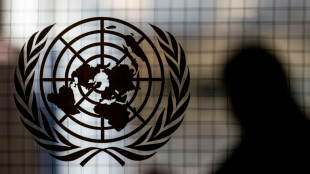
Faced with allegations of grave violations in China and Russia, the UN body created to address rights abuses seems paralysed by uncertainty on how to respond.
The UN Human Rights Council, which will host a month-long session in Geneva from Monday, frequently acts to investigate and rein in abuses inside countries.
But that task is trickier and more fraught when the countries involved are among the world's most powerful, and permanent members of the UN Security Council.
Human rights council members have long shied away from taking on the two heavyweights directly, but a damning United Nations report on violations in China's Xinjiang region and concerns over an intensifying crackdown inside Russia have spurred calls for action.
Yet fears abound that a failed attempt to hold either country accountable would signal a shifting power balance and weaken the council.
"The way the council builds its response will influence its capacity to address the most serious situations in the years to come," a European diplomat told AFP.
"What is at stake is the vision of the universality of human rights, the vision of the role of the human rights council."
- New world order? -
China is facing intense scrutiny after former UN rights chief Michelle Bachelet released her long-delayed Xinjiang report last week, warning of possible crimes against humanity.
The report brought the UN seal to allegations by campaigners and others of a litany of abuses in Xinjiang, where they say more than one million Uyghurs and other Muslims have been detained.
Beijing has vehemently rejected such charges and criticised the report, accusing the UN of becoming a "thug and accomplice of the US and the West".
Bachelet's newly-appointed successor, Volker Turk of Austria, will face the tricky follow-up job, but the report also hints the rights council should address the issue.
Amid frenzied diplomatic consultations, there appears to be agreement that doing nothing is not an option.
"If a majority of countries on the Human Rights Council decide not to take action in a situation as serious as the one described in Mrs Bachelet's report, that would mean that we are in another world order," the European diplomat said.
There have been calls for an urgent council debate on Xinjiang, or a resolution denouncing the abuses or even requesting the appointment of an expert to probe the situation.
- 'Cost of inaction' -
"Governments should waste no time establishing an independent investigation," John Fisher of Human Rights Watch said.
At the same time, Western countries and their allies are wary of the impact if they fail to garner enough votes to pass a resolution in the 47-member-council.
"There is a cost of inaction, and a cost of a failed attempt to act," a Western diplomat said.
China has been energetically lobbying countries behind the scenes to "pre-emptively" counter any moves, observers say.
"We are strongly opposed to any politically-motivated exercise," Chinese ambassador Chen Xu told reporters Friday.
"We are ready to conduct business in a constructive way, but if anybody launches joint actions against us, we have to be fully prepared."
It remains unclear how the votes would land, and observers say Western countries might postpone presenting a resolution until they know the support is there.
"We need to look very closely at whether we have a majority or not", the European diplomat said.
The same goes for Russia.
Earlier this year, the council ordered a high-level probe of violations by Russian troops in Ukraine.
But there has been growing pressure for the body to also turn its gaze on rights abuses inside of Russia.
Rights groups have urged European Union countries to lead on a resolution to appoint an independent expert known as a Special Rapporteur to examine the situation, but a decision has yet to be taken.
"Everyone agrees there is a need... but what we haven't agreed on is timing," the Western diplomat said.
Despite being kicked off the council earlier this year over its war in Ukraine, "Russia does not lack support," the European diplomat said.
"One has to keep that in mind... The impact of a defeated resolution would be felt for a long time."
O.Lorenz--BTB