Fresh hopes for landmark treaty to rescue ocean life / Photo: ©

 South Korea economy grows three times faster than expected in Q3

 Ballon d'Or: Harry Kane's crowning moment

 Harry Kane wins men's Ballon d'Or

 Lula win rattles Brazil markets over spending spree fears

 De la Fuente wins men's Ballon d'Or coach of year

 Trump slams 'rigged' Brazil election after ally loses to leftist Lula

 Nadal returns for Vegas hardcourt event

 Fainga'anuku named as loose forward for All Blacks northern tour

 Anthropic points to AI dangers, soaring sales in IPO filing

 Sinner to play rescheduled Saudi Six Kings in December
 Brazilian lawmaker Andre Janones, Lula's social media 'general'

 Swiss Ebola patient repatriated from Nigeria

 Nations far from a deal as UN nature talks enter final stretch

 Brazil markets battered, tech in focus elsewhere

 French court adjourns trial over 2020 death of delivery driver

 Serbian student movement eyes power after election triumph

 Machado ready to meet Venezuela leader after shock return

 Lula celebrates election win as Brazil markets tumble

 France's Macron accuses social media of sowing discord ahead of election
 Anthropic unveils IPO filing showing soaring sales and AI risks

 US singer Chris Brown avoids jail over London nightclub brawl

 US singer Chris Brown avoids jail over UK nightclub brawl
 Man Utd crisis deepens as Carrick faces axe

 Serbian student movement eyes power after resounding snap poll victory

 Eala breezes past world number 411 in Tokyo opener

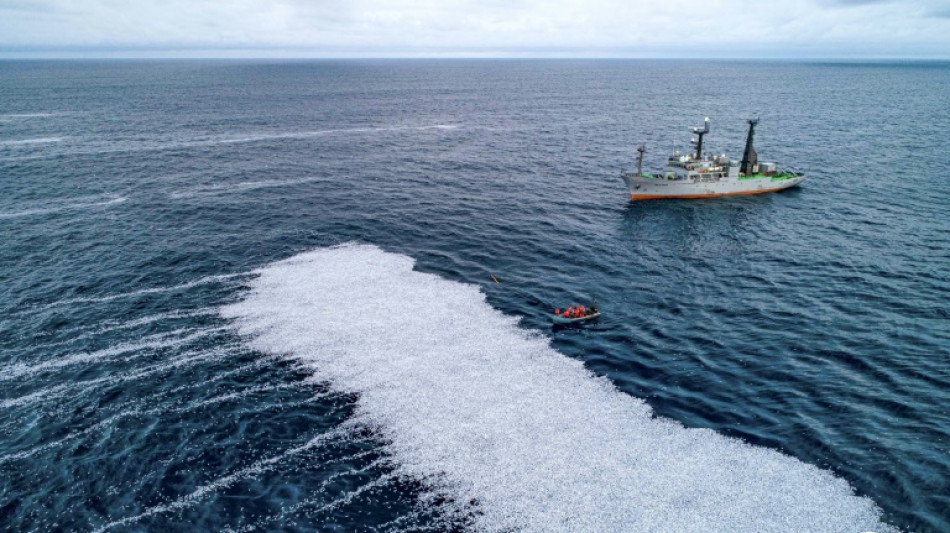
World leaders are under pressure to conclude years of talks on an agreement to protect open oceans that help sustain life on Earth, cover almost half the planet and currently fall under no country's laws.
As plans to protect and restore ecosystems across the world are mainstreamed, conservationists hope an oceans summit in France this week will give fresh momentum to efforts to finalise a legally binding UN treaty on the high seas.
The issue could not be more urgent, they say.
Oceans produce half the oxygen we breathe, regulate the weather and provide humanity's single largest source of protein.
But they are being pushed to the brink by human activities.
Carbon dioxide emissions and global warming drive devastating heatwaves and acidification, while humans have fished some marine species to the edge of extinction and used the world's waters as a garbage dump.
"The oceans as a whole are becoming warmer, the salinity levels are increasing. There's less oxygen for marine life," said Liz Karan, an expert with The Pew Charitable Trusts.
Even if a new treaty cannot solve all these problems, she said the accord was "more important than ever".
"What it can do is to ensure that there are refuges in place, great protected areas in place, that can give marine species a chance to breathe, an opportunity to survive and adapt to climate change."
- 'Greatest opportunity' -
Today, a patchwork of agreements and regulatory bodies govern shipping, fishing, and mineral extraction, while the UN Convention on the Law of the Sea, negotiated in the 1970s, lays out rules for how far a nation's zone of influence extends beyond its shores.
But despite two decades of consultations and negotiations, there is still no treaty protecting international waters -- those marine areas beyond national jurisdiction, accounting for about two-thirds of the world's oceans.
A new round of UN talks in March will aim to conclude the agreement.
"We sometimes say this is the most important environmental treaty that most people haven't even heard of," said Peggy Kalas, director of the High Seas Alliance, which brings together some 40 NGOs and the International Union for Conservation of Nature (IUCN).
The issue is finally gathering wider attention, she said, adding that meetings like the One Ocean Summit being held this week in the north-western French port city of Brest can help add to the pressure on governments to reach an agreement.
"It is really the greatest opportunity in a generation to conserve ocean life and diversity on a global scale," she told AFP.
- Shared responsibility -
Several issues divide nations on how best to manage the world's vast expanse of open ocean.
Among the chief issues up for debate are the creation of marine protected areas and the scope for curbing large-scale commercial fishing.
Another contentious question is who gets a share of the benefits from the exploitation of what are known as "marine genetic resources".
Poorer countries fear they will be sidelined as wealthier nations scour the seas for the next wonder ingredients for the pharmaceutical, chemical or cosmetic industries, and lock up the spoils in trademarks and patents.
"They want any financial gain originating from the resources of the high seas to fall under a benefit-sharing regime," said Andre Abreu, of the Tara Ocean Foundation.
An indication of the continued wrangling is the sheer number of sections in the latest treaty draft from 2019 still in tentative square brackets.
These include several overarching statements for the high seas, like the reference to the "polluter pays principle" and the "common heritage of mankind", a designation that currently only applies to the world's sea beds.
Other issues on the table include how to set up environmental impact assessments, enforcement and technology transfer.
The concept of marine protected areas has gathered significant international support, with more than 75 countries backing a plan to create conservation areas covering 30 percent of the world's land and oceans by 2030.
But the High Seas Alliance said a key issue will be if the treaty allows individual states to be able to veto the creation of a marine protected area.
"We're at the stage where we really need leadership from the highest level," Kalas said.
"This is urgent, every day and year it is delayed, there is biodiversity loss. We need to conclude these negotiations."
K.Brown--BTB