
Once hated by the left, FBI is now US conservatives' evil demon / Photo: © AFP

 Chelsea win as Bayern draw with Madrid in Women's Champions League

 Kane watches as Bayern cruise into German Cup last 16
 Bayern boss Kompany out of hospital after meningeal irritation

 Shares in Google owner Alphabet sink on profit miss, ad slowdown
 Chelsea win as Bayern and Madrid draw in Women's Champions League
 Made with munitions from the Falklands War, a 'Chalice of Peace' for the pope

 Pioneering US labor leader Dolores Huerta dies at 96

 Italian PM slams 'shameful' release of alleged protest organiser
 Hollywood producer Kennedy to head LA28 Olympic ceremony plans
 Djokovic wins Basel opener to boost ATP Finals bid

 US Fed holds interest rates steady despite surging inflation
 Chiefs sign ex-Ravens kicker suspended over sex allegations

 Inglis and Carey put Australia in command of South Africa decider

 92-year-old US judge handling Maduro case dies

 Perez extends Cadillac deal to 2029
 Arab Israelis proud of high election turnout, uncertain for future

 Inglis, Carey put Australia in command of South Africa decider
 French firm Safran helps build aircraft wings of the future in UK factory

 Ceasefire in Russia-occupied Ukrainian city holds for second day

 Canada hikes rates to contain oil price surge caused by Iran war
 World Bank warns of worsening food insecurity as commodity prices soar

 Mona Lisa scrubbed from Syrian textbooks as critics slam conservative drift
 Bolsonaro flees Brazil for US after election defeat: AFP
 Brazil's Bolsonaros: between power, prison, and exile

 Israel president urges against new vote despite inconclusive result
Agents of the US Federal Bureau of Investigation are used to criticism, but never in the agency's history have they faced anything like the attacks from conservatives after last week's raid on former president Donald Trump's Florida home.
Over its more than 100-year history, the FBI has been excoriated by southerners committed to racist segregation, by civil libertarians defending political activists and especially by African Americans whose 1960s liberation movement was treated as an acute national threat by the agency.
But the extraordinary threats of the past week originate in the FBI's political bedrock: conservative Republicans.
"It's the world turned upside down," said Kenneth O'Reilly, a retired University of Alaska historian, who has written books about the FBI and politics.
According to O'Reilly, the FBI has historically been a "deeply conservative institution" with a bipartisan constituency in Washington.
But since Trump condemned the FBI as corrupt and fascist after they searched his Mar-a-Lago estate on August 8 for illegally retained top secret documents, the attacks have kept coming -- and his supporters have fanned the flames.
Republican National Committee chairwoman Ronna McDaniel accused the bureau of "abuse of power."
Senator Marco Rubio, a Republican from Florida, compared the agency to secret police in a Marxist dictatorship, while Representative Paul Gosar declared: "We must destroy the FBI."
Online, including on Trump's own Truth Social network, the threats were more violent -- and turned real.
On August 11, an armed 42-year-old man attacked the FBI's branch in Cincinnati after writing on social media accounts attributed to him that people should "respond with force" to the raid on Trump and "kill the FBI on sight."
The man failed to enter the office in the Ohio city, and was later shot dead by police.
One day later, a 46-year-old man in Pennsylvania was arrested for making similar threats.
"If You Work For The FBI Then You Deserve To Die," he wrote on social media.
"My only goal is to kill more of them before I drop."
- Criticism, but no violence -
Long mythologized in film and television, the FBI -- the storied home of the 1930s G-Men and the powerful, inscrutable J. Edgar Hoover -- has regularly fielded criticism from all sides, O'Reilly told AFP.
"Among southern racists in the early 60s, there was a big backlash against the FBI, treating it like the Gestapo" when it investigated the lynchings of African Americans.
The worst period, O'Reilly said, was in the 1960s when the FBI spied extensively on and sought to undermine the civil rights movement, smearing Martin Luther King Jr. and stoking violence between rival groups to discredit them.
But the reactions at the time, said O'Reilly, who documented the FBI's war on the Black nationalist movement, were outrage and litigation, and then a sweeping Congressional probe that exposed the abuses.
"You didn't have violence directed at FBI agents," he said.
- Popular support until now -
In 1995, FBI actions did spark a violent attack. Anti-government extremists bombed a federal office building in Oklahoma City that included the regional FBI headquarters, killing 168 people.
The two extremists were motivated in part by the FBI's poor handling of two hostage-like sieges in 1992 and 1993 that turned deadly.
But through all of that, the FBI maintained general political and popular support.
The current anti-FBI turn has its roots in Trump's long battle with the bureau's investigations, and specifically its probes into hundreds of his supporters who violently stormed the US Capitol on January 6, 2021.
For O'Reilly, the open threats by Trump supporters and politicians are what makes the current moment shocking.
"I would guess the overwhelming majority of FBI agents voted for Trump," he said.
"So it's just a wild idea that the most conservative elements of the Republican Party see the FBI as a tool of the radical left."
- Climate of violence -
The strong response by US justice authorities to the threats has also been extraordinary.
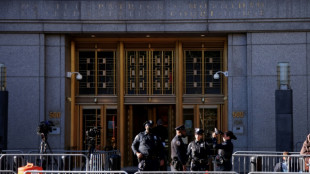
Fences were erected to protect the FBI headquarters in Washington
"Violence and threats against law enforcement, including the FBI, are dangerous and should be deeply concerning to all Americans," warned FBI Director Chris Wray.
The Department of Homeland Security alerted in a special bulletin that agents could be in danger.
"I don't recall a threat stream similar to this in the last many years," Brian O'Hare, the president of the FBI Agents Association, told NPR.
"It's troubling. It's unacceptable. And it should be condemned by all who are aware of it," he said.
"It's a climate of acceptance of violence that needs to be changed."
B.Shevchenko--BTB