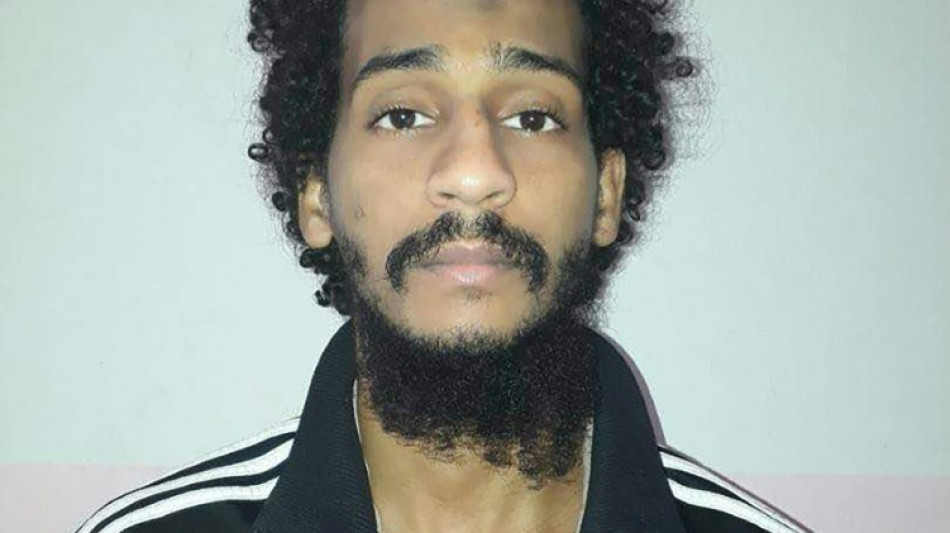
UK police detail 'remarkable' probe into IS 'Beatles' cell / Photo: © Syrian Democratic Forces/AFP/File

 How a viral post sparked India's Gen-Z protest
 Cambodia wants to bring tigers back, but should it?
 Chinese repairwomen smash stereotypes with power tools
 Ecuador's Death Canal: watery grave for victims of gang violence
 'Unique event': Solar eclipse fever fills empty Spain

 Venezuela says Caracas airport to reopen to commercial flights 'soon as possible'
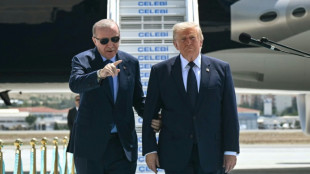
 World Cup: Eight teams remain in the hunt for glory
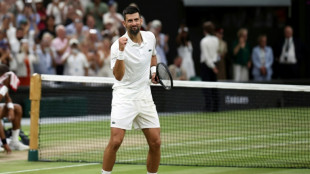 'A nice surprise': Marathon man Djokovic revels in Wimbledon epic

 Switzerland beat Colombia on penalties to reach World Cup quarter-finals

 Djokovic survives Wimbledon's longest quarter-final to book Sinner blockbuster

 'Flunked': US soccer seeks answers as World Cup dream shattered

 Mbappe revels in captain's role for France at World Cup

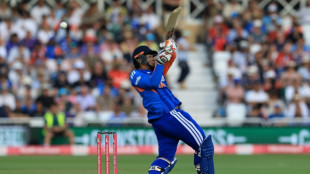 Iyer's India 'atrocious' in record 125-run T20 defeat by England
 Rain hands West Indies series win over Sri Lanka
 World Cup exit puts another nail in America's summer of fun
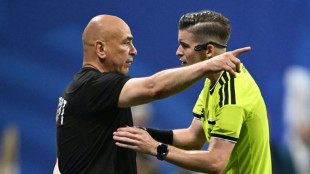
 US revokes Iran oil waiver after Hormuz tanker attacks

 England quicks star as India suffer record 125-run T20 defeat

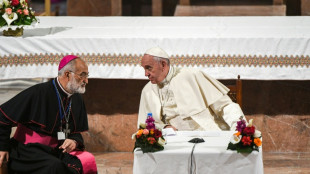 Cardinal tipped to be pope accused of molesting several women
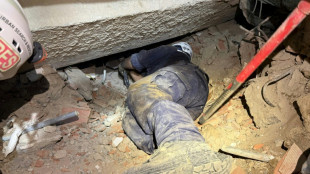
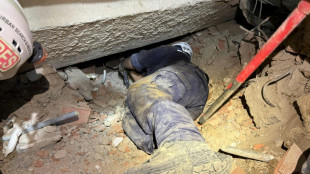 How rescuers carried out 180-hour 'miracle' amid Venzuela's ruins

 I can still win another Grand Slam, says Osaka after Wimbledon exit
 France's Le Pen says still running for president

 Argentina produce epic World Cup fightback to beat Egypt, reach quarters

 Canada province preparing lawsuit against OpenAI over school shooting
 Lidl-Trek celebrate 'perfect' day at Tour de France

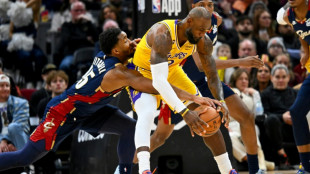 Cavs agree on Mitchell deal as LeBron watches: report

UK police lifted the lid Wednesday on a years-long probe into the notorious Islamic State (IS) kidnap-and-murder cell dubbed the "Beatles" by their captives.
Counter-terrorism officers said the hostages' recollections helped "zero in" on three of the British captors.
The IS cell members, who tried to keep their identities hidden, held dozens of foreign hostages in Syria between 2012 and 2015 and were known to their captives as the "Beatles" because of their distinctive British accents.
Two of them -- 38-year-old Alexanda Kotey and El Shafee Elsheikh, 34 -- have been brought to justice in the United States for their part in the gruesome beheadings and killings of several Americans.
Another, Mohamed Emwazi -- dubbed "Jihadi John" -- died in Syria in 2015.
A fourth alleged British member was remanded in UK custody last week on terrorism charges after Turkey deported him following a jail term there.
Ahead of Elsheikh's sentencing on Friday, British police have now detailed how their nearly decade-long probe unearthed key evidence used by US prosecutors to convict him in April.
"The building of the case is described as like putting together very small pieces of a jigsaw," Richard Smith, the head of London police's counter-terrorism unit, told reporters at a briefing Wednesday.
"What we pieced together here is a trail of breadcrumbs, fragments of breadcrumbs really, amongst a huge amount of other inquiries, which we were then able to present... to a court to assist the prosecution in the US."
- 'Snippet' -
London's Metropolitan Police first began probing what would become known as the "Beatles" cell in November 2012, when a spate of kidnappings of Western journalists and aid workers began in northern Syria.
Following some hostages' release, as well as videos of other captives being beheaded by an executioner with a British accent, officers discovered some of the suspected perpetrators were UK citizens.
From the accounts of freed hostages, alongside other information and intelligence, they first identified the executioner as Emwazi.
Born in Kuwait but raised in the UK since aged six, he was killed by a US drone strike in Syria in 2015.
As British police worked to identify others, Smith said a "snippet of conversation" between captors and captives provided the key breakthrough.
Kotey and Elsheikh had revealed they were once arrested in central London at a far-right English Defence League (EDL) protest, which featured a counter-demonstration by an Islamic group.
Officers were able to trawl back through records of arrests at such events and discovered a September 2011 incident in which the pair were held over a stabbing.
Police then unearthed video footage of the duo from the day, data from their seized mobile phones that showed links to Emwazi, and other evidence leads.
- Graphic phone images -
"(That) one piece of information emerged from the hostages we spoke to, which was fairly unremarkable on the face of it to the hostage but proved very significant to us," said Smith.
Officers also used a 2014 firearms conviction of Elsheikh's brother to find further evidence from his mobile phone seized in that case.
It included images of Elsheikh in Syria in combat gear with a gun, and graphic pictures of severed heads which the 34-year-old had labelled "Syrian casualties".
Meanwhile, officers discovered a 2009 police interview with him over an unrelated case that featured his voice, which experts were able to conclude was the same as a captor's heard in IS hostage videos.
The "Beatles" cell is accused of abducting at least 27 journalists and relief workers from the United States, Britain, Europe, New Zealand, Russia and Japan.
Kotey and Elsheikh were captured in January 2018 by a Kurdish militia in Syria and turned over to US forces in Iraq before being sent to the US with UK permission.
There they faced charges of hostage-taking, conspiracy to murder US citizens and supporting a foreign terrorist organisation.
Kotey pleaded guilty to his role in the deaths last September and was sentenced to life in prison in April.
K.Brown--BTB