Earning its stripes: tech bid to crack tiger trade / Photo: © AFP/File

 How a viral post sparked India's Gen-Z protest

 Cambodia wants to bring tigers back, but should it?

 Chinese repairwomen smash stereotypes with power tools

 Ecuador's Death Canal: watery grave for victims of gang violence

 'Unique event': Solar eclipse fever fills empty Spain

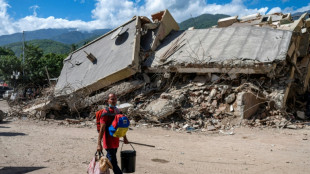 Venezuela says Caracas airport to reopen to commercial flights 'soon as possible'

 World Cup: Eight teams remain in the hunt for glory

 'A nice surprise': Marathon man Djokovic revels in Wimbledon epic

 Switzerland beat Colombia on penalties to reach World Cup quarter-finals

 Djokovic survives Wimbledon's longest quarter-final to book Sinner blockbuster

 'Flunked': US soccer seeks answers as World Cup dream shattered

 Mbappe revels in captain's role for France at World Cup

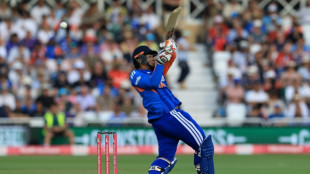 Iyer's India 'atrocious' in record 125-run T20 defeat by England

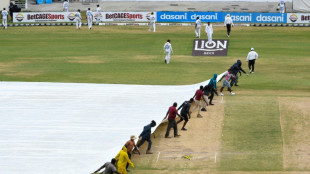 Rain hands West Indies series win over Sri Lanka

 World Cup exit puts another nail in America's summer of fun

 US revokes Iran oil waiver after Hormuz tanker attacks

 England quicks star as India suffer record 125-run T20 defeat

 Cardinal tipped to be pope accused of molesting several women

 How rescuers carried out 180-hour 'miracle' amid Venzuela's ruins

 I can still win another Grand Slam, says Osaka after Wimbledon exit

 France's Le Pen says still running for president

 Argentina produce epic World Cup fightback to beat Egypt, reach quarters

 Canada province preparing lawsuit against OpenAI over school shooting

 Lidl-Trek celebrate 'perfect' day at Tour de France

 Cavs agree on Mitchell deal as LeBron watches: report

In a town in northeastern Scotland, Debbie Banks looks for clues to track down criminals as she clicks through a database of tiger skins.
There are thousands of photographs, including of rugs, carcasses and taxidermy specimens.
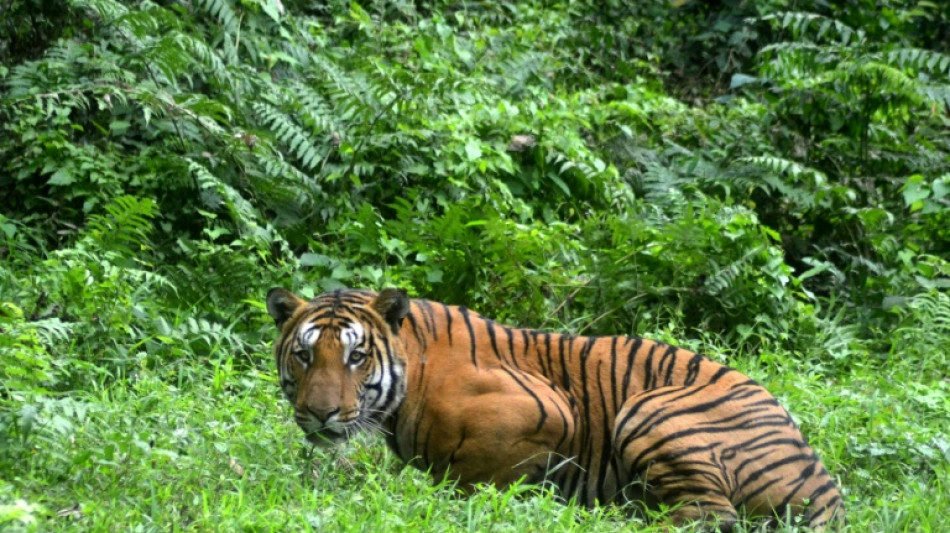
Banks, the crime campaign leader for the Environmental Investigation Agency (EIA), a London-based charity, tries to identify individual big cats from their stripes.
Once a tiger is identified, an investigator can pinpoint where it comes from.
"A tiger's stripes are as unique as human fingerprints," Banks told AFP.
"We can use the images to cross-reference against images of captive tigers that might have been farmed."
Currently this is slow painstaking work.
But a new artificial intelligence tool, being developed by The Alan Turing Institute, a centre in the UK for data science and artificial intelligence, should make life much easier for Banks and law enforcement officials.
The project aims to develop and test AI technology that can analyse the tigers' stripes in order to identify them.
"We have a database of images of tigers that have been offered for sale or have been seized," Banks said.
"When our investigators get new images, we need to scan those against the database.
"At the moment we are doing that manually, looking at the individual stripe patterns of each new image that we get and cross-referencing it against the ones we have in our database."
It is hoped that the new technology will help law enforcement agencies determine where tiger skins come from and allow them to investigate the transnational networks involved in trafficking tigers.
Once the officials know the origins of confiscated tiger skins and products, they will be able to tell whether the animal was farmed or poached from a protected area.
Poaching, fuelled by consumer demand, remains a major threat to the survival of the species, according to the EIA.
Tiger skins and body parts are sought after, partly due to their use in traditional Chinese medicine.
An estimated 4,500 tigers remain in the wild across Asia.
"Tigers faced a massive population decline in the last 120 years, so we want to do everything we can to help end the trade in their parts and products, including tiger skins," Banks said.
Anyone with photographs of tigers is invited to submit them to the EIA to help bolster the AI database.
"We are inviting individuals -- whether they are photographers or researchers and academics -- who may have images of tigers where their stripe patterns are clear," Banks said.
"They could be live tigers, dead tigers or tiger parts.
"If they can share those with us, the data scientists can then develop, train and test the algorithm," she said.
"We need thousands of images just to do that phase of the project."
K.Brown--BTB