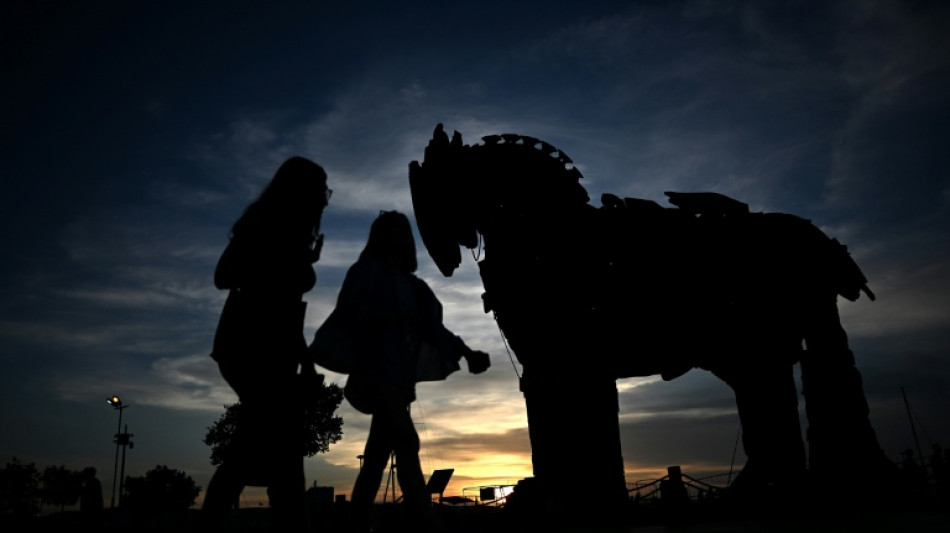
Between Homer and Hollywood: Troy a source of Turkish pride / Photo: © AFP

 Spain, France qualify for 2027 Women's World Cup as England wait
 A woman in charge of the UN? Candidates feel it's about time
 White House World Cup chief defends visa ban for Somali referee, Iranians

 'It doesn't matter': US star Reyna looks past World Cup scandal

 Knicks ready to 'throw the first punch' in NBA Finals
 Anthropic opens most powerful AI model to public with safeguards

 Trump vows response after Iran shoots down US helicopter

 Spurs handling physicality of Knicks and New York hostility
 Atalanta sack coach Palladino with Sarri set to arrive
 Scotland First Minister vows to help fans refused entry for World Cup in US

 Somalia backs referee after he is denied entry to US
 Pope Leo XIV met Bad Bunny in Madrid on Monday: Vatican

 EU orders Meta to open WhatsApp to rival AI chatbots for free
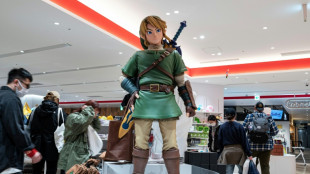 Nintendo to remake classic 'Zelda' game 'Ocarina of Time'

 Woolly mammoth among trove of ancient DNA found in squirrel poo

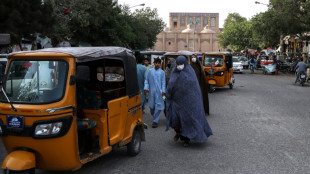 Afghan police disperse women's rights rally in Herat
 Townsend says Dempsey still part of Scotland set-up despite Japan move

 Itoje out of latest England training squad
 'No fairytale ending' as winger Lowe announces Ireland exit

 COP31 hosts unveil 'electrification' priority for climate talks

 Oil prices drop, stocks rise on Mideast hopes
 Europe's top firms fuelling inequality with payouts: Oxfam

 What we know about Xi's visit to North Korea
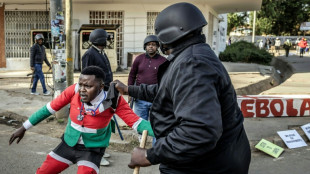 Kenyan police fire tear gas, make arrests at US Ebola centre protest

 Jota will be in Scotland skipper Robertson's 'heart' at World Cup, says widow

A gift from the film set of "Troy", a giant Trojan Horse replica looms over the port of Canakkale on the Dardanelles Strait in western Turkey.
First related by Homer, then retold for the silver screen in 2004, with Brad Pitt as Achilles, the legend of the ancient city travels to Rome's Colosseum this week, where a major new exhibition opens on Friday.
Keen to showcase the city's Anatolian roots, Turkey has loaned out more than 220 artefacts that will be on show at the exhibition, "Troy and Rome", which runs until mid-October.
"When you read Homer, you don't get a very clear idea of the Trojans' identity. But at the time of the Trojan War, they were certainly among the Anatolian peoples," said Reyhan Korpe, deputy head of the Troy excavations and an ancient history expert at Canakkale University.
Located on Turkey's Aegean coastline, the remains of Troy are a UNESCO-listed World Heritage site comprising 185 hectares (457 acres) of stones and crumbling ramparts dotted with poppies and scampering squirrels.
For 30 years, Korpe has walked every inch of this huge site, whose layers tell the story of nine different settlements, the remains of their ramparts intertwined and layered on top of one another.
- Western flank of the east -
"I spent a whole year just walking through the stones, maps in hand, trying to understand how they fit together," he told AFP.
His passion is evident for the site, which was founded in 3,000 BC and was constantly inhabited until being abandoned in the sixth century AD.
"It was the most western part of eastern civilisation," which is what gave Troy its significance, Korpe said.
The Trojan War, which took place around 1,200 BC and lasted 10 years, until the siege and the city's defeat -- parts of which are recounted in the Iliad -- "was the first confrontation between the East and the West", he said of the Anatolian world and its Greek equivalent, referring to it as "the first world war".
It is an idea with strong resonance in these wooded hills, which several millennia later witnessed the World War I battles of 1915, when Allied troops suffered a bloody defeat trying to seize the Dardanelles from the Ottoman Empire.
- Luwian hieroglyphics -
Of the hundreds of artefacts Turkey has loaned to the Rome exhibition, more than 100 come from the Troy museum, some of which will be on display for the first time.
One piece is a bronze seal marked with hieroglyphics that was discovered in 1995, which offers important clues about the city's Anatolian roots.
"It's the only trace of writing found at Troy that was written in an Anatolian language, which proves that the first language spoken there was that of the Luwian peoples," explained museum director Sinem Duzgoren.
The Luwians were an ancient people who lived in western and southern Anatolia during the Bronze and early Iron Ages, whose language played a major role in the Hittite empire.
- From Wilusa to Ilion -
Although Troy was not a Hittite city, it was part of the Hittite empire, which referred to it as Wilusa. That became Ilion for the Greeks -- or Ilios for Homer.
"These pieces may not be the most spectacular, but they are the most important from a historical point of view, because they bear witness to the history of Troy," Duzgoren told AFP.
Also sent to Rome are a large number of weapons for use in war -- stones for use in a sling, knives, spears and arrowheads.
"These weapons are mentioned in the Iliad and date from the same period that they were mentioned by Homer," she said.
But it is a reality that is a far cry from the epic, romanticised fighting that plays out in Wolfgang Petersen's "Troy" (2004).
Apart from bequeathing the 12-tonne replica of the Trojan Horse looming over Canakkale's waterfront, the film did a lot to fuel renewed interest in Troy, Korpe said.
"Neither the producers nor the director came here, even though that was when we made some of the most significant discoveries," he said sadly.
"But the number of tourists did grow, even if they were just looking for traces of Brad Pitt among the ruins!"
H.Gerber--VB