Two decades later, impacts from Indonesia mud volcano linger / Photo: © AFP

 Evenepoel wins Tour de France individual time-trial

 Tropical Storm Bertha strengthens, threatening Gulf coast of US
 Microsoft strikes deal for Mistral's AI computing power
 Dutch students unveil 'world-first' solar-powered ambulance

 French lawmakers set to ban social media for under-15s in European first

 UK PM Burnham unveils energy tax cut, tells ministers to cut living costs
 Pharma heavyweights clash over anti-obesity drug ads
 Hungary raids Orban's Fidesz party servers in graft probe
 General Motors lifts 2026 outlook despite hit from electric retreat

 Uproar in France over reintroduction of bee-harming pesticides
 Kuwaitis ration electricity as Iran hits power grid

 Former Man Utd boss Ferguson salutes old rival Keegan

 UK PM Burnham's new cabinet to meet as he announces tax cut
 Former MotoGP champion Quartararo to make Honda switch
 Oleksandr Syrsky, Ukraine's under-fire commander-in-chief
 New UK govt tackles cost of living with energy tax cut
 China summons Philippine ambassador over clash in disputed waters

 Panama, China renew maritime port agreement
 De Gaulle returns to unite the French -- at the cinema

 North Korea reaffirms support for Moscow over Ukraine

 South China Sea rivalry looms over ASEAN meeting

 Arrogance or pride? Argentina grapples with World Cup villain label

 Fires in Brazil's Amazon dropped to historic low in 2025
 French youth social media ban meets age check conundrum

 Lebanon's Aoun to meet Trump as pressure builds to disarm Hezbollah
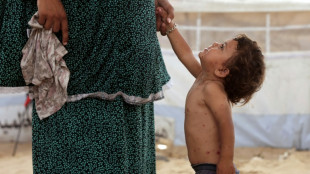
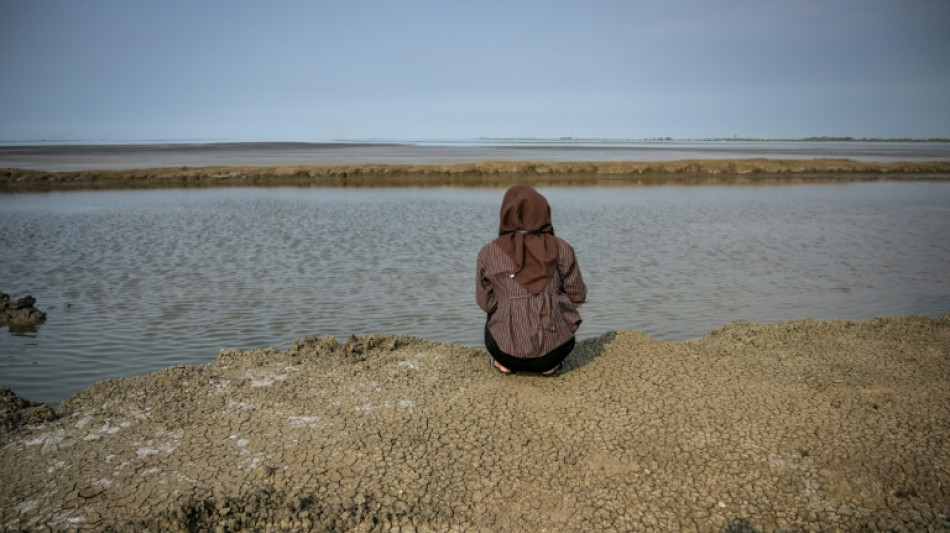
Harwati clasped her hands and offered a prayer on the edge of a sludge lake on the Indonesian island of Java, as dozen of residents gathered to mark two decades since mud volcano eruptions began displacing thousands.
On May 29, 2006, the earth in the Sidoarjo district of East Java province opened up, ejecting pungent, steaming hot mud that swallowed villages and factories.
Thirteen people died when an underground gas pipeline in the disaster zone exploded.
The eruptions, which continue to occur, destroyed at least a dozen villages and have displaced tens of thousands of people.
Harwati said the gathering, held on Friday to mark two decades since the disaster, was organised to remind the government that residents are still feeling the impact of the mudflow.
"Even though presidents change, we still hope (the government will) provide justice for us," the 50-year-old told AFP on Saturday, insisting that the disaster was "far" from over.
She demanded the government conduct a thorough examination of the mudflow's impacts on the health of nearby residents, saying many locals have suffered from cancers after the incident.
An area of over 600 hectares was swallowed by the mud, according to the government, as efforts to plug it, including with huge concrete balls, have proved ineffective.
The disaster forced Muhammad Irsyad to leave his village in 2012, as he could no longer tolerate pollution that seeped into the well his family relied on for cooking and bathing.
"I was angry when I wanted to take a bath because when we shower, my eyes got stung as soon as the water hits it," Irsyad, 62, told AFP.
Two decades since the disaster, Irsyad said he was still "rearranging" his life, with his family surviving on income earned from their food stall and drinking water sales.
Irsyad's wife Siti Chusniawati said she was "sad" to relocate to a new place, but added that the family had little choice.
"It was tough, but whether we want it or not, we just go on day by day, trying to be able to adapt with this new circumstance," the 48-year-old said.
- 'Not finished' -
Independent studies alternate blame between oil and gas company PT Lapindo Brantas, which was drilling in the area at the time, and an earthquake that struck two days earlier about 260 kilometres (162 miles) away.
Lapindo -- part of a business empire controlled by Indonesia's powerful Bakrie family -- was eventually ordered to compensate victims, but payments took years, triggering angry protests.
The government eventually intervened and loaned the company the funds to expedite the remaining payments.
Irsyad called the use of public money to pay for damages following the disaster an "injustice". He said the company should take responsibility.
Lapindo, which has since changed its name to Minarak Brantas Gas, did not immediately respond to an AFP request for comment, but the firm previously said investigations "determined that no correlation could be proven between the drilling activities and the mud eruption".
Environmental groups have found that groundwater near in area has been polluted following the disaster, causing illnesses for locals, said Melky Nahar, a coordinator of NGO Mining Advocacy Network (JATAM).
"After two decades, the destruction over the health, environment and base of production of people... are not finished," he said.
Irsyad, who moved to his current home some four kilometres away from his old one, said he told his friend that he wished to be buried in his old village.
"So my child and grandchild will look for me there. And from there they possibly will have a question: 'why grandfather was buried here?'"
L.Maurer--VB