-
 How a viral post sparked India's Gen-Z protest
-
Ex-Australia cricketer MacGill loses appeal against cocaine conviction
-
 Cambodia wants to bring tigers back, but should it?
-
Oil prices extend rally as US strikes on Iran revive geopolitical fears
-
 Chinese repairwomen smash stereotypes with power tools
-
Iraq's holy cities to host funeral processions for Khamenei
-
 Ecuador's Death Canal: watery grave for victims of gang violence
-
In Venezuela's quake ruins, a baby is born
-
 'Unique event': Solar eclipse fever fills empty Spain
-
What to know about the total solar eclipse due in August

-
 Venezuela says Caracas airport to reopen to commercial flights 'soon as possible'
-
Trump, NATO allies to begin key talks at Turkey summit
-
 World Cup: Eight teams remain in the hunt for glory
-
Former Real Madrid coach Arbeloa named Fulham manager
-
 'A nice surprise': Marathon man Djokovic revels in Wimbledon epic
-
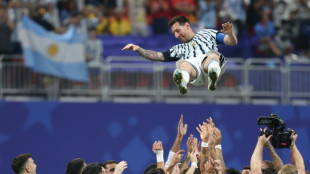
Messi inspires Argentina great escape over Egypt, Swiss advance
-
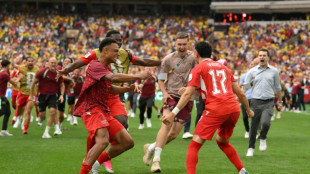 Switzerland beat Colombia on penalties to reach World Cup quarter-finals
-
US strikes Iran after Hormuz attacks, Tehran threatens response
-
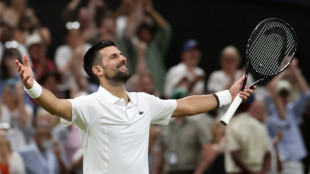 Djokovic survives Wimbledon's longest quarter-final to book Sinner blockbuster
-
Djokovic wins five-hour epic to earn Sinner showdown at Wimbledon
-
 'Flunked': US soccer seeks answers as World Cup dream shattered
-
US strikes Iran after Hormuz tanker attacks: military
-
 Mbappe revels in captain's role for France at World Cup
-
Messi 'didn't want to go home' as Argentina comeback stuns Egypt
-
 Iyer's India 'atrocious' in record 125-run T20 defeat by England
-
Netflix strikes deals in short-form video push
-
 Rain hands West Indies series win over Sri Lanka
-
The height factor: how a small building survived Venezuela's quakes
-
 World Cup exit puts another nail in America's summer of fun
-
Egypt 'cheated' in controversial World Cup exit to Messi's Argentina, says Hassan
-
 US revokes Iran oil waiver after Hormuz tanker attacks
-
Global AI industry falls short on safety, think tank warns

-
 England quicks star as India suffer record 125-run T20 defeat
-
'History made': Egyptian pride despite World Cup heartbreak
-
 Cardinal tipped to be pope accused of molesting several women
-
How rescuers carried out 180-hour 'miracle' amid Venezuela's ruins
-
 How rescuers carried out 180-hour 'miracle' amid Venzuela's ruins
-
Victorious Belgian footballers troll Trump with YMCA dance

-
 I can still win another Grand Slam, says Osaka after Wimbledon exit
-
Scotland boss Townsend expects Russell will face Springboks
-
 France's Le Pen says still running for president
-
Messi inspires Argentina great escape over Egypt
-
 Argentina produce epic World Cup fightback to beat Egypt, reach quarters
-
Zverev, Cobolli targeting rematch at Wimbledon
-
 Canada province preparing lawsuit against OpenAI over school shooting
-
Colombia president-elect accuses outgoing leader of 'coup' plotting
-
 Lidl-Trek celebrate 'perfect' day at Tour de France
-
IOC eases restrictions on Russians before 2028 LA Games as anthem, flag ban remains
-
 Cavs agree on Mitchell deal as LeBron watches: report
-
Muchova ends Osaka run to reach Wimbledon semis
Rushdie in serious condition after stabbing
Salman Rushdie remained hospitalized in serious condition Saturday after being stabbed at a literary event in New York state in a shocking assault that triggered international outrage, but drew applause from hardliners in Iran and Pakistan.
The British author, who spent years under police protection after Iranian leaders ordered his killing, underwent emergency surgery and was placed on a ventilator after Friday’s assault in which a 24-year-old man, Hadi Matar, rushed the stage where Rushdie was about to deliver a lecture and stabbed him in the neck and abdomen.
According to his agent Andrew Wylie, the nerves in one of Rushdie’s arms were severed and his liver damaged in the attack, and he "will likely lose one eye."
Rushdie, 75, had been living under an effective death sentence since 1989 when Iran’s then supreme leader Ayatollah Ruhollah Khomeini issued a religious decree, or fatwa, ordering Muslims to kill the writer.
The fatwa followed publication of the novel “The Satanic Verses” which sparked fury among some Muslims who believed it was blasphemous.
- Assailant raised in US -
Rushdie moved to New York in the early 2000s and became a US citizen in 2016. Despite the continued threat to his life, he was increasingly seen in public -– often without noticeable security.
And security was not particularly tight at Friday’s event at the Chautauqua Institution, which hosts arts programs in a tranquil lakeside community in western New York state.
According to witnesses, Rushdie was seated on an auditorium stage and preparing to speak when Matar jumped up from the audience and managed to stab him several times before being wrestled to the ground by staff and other spectators. Matar was finally cuffed and taken into police custody.
A doctor in the audience provided emergency first aid on the spot before Rushdie was airlifted by helicopter to the hospital in nearby Erie.
State police said Matar, from Fairfax, New Jersey, had been formally charged with attempted murder, but otherwise provided no information on his background or what might have motivated him.
His family apparently came from a border village called Yaroun in southern Lebanon. An AFP reporter who visited the village Saturday was told that that Matar’s parents were divorced and his father –- a shepherd –- still lived there. Journalists who approached his father’s home were turned away.
Matar was "born and raised in the US," the head of the local municipality, Ali Qassem Tahfa, told AFP.
While Khomeini’s original fatwa has ceased to be a part of daily discourse in Iran for some time, the clerical leadership under his successor Ayatollah Ali Khamenei did nothing to indicate it no longer stood and, on occasion, underlined the decree was still valid.
Conservative media in Iran hailed Friday's attack, with one state-owned paper saying the "neck of the devil" had been "cut by a razor."
In Pakistan, a spokesman for the Tehreek-e-Labbaik Pakistan –- a party that has staged violent protests against what it deems to be anti-Muslim blasphemy -- said Rushdie "deserved to be killed."
Elsewhere there was widespread shock and outrage, along with expressions of support and solidarity for the writer.
British leader Boris Johnson said he was "appalled," while in Washington, US National Security Advisor Jake Sullivan called it a "reprehensible” attack.
Rushdie was propelled into the spotlight with his second novel "Midnight's Children" in 1981, which won international praise and Britain's prestigious Booker Prize for its portrayal of post-independence India.
- Wrote memoir in hiding -
But his 1988 book "The Satanic Verses" transformed his life when the resulting fatwa forced him into nearly a decade in hiding, moving houses repeatedly and being unable to tell even his children where he lived.
Even as the need for constant security began to diminish in the late 1990s, threats and boycotts continued against literary events that Rushdie attended. His knighthood by Queen Elizabeth II in 2007 sparked protests in Iran and Pakistan, where a government minister said the honor justified suicide bombings.
Since moving to New York Rushdie has been an outspoken advocate of freedom of speech, notably launching a strong defense of French satirical magazine Charlie Hebdo after its staff were gunned down by Islamists in Paris in 2015.
The fatwa and other threats failed to stifle Rushdie’s writing and inspired his memoir "Joseph Anton," named after his alias while in hiding and written in the third person.
Suzanne Nossel, head of the PEN America organization, said the free speech advocacy group was "reeling from shock and horror."
I.Meyer--BTB