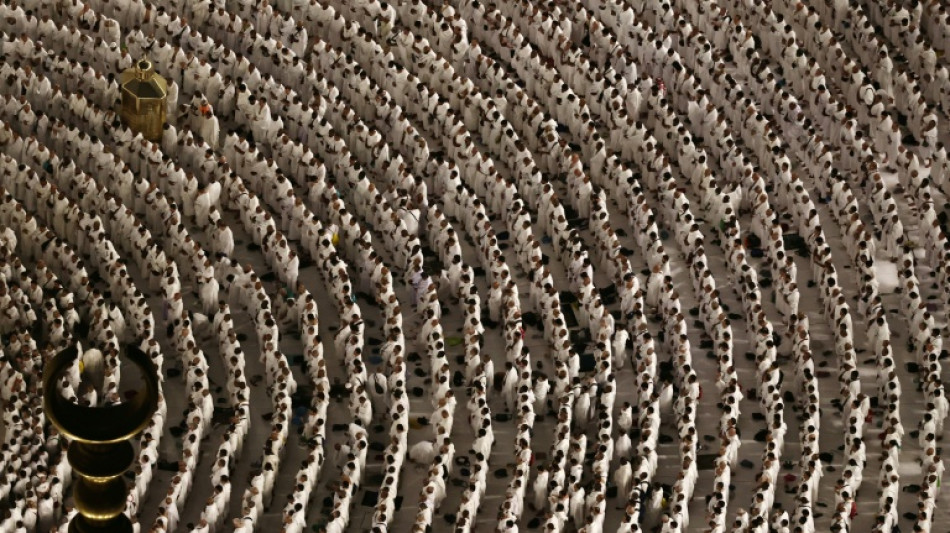
Saudi Arabia turns to drones to shield pilgrims from extreme heat
/ Photo: © AFP

 US eyes offshore nuclear reactors
 The Sterling Announces Luxury Cocktail Lounge Concept and Investor Showcase in Orlando

 Inter Miami signs Brazil veteran Casemiro but MLS probes deal

 White House accuses China's Moonshot of stealing Anthropic AI

 Pogacar sweating on Yates's fitness ahead of Tour Queen stage

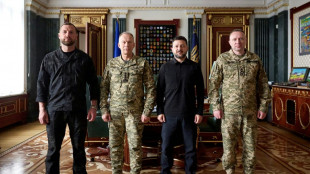 Ukrainian soldiers and civilians welcome new army commander

 UK fintech Revolut valuation soars to $115 bn: source

 German FM, on Africa tour, eyes business ties amid US, China pressure

 Rubio says at ASEAN meeting he expects 'positive' US visit by China's Xi

 Philipsen wins Tour de France 17th stage

 DonnaPro Introduces AI-Trained Executive Assistants for European CEOs

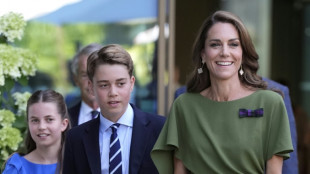 Happy birthday, George! UK prince becomes a teenager

 Oil prices jump on Mideast war, stock markets diverge
 US hits Iranian island, says war cost at $37.5 bn
 Metal mining's carbon footprint far larger than thought: study
 TokenInsight Q2 2026 Report: TradFi Momentum Lifts MEXC to No. 2 in Commodity Perpetuals

 Leonardo chief sees potential for Germany to join GCAP fighter jet project
 Louvre heist gallery reopens to public, but with nothing to steal

 Ukraine's new army chief: who is Mykhailo Drapaty?

 India student protests keep up pressure on Modi government

 Italian FA chief says in touch with Guardiola over coaching vacancy
 Cooler inflation hands new UK PM Burnham an early boost
 Bezos holds talks with group interested in buying Liverpool stake: reports

 The student movement in India challenging Modi's government

 Danish fish fossil cliffs set to gain UNESCO status
With temperatures hitting 45C in Mecca this week, Saudi health workers have increasingly relied on drones to supply a vast array of medical clinics treating heat-stressed pilgrims during the hajj.
The rituals at the hajj have been a constant for centuries.
But technology is rapidly changing the experience for pilgrims and officials alike -- with AI, UAVs and mobile apps providing crucial services, logistical support and helping manage the mammoth crowds.
Rather than relying on congested roads filled with over 1.5 million pilgrims, drones in particular have proven to be a technological remedy for helping keep the 127 clinics spread across Mecca, Mina and Arafat adequately provisioned.
"The main goal is to provide fast service to the guests of God during the season," Fahd Al-Bathi, the chief operating officer at the National Unified Procurement Company (NUPCO), told AFP.
Preparations for the medical needs of the hajj season began nine months ago.
Standing before a colour-coded map of medical centres dotting the area, the NUPCO operations officer Turki Al-Obaidi said his teams work around the clock during the hajj.
"Our teams must ensure we reach patients as quickly as possible. This is a crucial factor with these extremely large crowds," he added.
Before the adoption of drones, drivers could spend over an hour en route to clinics running low on supplies.
Now, authorities have centralised operations around a sprawling centre that supplies drones with medications and other necessities.
"We are seeking to integrate new innovations through which we can ensure that medical supplies arrive safely, as quickly as possible, and with the highest quality," said Bathi.
In the operations room -- equipped with a giant data screen -- staff carefully track drone deliveries, while other employees use electric scooters to get around faster.
Drones are part of a growing arsenal of technology-led solutions aiming to better manage the hajj and the challenges presented by the searing desert climate.
Artificial intelligence has been deployed to help monitor the footage from thousands of cameras in and around the holy city of Mecca.
The new solutions help supplement more traditional methods to manage the heat, which include giant fans, trucks distributing free water and mist systems that help cool crowds.
"Heat exhaustion is one of the main issues" during the hajj, said Saudi health official Jamil Abu Al-Aynayn.
"We maintain a high and rapid level of readiness."
F.Mueller--VB