-
 How a viral post sparked India's Gen-Z protest
-
Ex-Australia cricketer MacGill loses appeal against cocaine conviction
-
 Cambodia wants to bring tigers back, but should it?
-
Oil prices extend rally as US strikes on Iran revive geopolitical fears
-
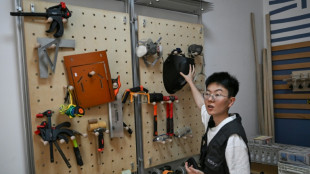 Chinese repairwomen smash stereotypes with power tools
-
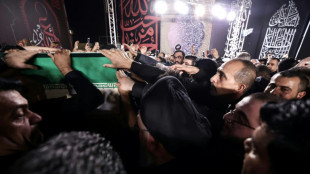
Iraq's holy cities to host funeral processions for Khamenei
-
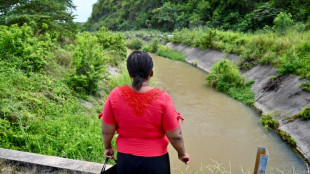 Ecuador's Death Canal: watery grave for victims of gang violence
-
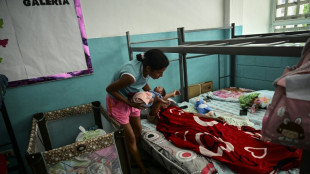
In Venezuela's quake ruins, a baby is born
-
 'Unique event': Solar eclipse fever fills empty Spain
-
What to know about the total solar eclipse due in August

-
 Venezuela says Caracas airport to reopen to commercial flights 'soon as possible'
-
Trump, NATO allies to begin key talks at Turkey summit
-
 World Cup: Eight teams remain in the hunt for glory
-
Former Real Madrid coach Arbeloa named Fulham manager
-
 'A nice surprise': Marathon man Djokovic revels in Wimbledon epic
-
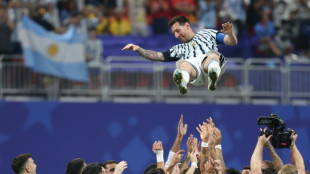
Messi inspires Argentina great escape over Egypt, Swiss advance
-
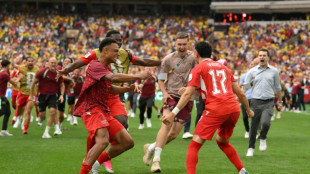 Switzerland beat Colombia on penalties to reach World Cup quarter-finals
-
US strikes Iran after Hormuz attacks, Tehran threatens response
-
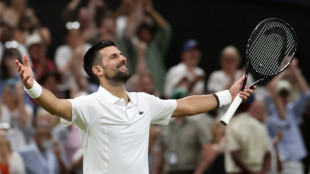 Djokovic survives Wimbledon's longest quarter-final to book Sinner blockbuster
-
Djokovic wins five-hour epic to earn Sinner showdown at Wimbledon
-
 'Flunked': US soccer seeks answers as World Cup dream shattered
-
US strikes Iran after Hormuz tanker attacks: military
-
 Mbappe revels in captain's role for France at World Cup
-
Messi 'didn't want to go home' as Argentina comeback stuns Egypt
-
 Iyer's India 'atrocious' in record 125-run T20 defeat by England
-
Netflix strikes deals in short-form video push
-
 Rain hands West Indies series win over Sri Lanka
-
The height factor: how a small building survived Venezuela's quakes
-
 World Cup exit puts another nail in America's summer of fun
-
Egypt 'cheated' in controversial World Cup exit to Messi's Argentina, says Hassan
-
 US revokes Iran oil waiver after Hormuz tanker attacks
-
Global AI industry falls short on safety, think tank warns

-
 England quicks star as India suffer record 125-run T20 defeat
-
'History made': Egyptian pride despite World Cup heartbreak
-
 Cardinal tipped to be pope accused of molesting several women
-
How rescuers carried out 180-hour 'miracle' amid Venezuela's ruins
-
 How rescuers carried out 180-hour 'miracle' amid Venzuela's ruins
-
Victorious Belgian footballers troll Trump with YMCA dance

-
 I can still win another Grand Slam, says Osaka after Wimbledon exit
-
Scotland boss Townsend expects Russell will face Springboks
-
 France's Le Pen says still running for president
-
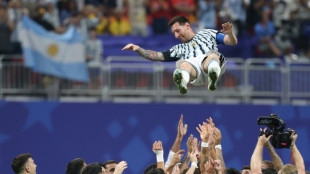
Messi inspires Argentina great escape over Egypt
-
 Argentina produce epic World Cup fightback to beat Egypt, reach quarters
-
Zverev, Cobolli targeting rematch at Wimbledon
-
 Canada province preparing lawsuit against OpenAI over school shooting
-
Colombia president-elect accuses outgoing leader of 'coup' plotting
-
 Lidl-Trek celebrate 'perfect' day at Tour de France
-
IOC eases restrictions on Russians before 2028 LA Games as anthem, flag ban remains
-
 Cavs agree on Mitchell deal as LeBron watches: report
-
Muchova ends Osaka run to reach Wimbledon semis
Salman Rushdie on ventilator after stabbing
British author Salman Rushdie, whose writings have made him the target of Iranian death threats, was on a ventilator and could lose an eye after he was repeatedly stabbed at a literary event in New York state Friday.
Following the attack just before 11:00 am local time Rushdie had been airlifted to the hospital where he needed emergency surgery, and his agent said in a statement obtained by The New York Times that "the news is not good."
"Salman will likely lose one eye; the nerves in his arm were severed; and his liver was stabbed and damaged," said agent Andrew Wylie, who added that as of now Rushdie cannot speak.
New York state police identified the suspect involved in Friday morning's attack as Hadi Matar, a 24-year-old from Fairfield, New Jersey. A probable motive remained unclear.
Police said Rushdie was stabbed in the neck as well as the abdomen. A number of people rushed to the stage and took the suspect to the ground, before a trooper present at the event arrested him.
A doctor in the audience administered medical care until emergency first responders arrived. An interviewer onstage, 73-year-old Ralph Henry Reese, suffered a facial injury but has been released from the hospital, police said.
The attack occurred at the Chautauqua Institution, which hosts arts programs in a tranquil lakeside community 70 miles (110 kilometers) south of Buffalo city.
Carl LeVan, an American University politics professor attending the event, told AFP he saw the suspect run onto the stage where Rushdie was seated and "stabbed him repeatedly and viciously."
LeVan, a Chautauqua regular, said the suspect "was trying to stab him as many times as possible before he was subdued," adding that he believed the man "was trying to kill" Rushdie.
"There were gasps of horror and panic from the crowd," the professor said.
LeVan said witnessing the event had left him "shaken," adding he considered Chautauqua a safe place of creative freedom.
"To know that this happened here, and to see it -- it was horrific," he said. "What I saw today was the essence of intolerance."
Another witness, John Stein, told ABC that the assailant "started stabbing on the right side of the head, of the neck. And there was blood... erupting."
- A decade in hiding -
Rushdie, 75, was propelled into the spotlight with his second novel "Midnight's Children" in 1981, which won international praise and Britain's prestigious Booker Prize for its portrayal of post-independence India.
But his 1988 book "The Satanic Verses" brought attention beyond his imagination when it sparked a fatwa, or religious decree, calling for his death by Iranian revolutionary leader Ayatollah Ruhollah Khomeini.
The novel was considered by some Muslims as disrespectful of the Prophet Mohammed.
Rushdie, who was born in India to non-practicing Muslims and today identifies as an atheist, was forced to go underground as a bounty was put on his head -- which remains today.
He was granted police protection by the government in Britain, where he was at school and where he made his home, following the murder or attempted murder of his translators and publishers.
He spent nearly a decade in hiding, moving houses repeatedly and being unable to tell his children where he lived.
Rushdie only began to emerge from his life on the run in the late 1990s after Iran in 1998 said it would not support his assassination.
Now living in New York, he is an advocate of freedom of speech, notably launching a strong defense of French satirical magazine Charlie Hebdo after its staff were gunned down by Islamists in Paris in 2015.
The magazine had published drawings of Mohammed that drew furious reactions from Muslims worldwide.
- An 'essential voice' -
Threats and boycotts continue against literary events that Rushdie attends, and his knighthood in 2007 sparked protests in Iran and Pakistan, where a government minister said the honor justified suicide bombings.
The fatwa failed to stifle Rushdie's writing and inspired his memoir "Joseph Anton," named after his alias while in hiding and written in the third person.
"Midnight's Children" -- which runs to more than 600 pages -- has been adapted for the stage and silver screen, and his books have been translated into more than 40 languages.
Suzanne Nossel, head of the PEN America organization, said the free speech advocacy group was "reeling from shock and horror."
"Just hours before the attack, on Friday morning, Salman had emailed me to help with placements for Ukrainian writers in need of safe refuge from the grave perils they face," Nossel said in a statement.
F.Müller--BTB