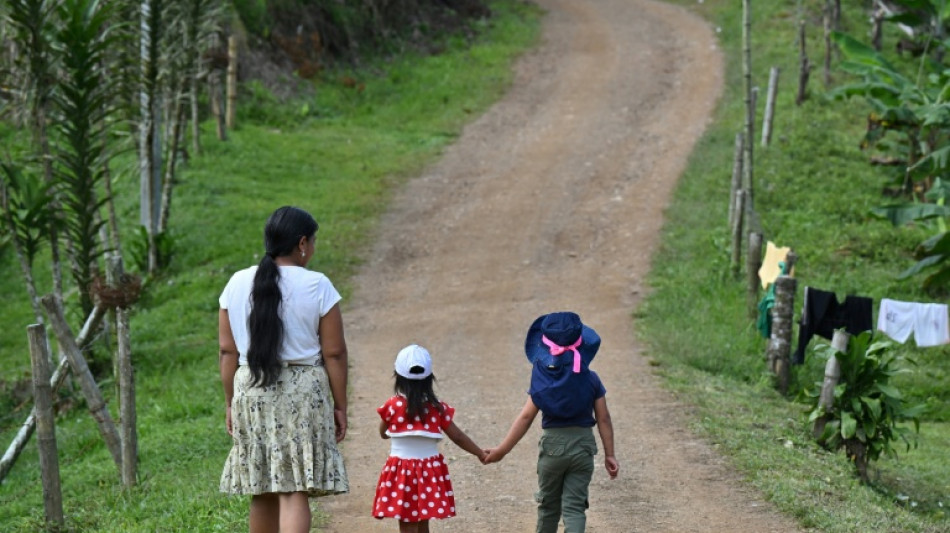
Genital mutilation: the silent suffering of Colombia's Indigenous girls / Photo: © AFP

 Repsol says profit more than triples on higher oil prices

 TotalEnergies says profit doubled on Mideast war
 Giant swing on Swiss peak aims to boost summer tourism as Alps warm
 ASEAN to call for open straits as US-Iran war casts shadow

 AI catches up with humans to score 100% at top maths contest

 South Korea election office raided in fake turnout figures probe: investigators
 Killer whales: orcas blow fish to bits 'for fun', study finds
 Deadly wildfires force thousands from homes in parts of Europe

 Tech bounce lifts Asia stocks, oil extends gains on US-Iran fears

 Surrounded by militias, Sudanese fear endless cycle of war

 Commonwealth Games 'where champions are made' despite slimmed down model, argues president
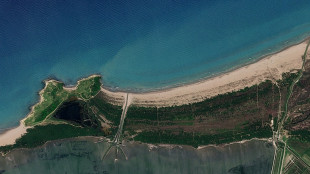 Trump family project in Albania has already caused 'irreparable' damage: NGOs
 Bollywood blast master keeps it real with fire and fury

 Tearful fights, edible offerings: A glimpse into the Maradona trial
 What's the deal with peptides? The hyped market under US review

 Tesla shares fall as Musk touts ambitious -- and costly -- plans

 Houthis claim Red Sea tanker strikes as US hits Iran again

 Wildfires ravage parts of southern France, Italy and Spain

 Alphabet beats expectations in second quarter, cloud revenue nearly doubles

 Trump threatens Iran infrastructure, Tehran vows 'eye for eye'

 US teen withdraws lawsuit against Meta over social media addiction

 Lebanon PM says Beirut working for 'complete Israeli withdrawal'

 EU conditionally clears Paramount bid for Warner Bros.

 Philipsen snaps 'horrible' drought with Tour de France stage 17 victory

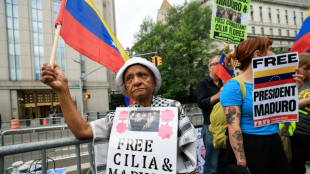 US trial of Venezuela's Maduro set for June 2027

Alejandrina Guasorna did not discover until adulthood that she had been subjected to female genital mutilation (FGM) the day she was born in a remote Indigenous community in Colombia's coffee-growing region.
In the mountains of Risaralda, home to the Embera people, dozens of babies have their clitoris cut each year in a brutal practice based on traditional beliefs about the need to control girls' sexuality.
Some bleed to death or die of infections from unhealed wounds.
"We often saw dead baby girls. We thought it was normal," said Guasorna, a 74-year-old farm worker who has helped deliver babies in her own family but herself never performed genital cutting.
Colombia is the only Latin American country where female circumcision, believed to have been passed on to Indigenous groups by descendants of African slaves, is known to be still practiced.
Nearly two centuries after Colombia, which was a major hub in the South American slave trade, abolished slavery, a landmark ban on FGM is finally being debated by Congress.
- A blade or nail -
When girls are born in the Embera Chami reserve of Pueblo Rico, a region under Indigenous jurisdiction, midwives use a blade or red-hot nail to remove part of all of their external genitalia, local women told AFP.
The practice, which has declared a human rights violation by the UN and World Health Organization but remains widespread in parts of Africa, is a taboo subject in the Embera reserve.
Many people look away or remain silent, clearly uncomfortable, when the subject comes up.
Guasorna only learned that she had undergone the procedure after hearing rumors that were eventually confirmed by her sister.
Francia Giraldo, an Embera leader, said some babies bleed to death and are never taken to hospital. Parents receive neither birth nor death certificates.
Their mothers, she said, "bury them" straight away.
The bill before Congress, which was drafted by lawmakers together with Indigenous women leaders, aims to end the practice.
It does not, however, provide for midwives who flout the ban to be punished, with Indigenous leaders arguing that the women "lack information" about the dangers of FGM.
It calls instead for a government-led awareness campaign to sensitize them to the suffering caused by the mutilation and to dispel myths about girls who are spared -- that they will grow up to be sexually promiscuous or even that their clitorises will grow into something resembling a penis.
- Pain and secrecy -
Sexual relations are often painful for victims of FGM.
Etelbina Queragama's face is dotted with paint marks that denote her status within her community.
Speaking in Embera, translated into Spanish by one of her seven children, the 63-year-old housewife said she has "never" felt anything but pain during intercourse.
There are no official figures on the practice of genital mutilation, given the secrecy surrounding the custom.
But according to the National Health Institute, at least 204 cases were performed in Colombia between 2020 and 2025.
Sarita Patino, a doctor at a hospital that treats FGM victims in Pueblo Rico, believes the incidence of FGM is "greatly under-reported."
Since the start of the year, she has already seen six cases.
In February, a six-month-old baby was brought in with a fever. "The baby girl had her clitoris mutilated... (it looked) like a burn," Patino said.
- Byproduct of slave trade -
According to the United Nations, an estimated 230 million women and girls around the world are subjected to FGM every year.
In Colombia, the practice is believed to be the product of intermingling between Indigenous and Afro-Colombians who make up around 10 percent of the population but who very rarely still practice FGM.
Carolina Giraldo (no relation of Francia), a historian and Embera congresswoman who drafted the ban on FGM, said it pains her "when people call us (the Embera) murderers and ignorant" over genital cutting.
She hopes to see "women who advocate for women's rights" travel to remote areas to campaign for an end to the silent suffering of Indigenous girls.
R.Kloeti--VB