Day of reckoning arrives for social media after US court loss / Photo: © AFP

 ASEAN calls for open straits as US-Iran war casts shadow

 Ford and Geely to form joint venture at struggling Spain plant

 Russia warns US against Ukraine arms sales in Manila meeting

 New UK PM announces tax cut for struggling pubs

 Supporters flood India's 'cockroach' protesters with food

 Modi vows punishment for exam leaks fuelling India protests

 Norway set to make formal complaint to FIFA over Balogun red card saga

 Floods in northeast India kill at least 41

 Nestle siphons off bottled water business into joint venture

 Hundreds hospitalised in Japan heatwave 'disaster'
 Renault says sales stalled in first half
 EasyJet says profits nosedive on Mideast war

 Modi vows punishment for exam fraud fuelling India protests

 Six candidates in race to lead UN set for televised debate

 Comic-Con kicks off with Marvel's return

 Dutch riders dreaming of crazy party corner of Alpe d'Huez

 Houthis target Red Sea shipping as US hits Iran

 Record-equalling Red Sox streak halted at 15 wins

 Messi-less Miami beat Fire 3-2 to spoil Lewandowski's MLS debut

 Mercedes expect Hungary challenge from Hamilton and Ferrari

 In Ghana, one man's race to save critically endangered fish

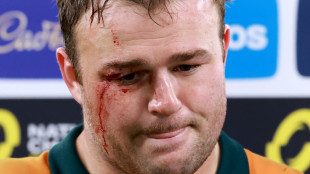 Wilson captain, Slipper absent in Kiss's first Wallabies squad

 New Mideast fighting puts eurozone rate-setters on alert

 Venezuelans search for animal companions lost in the quakes

 Argentine Football Association says US did not detain its president

A Los Angeles jury's ruling that Meta and YouTube contributed to a teenage girl's depression marks a potential turning point in the years-long legal battle against social media giants -- one that could carry an enormous price tag.
The civil court on Tuesday found Meta and YouTube's parent Google liable for failing to adequately warn young people about the risks of excessive use of their Instagram and YouTube apps, respectively, even though they were aware of the dangers.
Both Meta and YouTube said Wednesday that they planned to appeal the California verdict.
A separate jury in Santa Fe, New Mexico, earlier this week found Meta liable for endangering minor users of Facebook and Instagram.
- Billions on the line -
Meta was quick to note that compensatory damages in the Los Angeles case totalled just $3 million, with a further $3 million in punitive damages awarded by the jury Wednesday.
In New Mexico, the company was ordered to pay $375 million in penalties, a verdict it said it would appeal.
The rulings could ripple across hundreds of pending lawsuits against social media companies facing similar allegations, with the total liability potentially running into the billions of dollars.
"Bellwether trials like this one serve as signals about how juries respond to specific theories of harm," said Daryl Lim, a law professor at Pennsylvania State University.
He added that the verdict "should increase the pressure" on platforms to settle outstanding cases.
Snap and TikTok settled with the plaintiff in the Los Angeles case before the trial began, sidestepping a jury entirely.
- Self-regulation -
The cases center on users like Kaley G.M., the plaintiff in the Los Angeles case, who said she developed depression, chronic anxiety and body image issues from early and intense exposure to social media.
Researchers have increasingly linked such sufferings to heavy social media use among adolescents.
"For years, social media companies have claimed they're hard at work making their platforms safer for kids and teenagers," said Minda Smiley, an analyst at eMarketer. "Critics have long been skeptical."
"This verdict could mark the start of a difficult new chapter for social platforms -- one where the rules they write for themselves no longer cut it," she added.
Vanitha Swaminathan, a marketing professor at the University of Pittsburgh, said the ruling exposed "an important tension between the goals of the platform companies and the issues it poses for some of its most vulnerable consumers."
- New crack in Section 230 -
For year, US platforms have sheltered behind Section 230, a legal provision shielding them from liability for content posted by their users.
But lawyers for Kaley G.M. chose a different battlefield: the design of the platforms themselves, which they argued were engineered to trap and addict young users.
The strategy amounts to a "narrowing" of Section 230 that offers "alternative pathways to liability," said Lim at Pennsylvania State University.
- Legislative pressure builds -
The Los Angeles and Santa Fe cases are part of a broader wave of legal and regulatory action that gathered pace after Australia moved last year to ban social media for people under 16.
Several US states have since passed or are weighing their own legislation to protect minors online, though none has set a hard minimum age.
Congress has so far stayed on the sidelines. "It usually steps in only after courts and state governments have begun to reshape the policy landscape," Lim said.
Should the courts ultimately compel platforms to overhaul their products, the consequences could be severe.
"Their ad businesses thrive off attention," said Jasmine Enberg of Scalable. "If product changes make their apps less engaging, that makes them less valuable to advertisers."
"If these companies are forced to redesign their products," she warned, "that poses an existential threat to their business models."
R.Kloeti--VB