
China to approve 'ethnic unity' law condemned by rights groups / Photo: © AFP

 ECB opens door to September rate-hike as Iran war flares up

 World Bank estimates Venezuela quakes caused $19.6 bn in damage

 Italy's far-right line up to defend jeweller who killed robbers

 AI-led boom in IPOs raises concerns about a bust

 Klopp expected to be named new Germany coach on Friday

 ECB holds rates as Iran war flare-up threatens to drive prices higher
 MEXC's "Kickoff Fest" Trading Event Concludes with Top Individual Reward of 27,352 USDT

 Oil soars close to $100 on fresh Mideast attacks

 India's angry Gen Z protesters say Modi must fix accountability

 Barca sign Adeyemi from Borussia Dortmund

 EasyJet profits nosedive on Mideast war
 EU fines Google 890 mn euros, risking US fury

 France evacuates thousands of tourists as fire rages in pine forest

 French Jewish DJ sues after activists disrupt stage show: lawyer

 Nokia says AI, cloud boosted sales in second quarter

 Repsol says profit more than triples on higher oil prices

 TotalEnergies says profit doubled on Mideast war

 Giant swing on Swiss peak aims to boost summer tourism as Alps warm
 ASEAN to call for open straits as US-Iran war casts shadow

 AI catches up with humans to score 100% at top maths contest

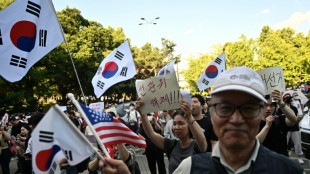 South Korea election office raided in fake turnout figures probe: investigators

 Killer whales: orcas blow fish to bits 'for fun', study finds

 Deadly wildfires force thousands from homes in parts of Europe

 Tech bounce lifts Asia stocks, oil extends gains on US-Iran fears

 Surrounded by militias, Sudanese fear endless cycle of war

China was set to approve Thursday what it called an "ethnic unity" law, which rights advocates warn could further marginalise minority groups like the Uyghurs.
The draft law, set to be passed by the National People's Congress, would formalise policies to promote Mandarin as the "national common language" in education, official business and public places.
China's government has been accused for decades of pursuing policies to force assimilation across the vast country into the Han majority.
Social cohesion is a key focus of the new "ethnic unity" law, which criminalises engaging in "violent terrorist activities, ethnic separatist activities, or religious extremist activities".
The proposed law says it aims to "strengthen cohesion" within China, which the legislation argues is undergoing unprecedented social change.
China officially recognises 55 official ethnic minorities within its borders that speak hundreds of languages and dialects.
Government policies have already directed that Mandarin Chinese be used as the language of instruction in some areas with large minority populations, such as Tibet and Inner Mongolia.
Yalkun Uluyol, a China researcher at Human Rights Watch, described the new legislation as a "significant departure" from a Deng Xiaoping-era policy that guaranteed the right of minorities to use their own languages.
Educational institutions will now need to use Mandarin as the principal teaching language. Teenagers will now be required to have "a basic grasp" of Mandarin upon completing compulsory education.
No minority languages are specifically cited in the new law, although it will likely affect Uyghur, Mongolian and Tibetan speakers.
"It is no coincidence that the law targets spaces where children are most likely to encounter their mother tongue," Erika Nguyen from PEN America told AFP.
"The intent being to sever children's ties with their identity, history, and culture."
A recent report by PEN and the Southern Mongolian Human Rights Information Center (SMHRIC) said that more than 80 percent of Mongolian language websites in China have been "censored or banned".
Requiring fluency in Mandarin in public life could also inhibit the chances of Mongolian-speakers advancing professionally, SMHRIC director Enghebatu Togochog said in a statement.
"Economically, it marginalises Mongolians, as Chinese fluency becomes a gatekeeper for jobs and advancement," Togochog said.
The law also states that its provisions can also be applied outside China's borders.
While it calls for "strengthening ties" with overseas Chinese communities, it also warns that people outside China who "engage in activities that undermine ethnic unity" or inciting "ethnic separatism" will be held legally liable.
E.Gasser--VB