Canadians are choosing when to die, often with a smile / Photo: © AFP

 Miami stumble to draw against Cincinnati despite Suarez strike

 Bangladesh scrambling as Ganges water treaty to expire

 England in peril with Rugby League World Cup semi spots at stake

 Antonelli ready to rewrite the Formula One record books in Mexico
 EU, Canada to build 'new chapter' in alliance at Montreal summit

 Argentine football fan jailed for threats over Di Maria return

 Liverpool beat Chelsea in League Cup shoot-out, Man City survive scare

 Inter leave it late again in Serie A as AC Milan, Juventus lose

 Shares in Google owner Alphabet plummet on profit miss, ad slowdown

 Putin hails Elon Musk as 'truly a genius'

 US stocks eye big tech earnings as Fed holds rates steady

 US Fed holds interest rates steady despite 'too high' inflation

 Rwanda cannot be blamed for what happens in DR Congo, FM says
 Inter leave it late again in Serie A as Bologna sink AC Milan

 Bolsonaro's escape to the US: How it happened
 Russell calls on Scotland to 'kick on' and beat big teams
 Airbus aims for record deliveries despite disappointing quarter

 Cuba wins UN vote against US embargo with weakest backing in 30 years

 Real Madrid, La Liga apology over Mbappe shows power of Chinese market

 From Gaza to Ramallah, Palestinians see little hope in Israeli vote
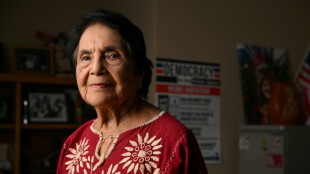 US labor leader Dolores Huerta dead: family

 Investors turn cautious ahead of tech results, Fed update on rates

 'Cruise for life' strands passengers in Cambodia as operator goes bust

 Bolsonaro flees Brazil for US after election defeat

 A throne on wheels, popemobiles star in new Vatican show

Jacques Poissant's suffering stopped the day he asked his daughter if it would be "cowardly to ask to be helped to die".
The retired Canadian insurance adviser was 93, and "was wasting away" after a long battle with prostate cancer.
"He no longer had any zest for life," Josee Poissant told AFP.
Last year her mother made the same choice at 96 when she realised she would not be getting out of hospital.
She died surrounded by her children and their partners listening to the music she loved. "She was at peace. She sang until she went to sleep."
Josee Poissant remembers it as a beautiful and moving moment. "There isn't a good way to die, but for me this was the best" and it was "a privilege to have the time to say goodbye".
- One Canadian in 20 -
One in 20 Canadians who died in 2023 chose themselves when they would go.
Assisted dying has been legal since 2016 for people at the end of life. The right was extended to those suffering from serious and incurable illness in 2021, even if death was not "reasonably foreseeable."
While Britain and France are considering similar measures, Canada is preparing to go even further.
A parliamentary committee is set to start work next month on whether assisted dying should be extended to those suffering exclusively from mental illness.
Claire Brosseau hopes this will be her final battle. She took her right-to-die case to the courts after struggling for decades with bipolar disorder.
"I've been treated by psychiatrists, psychologists, counselors and 12-steps rehab in Montreal, New York City, Toronto and Los Angeles," she said.
"I've tried antidepressants, antipsychotics, mood stabilizers, benzos, sleeping pills and stimulants, cognitive behavioral therapy, dialectical behavioral therapy... tai chi, reiki, meditation, veganism, art therapy and music therapy," the former stand-up comedian said.
"There's nothing really that I haven't tried. It's just been too much for too long," she told AFP.
Every day is a trial for the 49-year-old who lives alone with her dog Olive in a little apartment in Toronto.
"I have about 10 to 30 minutes a day where I'm OK. But the rest of it is just terrible," Brosseau said.
She only goes out to walk Olive when the streets are deserted, has very limited contact with her family, no longer sees her friends, and has her groceries delivered. Even her appointments with her psychiatrists are done by video from her neat, minimalist home.
A change in the law would allow her to "go in peace and safety, surrounded by love. It won't be violent. I won't be alone," she said.
- Trivialised 'as therapy' -
Canada was to allow assisted dying regardless of illness by 2024. But this was pushed back by three years, with the government saying it wanted to make sure that the already overwhelmed mental health system was ready.
Eight out of 10 Canadians support assisted dying, but some worry about widening it further.
The issue has been trivialized to the point of being "presented as a form of therapy", argued Trudo Lemmens, a health law professor at the University of Toronto.
"We have already seen a sharper rise in cases than in other countries" like Belgium and the Netherlands, which pioneered the practice.
"The desire to commit suicide is often an integral part of a psychiatric disorder," and it is extremely difficult to predict how a mental illness will develop, he said.
But Mona Gupta, a psychiatrist who chaired an expert panel that advised the government, insisted "there is no clinical reason to draw a line separating people with mental disorders from those with chronic physical illnesses.
"We are talking about a very small number of people" who have chronic, severe, treatment‑resistant mental disorders, Dr Gupta said.
"We have to acknowledge that there are people who have been ill for decades and have undergone all kinds of treatments, and that the suffering caused by certain mental illnesses is sometimes just as unrelievable as physical pain," she argued.
- 'Keeping control' to the end -
Quebecker Rachel Fournier, who has brain cancer, has just learned that her request to die has been approved.
"When you're suffering, you feel like it's never going to end," the 71-year-old told AFP.
"Knowing that there will be an end, and that I can choose the moment, is an immense relief.
"I'm keeping control over my life even though I can't control what's happening to my body," said the mother of two and grandmother of four as she admired the winter sun on the snow outside her room in a palliative care centre.
Two doctors examined her request, making sure all the criteria required by law were met.
The applicant must be an adult, "have decision-making capacity", suffer from a serious or incurable illness, and "experience constant, unbearable physical or psychological suffering that cannot be relieved under conditions deemed tolerable".
Only then is a doctor authorized to administer the lethal drugs on the date and time the patient has chosen.
Fournier said she is proud to live in a country that allows patients to decide for themselves. She watched her mother sink into dementia without being able to ask to leave "with dignity", as she had wished, because the law was not yet in force.
"I don't want my daughters to have to answer the question: 'Do we pull the plug?'"
- 'Celebrate my life' -
For weeks now, the former gallerist has been spending part of her days "revisiting my life" through old photo albums, smiling about everything she "had the chance to experience".
She said it's a pity "that society wants to hide aging and death".
Yet in Canada, more and more families are choosing to turn their loved one's last day into a moment of celebration with music, singing, speeches and a buffet.
"Come celebrate my life," read the invitations one man sent out for his last day on Earth.
Doctors who have accompanied these patients talk of beautiful and moving ceremonies in gardens, a family's vacation cabin by a lake and even on a boat.
Now undertakers are offering dedicated spaces to families.
"We noticed that people were going to hotels or renting Airbnbs," said Mathieu Baker, whose Quebec funeral complex rents out a room overflowing with plants and paintings.
Baker remembered one woman who asked to watch a horror movie one last time before she passed and another who opted for a few final beers and cigarettes. "These are very beautiful moments, very powerful ones," he said.
- Don't 'deny my humanity' -
"It is often a celebration," confirmed Georges L'Esperance, a doctor who has been providing assisted dying since the early days.
"Thanks to medicine, we have added years to people's lives, but not always life to those years," he said.
"The decision to end life must rest with the patient," he argued, adding that medical paternalism long ago took a back seat in Canada.
Claire Brosseau rails against the idea that people with mental illness are incapable of making informed decisions. "We're allowed to get married, write a will, make decisions that affect our entire lives. But not this one?"
She wants to be recognized as a whole person, capable of deciding, worthy of compassion and respect. "To deny me this right is to deny my humanity," she said.
L.Maurer--VB