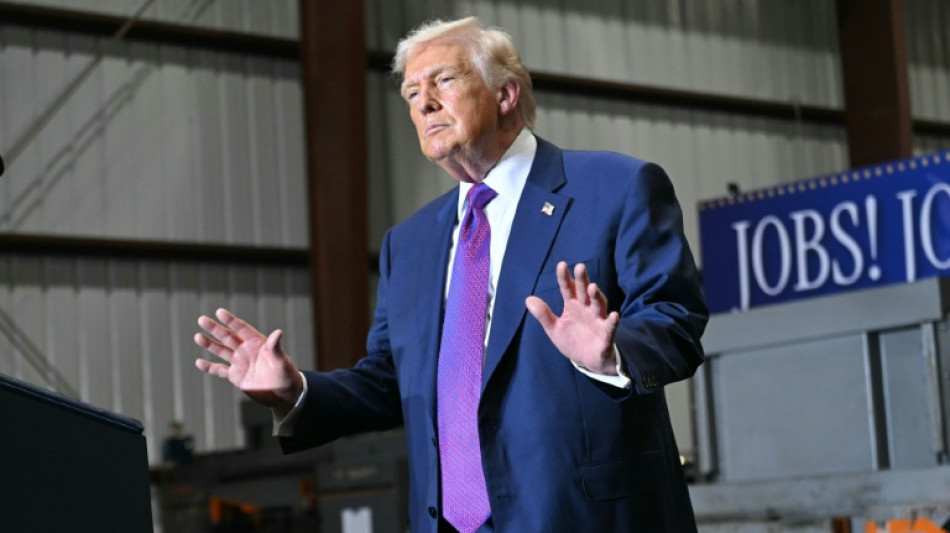
US Supreme Court strikes down Trump global tariffs / Photo: © AFP/File

 Brewers beat Rays 4-1 to capture first World Series title

 Philippine island fights rising seas with nature, not concrete

 Bangladesh presses India before Ganges water treaty expires

 Trump accuses Alaska Democrats of fraud over same-name scandal

 Spain mourns after latest train tragedy kills 68

 Trump's border: quiet, but few people are happy

 Australian defence chief says China military buildup creating 'pressure' in SE Asia
 No penalty practice? No problem for Man City in shoot-out win

 Microsoft beats expectations fueled by Azure cloud business
 Chelsea win as Bayern draw with Madrid in Women's Champions League

 Kane watches as Bayern cruise into German Cup last 16

 Bayern boss Kompany out of hospital after meningeal irritation

 Shares in Google owner Alphabet sink on profit miss, ad slowdown
 Chelsea win as Bayern and Madrid draw in Women's Champions League
 Made with munitions from the Falklands War, a 'Chalice of Peace' for the pope

 Pioneering US labor leader Dolores Huerta dies at 96

 Italian PM slams 'shameful' release of alleged protest organiser

 Hollywood producer Kennedy to head LA28 Olympic ceremony plans

 Djokovic wins Basel opener to boost ATP Finals bid

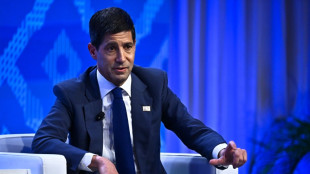 US Fed holds interest rates steady despite surging inflation

 Chiefs sign ex-Ravens kicker suspended over sex allegations

 Inglis and Carey put Australia in command of South Africa decider

 92-year-old US judge handling Maduro case dies

 Perez extends Cadillac deal to 2029
 Arab Israelis proud of high election turnout, uncertain for future

The US Supreme Court on Friday ruled Donald Trump's sweeping global tariffs illegal -- a stunning political setback that blocks the signature policy of the president's economic agenda.
The conservative-majority high court ruled six-three in the judgment, saying that an emergency powers law known as the International Emergency Economic Powers Act (IEEPA) "does not authorize the President to impose tariffs."
The ruling does not impact sector-specific duties that Trump has separately imposed on imports of steel, aluminum and various other goods. Several government probes which could ultimately lead to more such sectoral tariffs remain in the works.
Still, this marks Trump's biggest defeat at the Supreme Court since returning to the White House last year.
While Trump has long relied on tariffs as a lever for pressure and negotiations, he made unprecedented use of emergency economic powers in his second term to slap new duties on virtually all US trading partners.
These included "reciprocal" tariffs over trade practices that Washington deemed unfair, alongside separate sets of duties targeting major partners Mexico, Canada and China over illicit drug flows and immigration.
The court on Friday noted that "had Congress intended to convey the distinct and extraordinary power to impose tariffs" with IEEPA, "it would have done so expressly, as it consistently has in other tariff statutes."
The Supreme Court's three liberal justices joined three conservatives in Friday's ruling, which upheld lower court decisions that tariffs Trump imposed under IEEPA were illegal.
Conservative Justices Brett Kavanaugh, Clarence Thomas and Samuel Alito dissented.
Chief Justice John Roberts, in delivering his opinion, noted that "IEEPA contains no reference to tariffs or duties."
A lower trade court ruled in May that Trump overstepped his authority with across-the-board levies and blocked most of them from taking effect, but that outcome was put on hold as the government sought an appeal.
- 'Much-needed certainty' -
US business groups cheered the ruling, with the National Retail Federation saying this "provides much-needed certainty" for American firms and manufacturers.
"We urge the lower court to ensure a seamless process to refund the tariffs to US importers," the federation said.
The justices did not address the degree to which importers can receive refunds.
But Kavanaugh warned that this process -- as acknowledged during oral arguments -- could be a "mess."
EY-Parthenon chief economist Gregory Daco told AFP that the loss of IEEPA tariff revenues for the US government could amount to around $140 billion.
The ruling will likely bring the average tariff rate from 16.8 percent to around 9.5 percent, he added ahead of the ruling.
But lower levels will likely be temporary as the government seeks other ways to reimpose some of the sweeping duties, he added.
The Budget Lab at Yale University similarly estimates consumers face an average effective tariff rate of 9.1 percent with Friday's decision, down from 16.9 percent. But it said this "remains the highest since 1946," excluding 2025.
- Constrained ambition -
For now, the European Union said it was studying the court ruling and will remain in close contact with the Trump administration.
Britain plans to work with the United States on how this affects a trade deal between both countries, while Canada said the decision affirms that Trump's tariffs were "unjustified."
Striking down the emergency tariffs "would constrain the president's ambitions to impose across-the-board tariffs on a whim," said Erica York of tax policy nonprofit the Tax Foundation.
But it still leaves him other statutes to use for tariffs, even if they tend to be more limited in scope -- or require specific processes such as investigations -- York told AFP.
"The ruling dismantles the legal scaffolding, not the building itself," said ING analysts Carsten Brzeski and Julian Geib of Trump's trade restrictions.
D.Schaer--VB