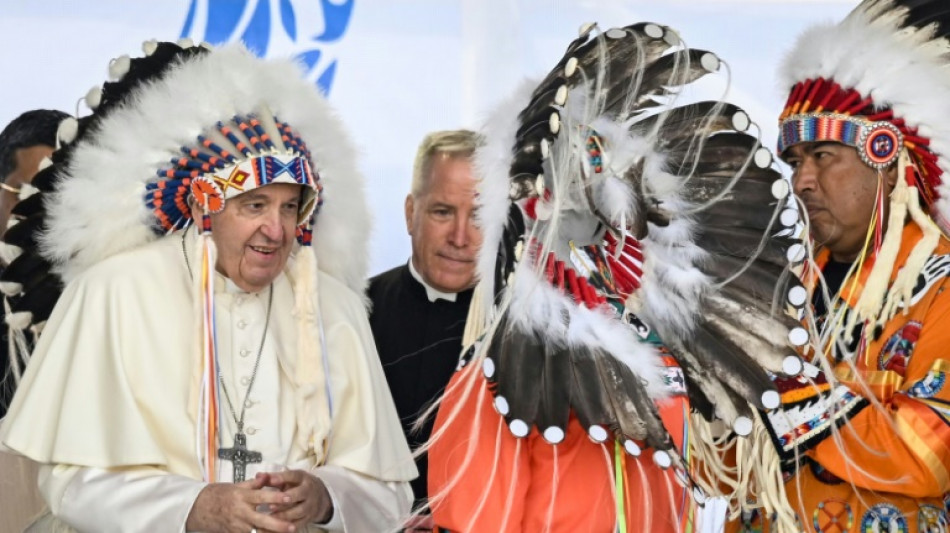
Pope apologizes for 'evil' done to Canadian Indigenous school survivors / Photo: © AFP

 Rescuers search for missing in China storms after 100,000 flee

 OpenAI to launch new model after US freeze
 UK museums at 'sharp end' of climate change challenge
 In Mauritania, Imraguen people's desert-ocean paradise under threat
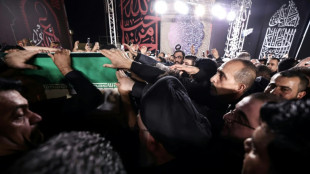 Iraq's holy cities host funeral processions for Khamenei
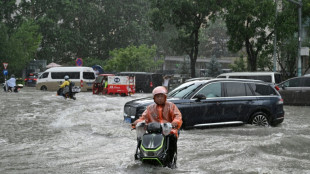 Rescuers search for missing in China storms after 100,000 evacuated
 Ex-Australia cricketer MacGill loses appeal against cocaine conviction
 Oil prices extend rally as US strikes on Iran revive geopolitical fears
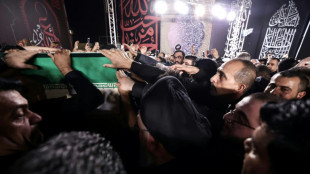 Iraq's holy cities to host funeral processions for Khamenei
 In Venezuela's quake ruins, a baby is born
 What to know about the total solar eclipse due in August
 Trump, NATO allies to begin key talks at Turkey summit
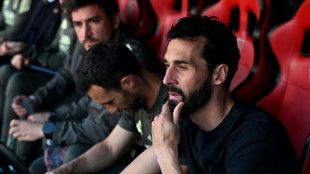 Former Real Madrid coach Arbeloa named Fulham manager
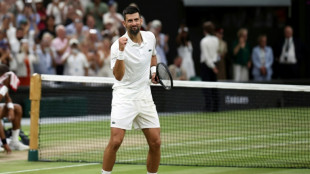
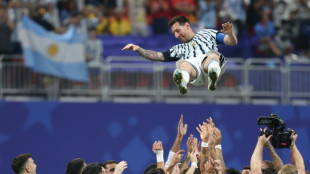 Messi inspires Argentina great escape over Egypt, Swiss advance
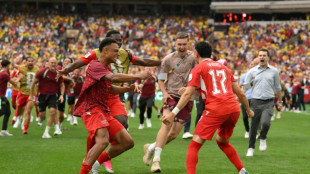
 US strikes Iran after Hormuz attacks, Tehran threatens response
 Djokovic wins five-hour epic to earn Sinner showdown at Wimbledon

 US strikes Iran after Hormuz tanker attacks: military

 Messi 'didn't want to go home' as Argentina comeback stuns Egypt
 Netflix strikes deals in short-form video push
 The height factor: how a small building survived Venezuela's quakes
 Egypt 'cheated' in controversial World Cup exit to Messi's Argentina, says Hassan
 Global AI industry falls short on safety, think tank warns

 'History made': Egyptian pride despite World Cup heartbreak
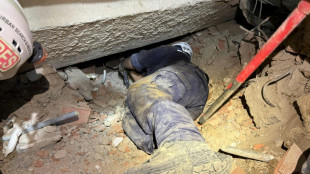
 How rescuers carried out 180-hour 'miracle' amid Venezuela's ruins
 Victorious Belgian footballers troll Trump with YMCA dance
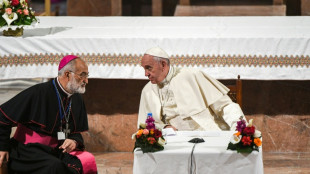
Pope Francis on Monday apologized for the "evil" inflicted on the Indigenous peoples of Canada on the first day of a visit focused on addressing decades of abuse committed at Catholic institutions.
The plea from the leader of the world's 1.3 billion Catholics was met with applause by a crowd of First Nations, Metis and Inuit people in Maskwacis, in western Alberta province -- some of whom were taken from their families as children in what has been branded a "cultural genocide."
"I am sorry," 85-year-old pontiff, who remained seated as he delivered his address at the site of one of the largest of Canada's infamous former residential schools for Indigenous children.
"I humbly beg forgiveness for the evil committed by so many Christians against the indigenous peoples," said the pope, as he formally acknowledged "many members of the Church" had cooperated in "cultural destruction and forced assimilation."
As he spoke the emotion was palpable in Maskwacis, an Indigenous community south of provincial capital Edmonton which was the site of the Ermineskin residential school until it closed in 1975.
Several hundred people, many in traditional clothing, were in attendance, along with Canadian Prime Minister Justin Trudeau and Mary Simon, the country's first Indigenous governor general.
Many lowered their eyes, wiped away tears or leaned on and hugged neighbors, and Indigenous leaders afterwards placed a traditional feathered headdress on the pope.
"The place where we are gathered renews within me the deep sense of pain and remorse that I have felt in these past months," Francis said, citing the "physical, verbal, psychological and spiritual abuse" of children over the course of decades.
Counsellors were waiting near teepees set up to provide support to those who may need it, and earlier volunteers had distributed small paper bags for the "collection of tears."
- 'Cry love' -
"The First Nation believes that if you cry, you cry love, you catch the tears on a piece of paper and put it back in this bag," explained Andre Carrier of the Manitoba Metis Federation, before the pope spoke.
Volunteers will collect the bags and later they will be burned with a special prayer, "to return the tears of love to the creator," he said.
From the late 1800s to the 1990s, Canada's government sent about 150,000 children into 139 residential schools run by the Church, where they were cut off from their families, language and culture.
Many were physically and sexually abused by headmasters and teachers, and thousands are believed to have died of disease, malnutrition or neglect.
A delegation of Indigenous peoples traveled to the Vatican in April and met the pope -- a precursor to Francis' trip -- after which he formally apologized.
But doing so again on Canadian soil was of huge significance to survivors and their families, for whom the land of their ancestors is of particular importance.
Later in the day, at 4:30 pm (2230 GMT) Francis will travel to the Sacred Heart Catholic Church of the First Peoples in Edmonton, one of the city's oldest churches, where he will deliver a second speech to Indigenous communities.
Since May 2021, more than 1,300 unmarked graves have been discovered at the sites of the former schools, sending shockwaves throughout Canada -- which has slowly begun to acknowledge this long, dark chapter in its history.
"I'm happy, it's a miracle. I am humbled," 50-year-old Gilda Soosay -- one of the residents who was to meet the pope in person -- told AFP.
- 'Healing journey' -
The flight to Edmonton was the longest since 2019 for Francis, who has been suffering from knee pain that has forced him to use a cane or wheelchair in recent outings, including a wheelchair on the Canada trip.
The papal visit, though highly anticipated, is also a source of controversy for some. Many expect Francis to make symbolic gestures, such as returning some of the Indigenous artifacts that have been held in the Vatican for decades.
"It means a lot to me" that he came, said Deborah Greyeyes, 71, a member of the Muskeg Lake Cree Nation, the largest Indigenous group in Canada.
"I think we have to forgive, too, at some point," she told AFP. But "a lot of stuff was taken away from us."
After a mass before tens of thousands of faithful in Edmonton on Tuesday, Francis will head northwest to an important pilgrimage site, the Lac Sainte Anne.
Following a July 27-29 visit to Quebec City, he will end his trip in Iqaluit, capital of the northern territory of Nunavut and home to the largest Inuit population in Canada, where he will meet again with former residential school students, before returning to Italy.
Francis is the second pope to visit Canada, after John Paul II, who did so twice in the 1980s and again in 2002.
O.Lorenz--BTB